
Freight class shapes the way businesses ship goods across the country and it can dictate exactly how much you spend to move a single pallet. Shockingly, the system splits freight into 18 distinct classes ranging from 50 to 500, all based on small differences in density, ease of handling, and liability. Most people assume the bigger the load, the higher the cost but sometimes a tiny, delicate item racks up more fees than iron beams that weigh ten times as much.
Table of Contents
- What Is Freight Class And How Is It Defined?
- The Importance Of Freight Class In Shipping Costs
- How Freight Class Determination Affects Logistics Management
- Key Factors Influencing Freight Class Selection
- Real-World Examples Of Freight Class Application
Quick Summary
| Takeaway | Explanation |
|---|---|
| Freight class affects shipping rates. | Understanding freight class enables better cost predictions and logistics planning for businesses. |
| Lower class numbers lead to lower rates. | Items categorized in lower freight classes, due to density and other factors, incur cheaper shipping costs. |
| Accurate classification prevents extra charges. | Misclassifying freight can result in unexpected charges or delays, impacting budget and efficiency. |
| Measure and assess cargo characteristics. | Precise measurement of weight, size, and handling needs helps identify correct freight class, optimizing shipping expenses. |
| Freight class impacts logistics management. | Knowledge of freight class assists companies in strategic shipping and resource allocation, enhancing operational efficiency. |
What is Freight Class and How is it Defined?
Freight class is a standardized classification system that determines shipping rates for less-than-truckload (LTL) freight transportation. Developed by the National Motor Freight Traffic Association (NMFTA), this systematic approach helps carriers and shippers establish consistent pricing based on specific commodity characteristics. Freight classification serves as a critical tool for understanding shipping costs and logistics planning.
Understanding Freight Class Components
The freight class system categorizes items across 18 different classes, ranging from class 50 to class 500.
The following table summarizes the four main factors that determine freight class, along with a brief explanation of each to clarify their impact on shipping:
| Factor | Description |
|---|---|
| Density | Weight per cubic foot; higher density usually results in lower freight class and costs. |
| Stowability | How easily freight can be stored or combined with other items; affects space use. |
| Handling | Complexity of moving, loading, or unloading freight; items requiring care are higher. |
| Liability | Risk of damage, theft, or loss during shipping; riskier items are often higher class. |
- Density: Weight per cubic foot of the shipment
- Stowability: How easily an item can be stored and transported with other goods
- Handling: Complexity of moving and loading the freight
- Liability: Potential risk associated with transporting specific items
The lower the class number, the less expensive the shipping rate. For instance, dense, compact items like metal plates typically fall into lower classes, while bulky, fragile items receive higher class designations that reflect increased transportation complexity.
Practical Implications of Freight Class
Understanding freight class determination is crucial for businesses seeking accurate shipping cost estimates. Learn more about freight forwarding strategies that can help optimize your shipping expenses. Shippers must carefully measure and assess their goods to assign the correct freight class, which directly impacts transportation pricing and efficiency. Miscalculating or misrepresenting freight class can result in unexpected charges, shipping delays, and potential financial penalties.
The Importance of Freight Class in Shipping Costs
Freight class plays a pivotal role in determining transportation expenses, serving as a fundamental mechanism for pricing complex shipping logistics. By establishing a standardized framework, freight class allows carriers to create fair and transparent pricing models that reflect the unique characteristics and transportation challenges of different commodities. Research from logistics experts demonstrates that accurate freight classification can significantly impact shipping expenditures.
Cost Calculation Mechanisms
Shipping rates are directly correlated with freight class, creating a nuanced pricing structure that considers multiple factors beyond simple weight measurements. The classification system enables more precise cost calculations by evaluating:
- Dimensional Weight: Relationship between package size and actual weight
- Transportation Complexity: Handling requirements and potential risks
- Space Utilization: How efficiently an item can be stored and transported
Businesses that understand these intricate pricing mechanisms can strategically optimize their shipping expenses by selecting appropriate packaging and consolidation strategies. Lower freight classes typically translate to more economical shipping rates, making efficient packaging and cargo density critical financial considerations.

Strategic Shipping Cost Management
Explore advanced freight forwarding strategies that can help businesses minimize transportation expenses. Precise freight class determination allows companies to anticipate shipping costs more accurately, reducing unexpected financial surprises. Shippers who meticulously analyze their cargo characteristics can negotiate better rates, select optimal transportation methods, and develop more cost-effective logistics workflows that contribute directly to improved bottom-line performance.
How Freight Class Determination Affects Logistics Management
Freight class determination fundamentally transforms logistics management by providing a structured approach to transportation planning and cost control. Logistics industry analysis reveals that sophisticated freight classification enables businesses to make more informed strategic decisions about shipping and inventory management.
Operational Planning and Efficiency
By integrating freight class insights, logistics managers can optimize their operational workflows through precise transportation strategies. The classification system allows for more nuanced decision-making by providing critical information about:
- Space Optimization: Understanding cargo density and stowability
- Risk Assessment: Evaluating potential transportation challenges
- Resource Allocation: Matching appropriate transportation methods with specific cargo requirements
Accurate freight class determination reduces unnecessary transportation expenses and minimizes the risk of inefficient cargo movement. Companies can strategically plan their shipping routes, select appropriate carriers, and develop more streamlined logistics processes.
Strategic Inventory and Shipping Decisions
Learn more about advanced freight management techniques that can transform your logistics approach. Logistics managers leverage freight class information to make sophisticated decisions about inventory management, carrier selection, and transportation routing. By understanding the intricate relationships between commodity characteristics and shipping costs, businesses can develop more agile and cost-effective supply chain strategies that adapt to changing market demands and transportation challenges.
Key Factors Influencing Freight Class Selection
Freight class selection involves a sophisticated evaluation of multiple interconnected characteristics that determine a shipment’s transportation requirements. Density analysis demonstrates that understanding these factors is crucial for accurate shipping cost predictions and logistical planning.
Fundamental Measurement Criteria
The National Motor Freight Classification (NMFC) system evaluates shipments across four primary dimensions that collectively determine freight class:
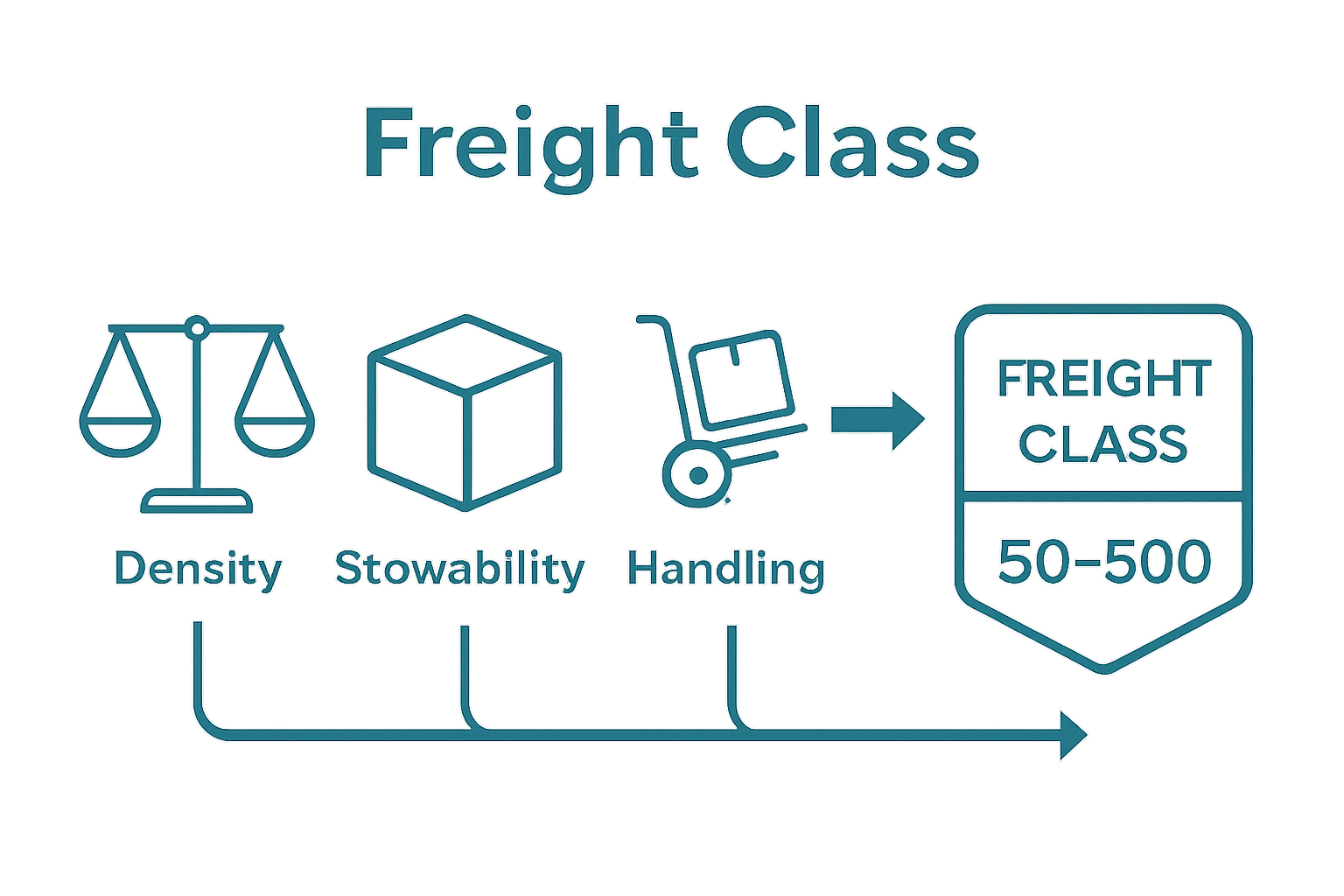
- Density: Weight per cubic foot of the shipment
- Stowability: Ease of storage and compatibility with other cargo
- Handling: Complexity of loading, unloading, and transporting the item
- Liability: Potential risk associated with transporting specific commodities
Density emerges as the most critical factor, directly influencing shipping rates.
Compact, heavy items typically receive lower class ratings, which translates to more economical transportation costs. Conversely, bulky, lightweight items often incur higher shipping expenses due to increased space requirements.
Strategic Commodity Assessment
Explore comprehensive freight classification strategies to optimize your shipping approach. Professional logistics managers must meticulously analyze each commodity’s unique characteristics, considering not just physical attributes but also potential transportation challenges. Items with complex handling requirements, fragile compositions, or specialized storage needs will receive higher freight class ratings, reflecting the increased complexity and potential risk associated with their transportation.
Real-World Examples of Freight Class Application
Freight class determination translates theoretical classification systems into practical shipping scenarios across diverse industries. Supply chain logistics research demonstrates how different commodities require unique transportation strategies based on their specific characteristics.
Industry-Specific Freight Classification
Various industries showcase the nuanced application of freight class principles, revealing how different products demand specialized shipping approaches:
- Electronics: Typically class 125 due to high value and fragility
- Industrial Machinery: Often class 70 with dense, compact configurations
- Furniture: Ranges from class 125 to 400 depending on size and material density
Precise freight classification enables businesses to optimize shipping expenses by understanding how product characteristics directly influence transportation costs. A computer server with high density might receive a lower class rating compared to a large, lightweight piece of artwork, despite potentially similar dimensional measurements.
This table compares typical freight class assignments for goods across various industries, illustrating how product characteristics affect their shipping classification:
| Industry/Product | Typical Freight Class | Key Characteristics |
|---|---|---|
| Electronics | 125 | High value, fragile, requires careful handling |
| Industrial Machinery | 70 | Dense, compact, easier to stow |
| Furniture | 125-400 | Bulky, often lightweight, variable density |
| Metal Plates | 50 | Very dense, solid, low risk |
| Artwork (large pieces) | 400 | Bulky, fragile, lightweight, high handling and liability risks |
| Computer Servers | 125 | Dense, valuable, moderately fragile |
Practical Cost Management Strategies
Discover advanced freight management techniques that can transform your logistics approach. Manufacturers and retailers can leverage freight class knowledge to design packaging, consolidate shipments, and negotiate more favorable shipping rates. By understanding how specific product attributes impact classification, businesses can make strategic decisions that reduce transportation expenses while maintaining product safety and integrity.
Streamline Freight Class Decisions with Reliable Courier Services from Or-Ner.com
Struggling to get your freight class right can leave your business facing extra fees, delayed shipments, or unexpected logistics costs. Navigating density, handling, and liability is complex, and a single misstep leads to budget overruns and headaches for you and your team. If you want reliable solutions and predictable shipping costs, you need more than information. You need a partner who understands both freight class rules and modern ecommerce logistics.
Choose or-ner.com for a logistics platform built for accuracy, speed, and peace of mind. We offer reliable courier services that turn your freight class insights into lower rates, faster delivery, and seamless order fulfillment. Our network of warehouses, real-time tracking, and data tools help you eliminate mistakes and optimize every shipment. Do not let freight class confusion impact the success of your business. Visit or-ner.com now and unlock smarter shipping for your growing ecommerce operation.
Frequently Asked Questions
What factors determine freight class for shipping?
Freight class is determined by four primary factors: density (weight per cubic foot), stowability (ease of storage), handling (complexity of moving the freight), and liability (risk associated with the item).
Why is understanding freight class important for shipping costs?
Understanding freight class is crucial because it directly affects shipping rates. Accurately classifying freight can help businesses avoid unexpected charges and optimize their shipping expenses.
How can miscalculating freight class impact shipping?
Misclassifying freight can lead to unexpected charges, shipping delays, and potential financial penalties, ultimately disrupting logistics and increasing costs.
What is the relationship between density and freight class?
Density is the most critical factor in freight classification. Items that are heavy and compact typically receive lower class ratings, resulting in more economical transportation costs, while bulky and lightweight items tend to incur higher shipping expenses.