
Moving goods across cities or continents used to mean endless juggling of paperwork, schedules, and anxious guesswork about where shipments might be. Today, businesses looking to get products into customers’ hands face a new world filled with choices. Some focus on full control from factory floor to final doorstep while others promise speed or savings in every box. Want better tracking, lower costs, or hands-off fulfillment? Every platform claims an edge but their strengths can surprise you. Curious which solution could cut your headaches and help you deliver with confidence? Keep reading to see how these options compare.
Table of Contents
orner
At a Glance
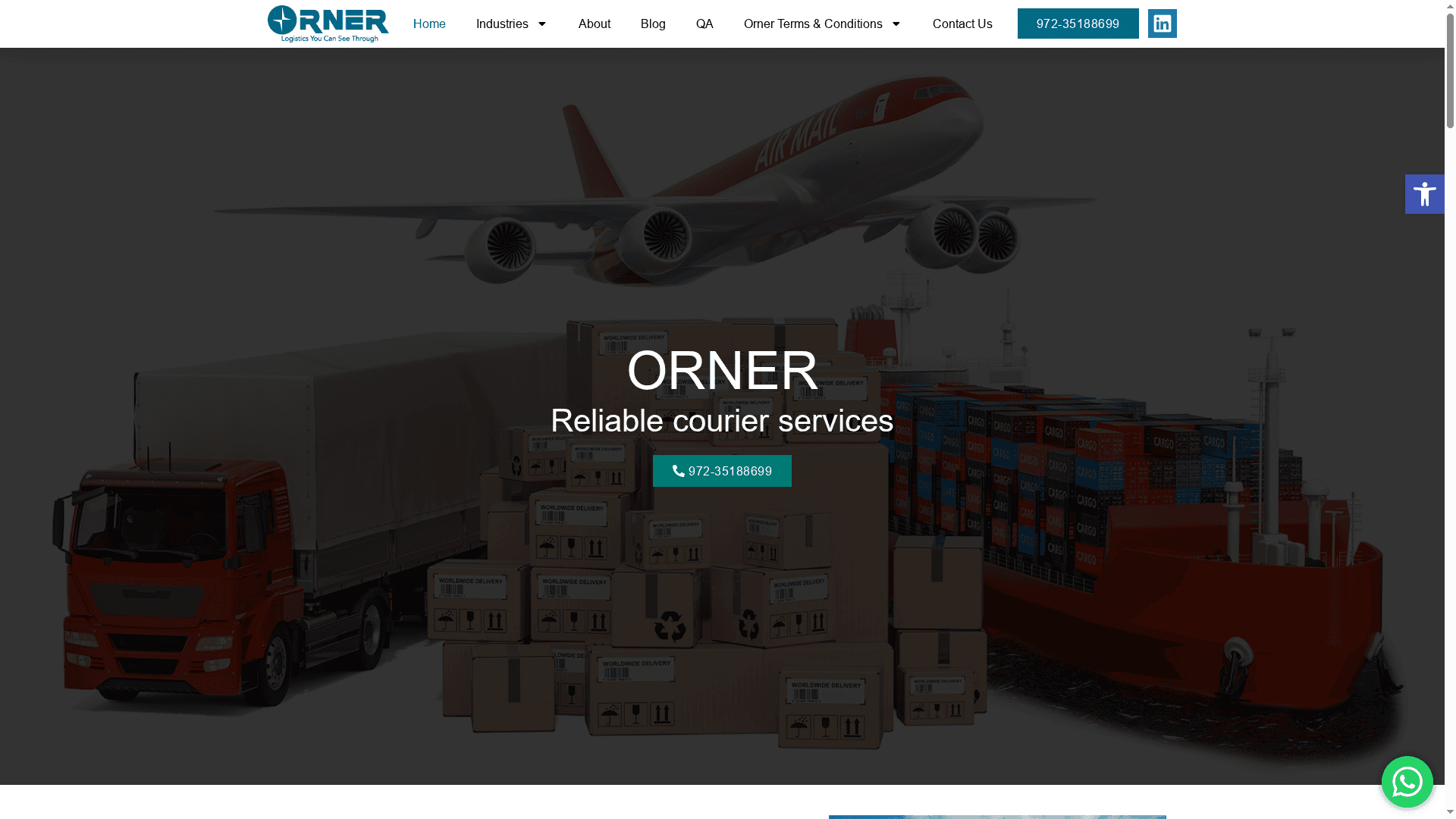
orner is an end-to-end logistics and supply chain platform built for ecommerce sellers who need reliable courier services and full visibility from factory to customer door. It combines freight booking, real-time tracking, customs clearance, and warehousing into a single interface so teams can act fast on exceptions and decisions. The platform serves everyone from small merchants to global brands and emphasizes speed, automation, and data-backed workflows. Bottom line: orner turns complex cross-border logistics into a manageable, visible process.
Core Features
orner lets you book, track, and deliver freight across ocean, air, and land while maintaining continuous, real-time supply chain visibility and communication. The platform bundles customs clearance, cargo insurance, and working capital options into an all-in-one solution and integrates directly with Amazon fulfillment centers and other ecommerce fulfillment services. Its global network of fulfillment centers and warehouses is designed to enable faster international shipping (with a stated two-day minimum on eligible routes) and to support inventory management, automated workflows, and exception handling from order placement through final delivery.
Pros
- Comprehensive end-to-end logistics solutions: orner consolidates booking, customs, insurance, fulfillment, and last-mile delivery into a single workflow, reducing handoffs and manual coordination.
- Real-time tracking and supply chain visibility: continuous communication and data-backed dashboards let you spot delays and reroute quickly, lowering the risk of stockouts and missed delivery windows.
- Support for large and small businesses: the platform scales from single-merchant operations to multinational brands while keeping core workflows consistent and auditable.
- Global warehousing and fulfillment centers: a worldwide footprint lets you position inventory closer to customers for faster delivery and lower shipping costs.
- Automation of workflows and inventory management: rule-based automation removes repetitive tasks and speeds up order-to-delivery cycles, freeing teams to focus on growth.
Who It’s For
orner is ideal for ecommerce sellers, manufacturers, distributors, and retailers with international or complex fulfillment needs. If you sell on marketplaces like Amazon, operate multiple warehouses, or require customs expertise and cross-border logistics, orner is built for you. Use cases include online retailers scaling into new markets, wholesalers streamlining multi-origin shipments, and supply chain teams seeking tighter control over delivery performance.
Unique Value Proposition
orner’s core advantage is consolidation: a single platform that couples reliable courier services with end-to-end supply chain tools and decision-grade analytics. That means fewer integrations, fewer invoices, and one source of truth for shipment status, inventory, and exception management. The platform’s Amazon integration and global fulfillment network accelerate time-to-delivery while its bundled services—customs, insurance, and working capital—reduce external dependencies. The trade-off? A reliance on orner’s proprietary ecosystem is deliberate: it prioritizes predictability, tighter SLAs, and simplified operations over piecemeal third-party stitching. In short: orner favors operational stability and speed, which is precisely what high-volume ecommerce teams need.
Real World Use Case
An online retailer uses orner to manage international shipping from multiple warehouses across continents, tracking every shipment in real time and automating workflows from order placement to final delivery. The result: fewer manual checks, faster restocking cycles, and measurable improvements in on-time delivery.
Pricing
Not specified in the provided content.
Website
Website: https://or-ner.com
tdy cargo
At a Glance
tdy cargo is a veteran freight forwarder with more than 40 years in international shipping, customs brokerage, warehousing, and end-to-end logistics. The company positions itself as a one-stop solution for businesses that need maritime and air freight combined with customs clearance and flexible storage. If you need experienced partners and localized support across multiple branches, tdy cargo delivers depth and continuity — though some digital details (pricing, full English content) require direct contact.
Core Features
tdy cargo focuses on international shipping by sea and air across diverse industries, backed by long-term agreements with carriers and freight partners worldwide. Core capabilities include specialized handling for goods that need unique approvals, comprehensive customs brokerage (including vehicle clearance in Palestinian territories), domestic and international land transport, professional bulk and personal-item packaging services, and advanced storage options for short- and long-term needs. These core services are bundled to support import-export flows and warehouse-backed distribution, creating an integrated supply chain offering.
Pros
- Deep industry experience: With over 40 years of operation, tdy cargo brings institutional knowledge that helps navigate complex cross-border regulations and carrier relationships.
- Comprehensive service range: The company covers shipping, customs, logistics, and storage, allowing clients to consolidate vendors and reduce coordination overhead.
- Customized solutions: tdy cargo emphasizes tailored workflows for varied client needs, which is useful for niche products that require special approvals or packaging.
- Wide physical presence: Multiple international and domestic branches increase accessibility and local handling capability for importers and exporters.
- Flexible warehousing: Advanced storage facilities support both short-term staging and long-term inventory management, which can smooth seasonal demand swings.
Cons
- Website lacks detailed disadvantages: The publicly available content does not list explicit limitations, making independent downside assessment harder.
- Pricing not transparent: Detailed rates and service customization require direct contact, which slows quick cost comparisons when tendering multiple providers.
- Limited English content: Much of the information appears primarily in Hebrew, which could complicate onboarding for non-Hebrew-speaking international clients.
Who It’s For
tdy cargo is best for businesses and individuals engaged in international trade who need a full-service logistics partner: importers/exporters, manufacturers sourcing components overseas, and distributors requiring customs clearance plus warehousing. It particularly suits operations that value carrier relationships, local branch support, and hands-on customs brokerage.
Unique Value Proposition
tdy cargo’s unique value lies in its combination of multi-decade experience, carrier partnerships, and an integrated service set that spans freight, customs, packaging, and storage. That single-provider model reduces coordination friction and keeps accountability centralized for complex cross-border shipments.
Real World Use Case
A retailer importing bulk goods from China can hire tdy cargo to book maritime freight, handle customs brokerage on arrival in Israel, and move stock into secure warehousing for subsequent domestic distribution — all managed through a single point of contact to reduce delays and paperwork.
Pricing
Not specified on the website; interested clients are advised to contact the company directly.
Website: https://tdycargo.com
Flexport
At a Glance
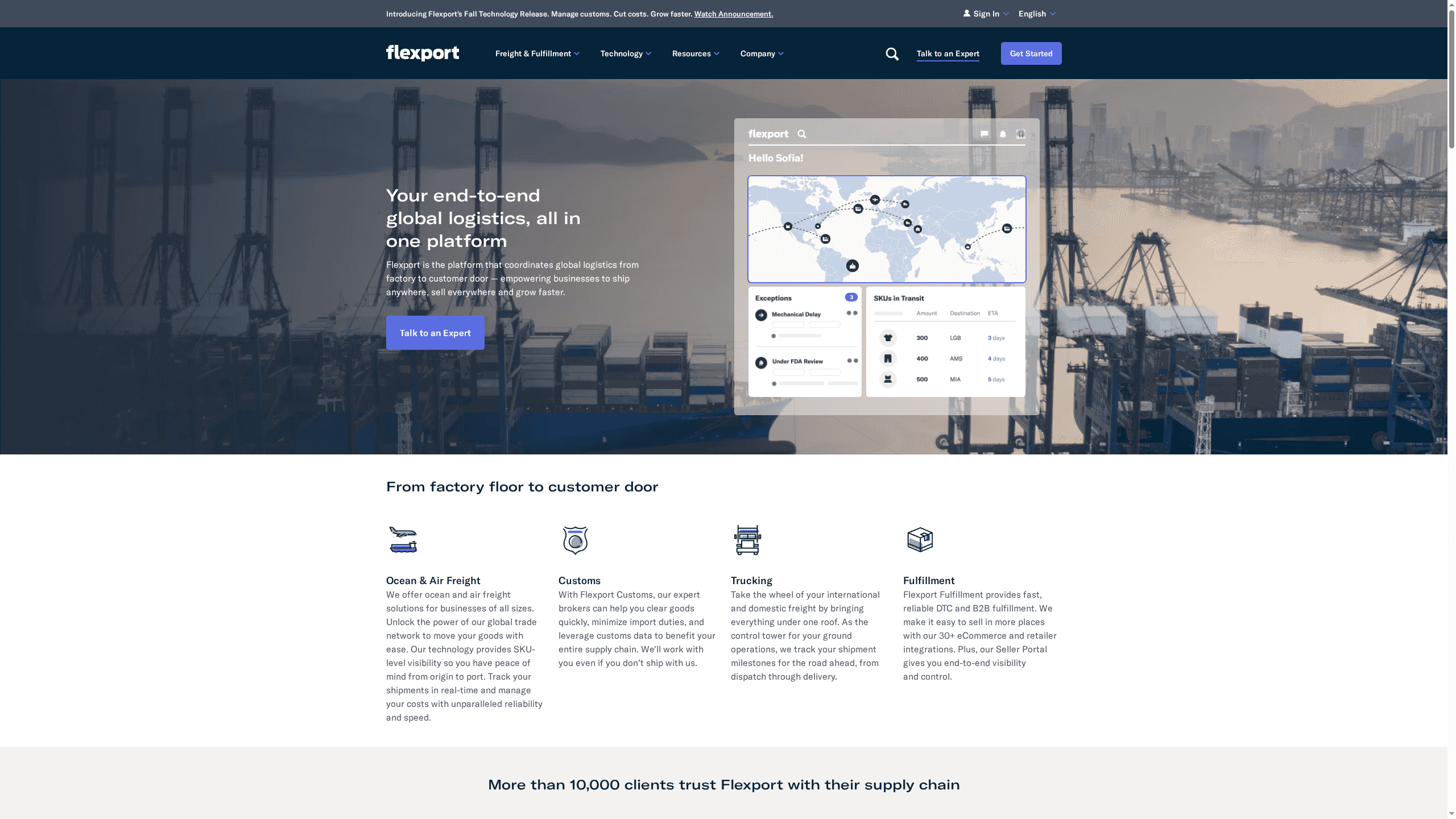
Flexport is an end-to-end global logistics platform that coordinates shipping from factory to customer door, giving businesses a single place to manage ocean and air freight, customs brokerage, trucking, and fulfillment. Its strength lies in centralizing disparate logistics functions and surfacing real-time shipment visibility and line-level data so you can make faster, evidence-based decisions. For teams that need consolidated control and data-driven insights across international moves, Flexport delivers a high degree of operational transparency. It can feel feature-rich—sometimes overwhelmingly so for first-time users.
Core Features
Flexport’s core capabilities include ocean and air freight services, customs brokerage, domestic and international trucking management, and B2B and direct-to-consumer (DTC) fulfillment with ecommerce integrations. The platform emphasizes real-time shipment tracking and visibility, line-level invoicing, and the ability to leverage customs data for smarter routing and compliance. It also provides dedicated communication spaces so shippers, brokers, and carriers can collaborate around exceptions and documentation, reducing the back-and-forth that typically slows cross-border logistics.
Stop. Consider this: a single dashboard for freight, customs, and last-mile coordination can cut cognitive load and speed response times.
Pros
- Integrated platform for multiple logistics services: Flexport consolidates ocean, air, customs, trucking, and fulfillment functions so you don’t need separate vendors for each leg of a shipment.
- Real-time shipment tracking and visibility: The system offers up-to-date tracking and line-level details, helping you pinpoint delays and act quickly.
- Customization options for different freight needs: Users can tailor routes and services to match shipment size, urgency, and compliance requirements.
- Supports both small and large scale shipments: The platform is built to handle single-carton DTC moves as well as pallet- and container-level commercial freight.
- End-to-end control and data-driven insights: Centralized data and invoicing provide the analytics needed to reduce costs and improve planning.
Cons
- Pricing details are not specified on the website, which makes budgeting and vendor comparisons harder without a quote.
- The breadth of features introduces complexity that can be challenging for new users to navigate without onboarding support.
- Limited information in the provided data about specific customer support channels and responsiveness leaves questions about post-sale service.
Who It’s For
Flexport is best for businesses of all sizes that need an integrated, technology-driven approach to global logistics—manufacturers, retailers, and ecommerce platforms that move inventory across borders and require visibility from factory to final delivery. If your operation depends on combining freight forwarding, customs clearance, and fulfillment under one roof with data to back decisions, Flexport is designed for you.
Unique Value Proposition
Flexport’s unique value lies in digitizing and structuring supply chain data to give continuous visibility and centralized control across multiple transport modes and customs processes. That single-source approach turns scattered logistics signals into actionable insights, enabling smarter routing, faster exception handling, and clearer cost allocation.
Real World Use Case
A retail company uses Flexport to manage ocean freight from overseas factories, clear customs, coordinate domestic trucking, and fulfill orders to customers while monitoring shipments in real time. The integrated data stream allows the team to spot delays, reassign carriers, and optimize inventory flow to reduce stockouts and demurrage fees.
Pricing
Not specified on the website
Website: https://flexport.com
ShipBob
At a Glance
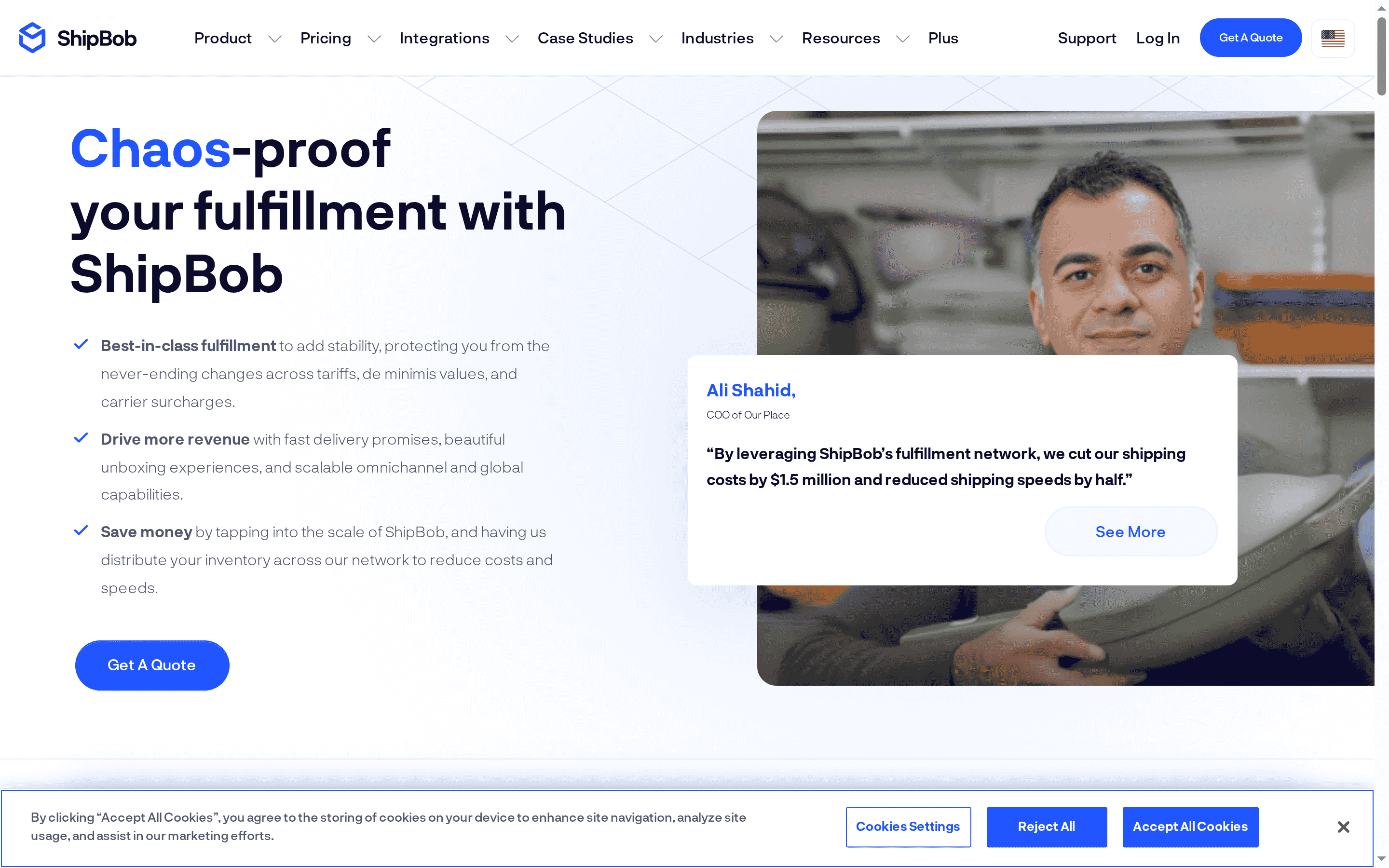
ShipBob is a technology-driven, global ecommerce fulfillment partner that combines a 60+ warehouse network with order management, inventory distribution, and international shipping capabilities. It’s built to help brands speed delivery, consolidate fulfillment costs, and scale across channels without adding logistics headcount. For merchants focused on faster transit, global reach, and data-backed inventory placement, ShipBob is a practical, full-service solution—though detailed pricing and some special services require conversation and quoting.
Core Features
ShipBob offers end-to-end fulfillment: picking, packing, shipping, returns, and inventory management through a warehouse management system with real-time tracking and reordering alerts. The platform supports inventory distribution across regions with automated replenishment, international shipping to 250+ destinations (including DDP options), B2B and wholesale flows with EDI support, branded packaging and kitting, plus value-added services for custom assembly. API and app-store integrations connect your ecommerce platforms and ERPs to ShipBob’s analytics and fulfillment engine.
Pros
- Extensive global footprint: With 60+ fulfillment centers worldwide, ShipBob enables distributed inventory closer to customers to reduce transit times and shipping costs.
- Comprehensive end-to-end service: The platform handles picking, packing, shipping, and returns so you can centralize fulfillment operations under one contract.
- Data and technology-first approach: Real-time inventory tracking and analytics help you optimize stock placement and trigger automated replenishment alerts.
- Competitive carrier relationships: Strong carrier partnerships deliver discounted rates that can materially lower per-shipment costs for growing merchants.
- High operational reliability: Reported accuracy and on-time delivery metrics (99.97% and 99.6%) indicate consistently reliable order processing.
- Customization for brand experience: Support for branded packaging, kitting, and customized unboxing lets you preserve brand identity at scale.
Cons
- Customized pricing model can obscure quick comparisons: Pricing is quote-based and reflects total fulfillment costs, so you’ll need a proposal to compare against other providers.
- Extra fees for specialized services: Services like kitting or other unique requirements may add incremental costs beyond standard fulfillment fees.
- Dependency on integrations: Seamless operation relies on integrations with your ecommerce platform or ERP, so implementation work is required for full automation.
Who It’s For
ShipBob fits ecommerce brands, DTC and wholesale businesses, and retailers that need scalable, tech-enabled fulfillment with international reach. It works best for teams that want to offload logistics complexity, leverage analytics for inventory placement, and pursue faster delivery without building a global warehouse footprint themselves.
Unique Value Proposition
ShipBob’s unique value lies in combining a global warehouse network with integrated fulfillment technology and analytics—so you get both physical reach and the software to intelligently distribute inventory. That combination aims to reduce shipping times and overall fulfillment spend while preserving brand customization and operational visibility.
Real World Use Case
A direct-to-consumer brand partnered with ShipBob to centralize fulfillment, halving shipping times and optimizing inventory distribution across warehouses. By leveraging ShipBob’s carrier discounts and placement strategy, the brand reported saving over $1.5 million annually—an example of how distribution and scale can quickly impact P&L.
Pricing
Quote-based: ShipBob’s pricing covers total fulfillment costs (warehousing, picking, packing, shipping) and is provided via custom quotes based on volume and service needs.
Website: https://shipbob.com
Shippo
At a Glance
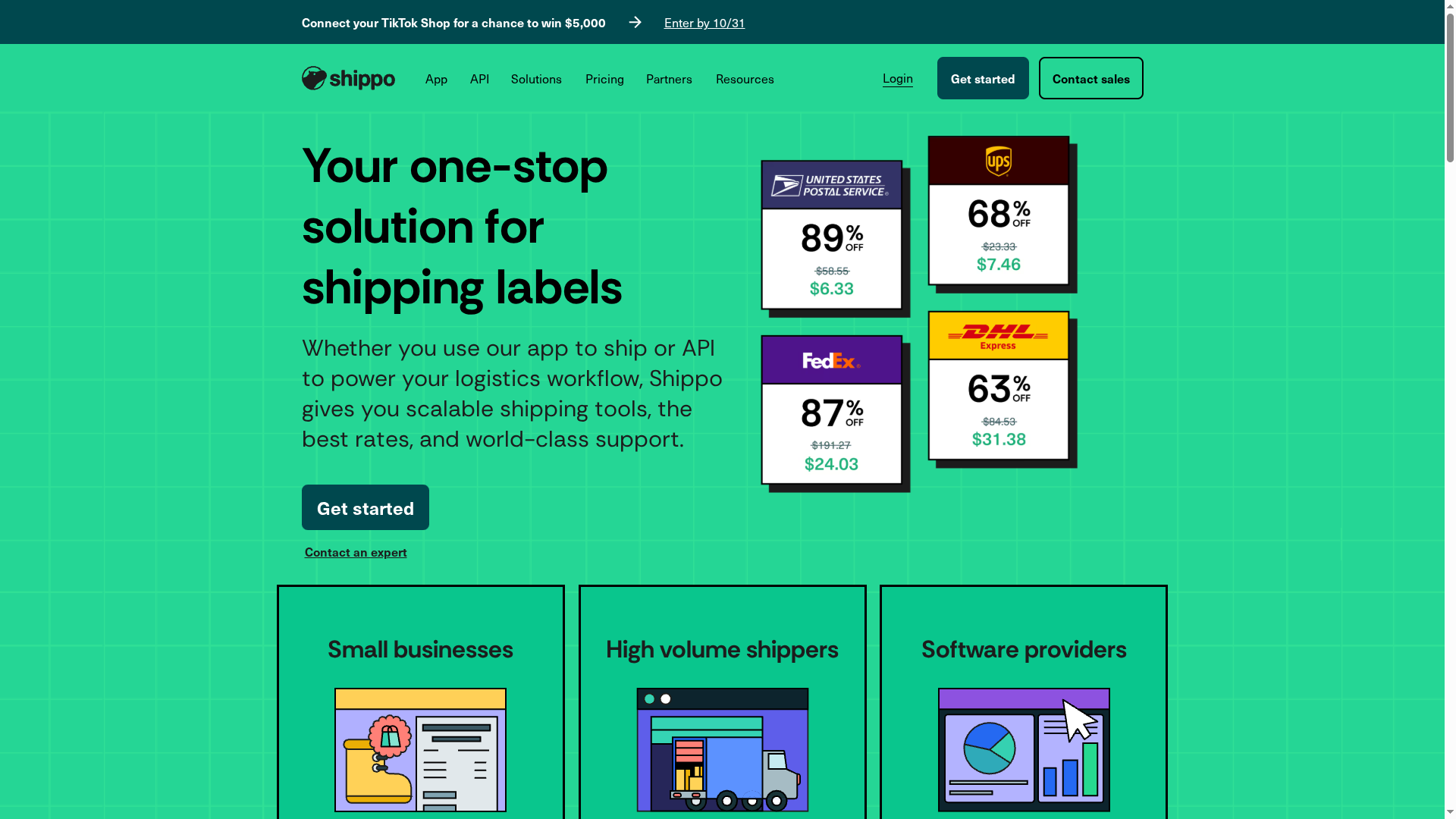
Shippo is a multi-carrier shipping platform trusted by over 300,000 businesses that blends store integrations, discounted rates, and developer-friendly APIs into a single workflow. It’s built to scale from solo e-commerce sellers to high-volume shippers, offering label printing, tracking, returns, and real-time delivery estimates. The bottom line: Shippo reduces per-shipment cost and operational friction, though you may need technical resources to unlock its full API potential.
Core Features
Shippo connects your stores and integrates with over 40 global carriers, enabling side-by-side rate comparison and discounted shipping labels. The platform supports shipping label printing and shipment validation, end-to-end tracking with customer notifications, and returns processing including label generation. For platform providers and software developers, Shippo exposes API solutions and real-time delivery estimates powered by AI to improve accuracy and automation. Everything is oriented around streamlining label creation, status visibility, and returns so you can focus on fulfillment operations rather than manual shipping tasks.
Pros
- Scales with your business: Shippo supports both small merchants and high-volume shippers, so you can grow without switching tools.
- Extensive carrier coverage: It integrates with over 40 global carriers, giving you broad routing flexibility and international reach.
- Cost savings on labels: Shippo provides deep discounts on shipping labels which can reduce cost-per-order for tight-margin products.
- Developer-friendly APIs: The platform’s API and store-connection options make automation and custom integrations feasible for platform providers.
- Comprehensive shipping features: From label printing and validation to tracking and returns, Shippo consolidates common fulfillment tasks in one place.
Cons
- Pricing can vary with usage and features, which means total cost depends on shipment volume and which paid tier you select.
- API integration requires technical knowledge, so teams without developer resources may face setup friction.
- Limited detail on support responsiveness in the provided data makes it hard to judge how fast issues are resolved.
Who It’s For
Shippo is ideal for e-commerce merchants of all sizes, platform providers, and software developers who need an efficient, scalable shipping backbone. If you manage multiple online stores, require discounted carrier rates, or want programmatic control over shipping workflows, Shippo fits the bill. If you’re purely non-technical and expect white-glove onboarding without developer help, plan accordingly.
Unique Value Proposition
Shippo’s unique value is the convergence of broad carrier access, measurable shipping discounts, and a robust API layer that lets businesses automate label creation, tracking, and returns. It reduces per-shipment cost while providing the integrations and tools necessary to scale fulfillment operations quickly.
Real World Use Case
A merchant integrates Shippo into their storefront stack to automate label creation, validate shipments, and send automated tracking notifications to customers. Returns are handled through the same platform with printable labels, saving time on manual entry and cutting shipping spend via discounted rates.
Pricing
Starting at Free (scalable plans available), with paid Pro and Premier tiers offered monthly or annually that unlock additional features, support, and user logins.
Website: https://goshippo.com
Easyship
At a Glance
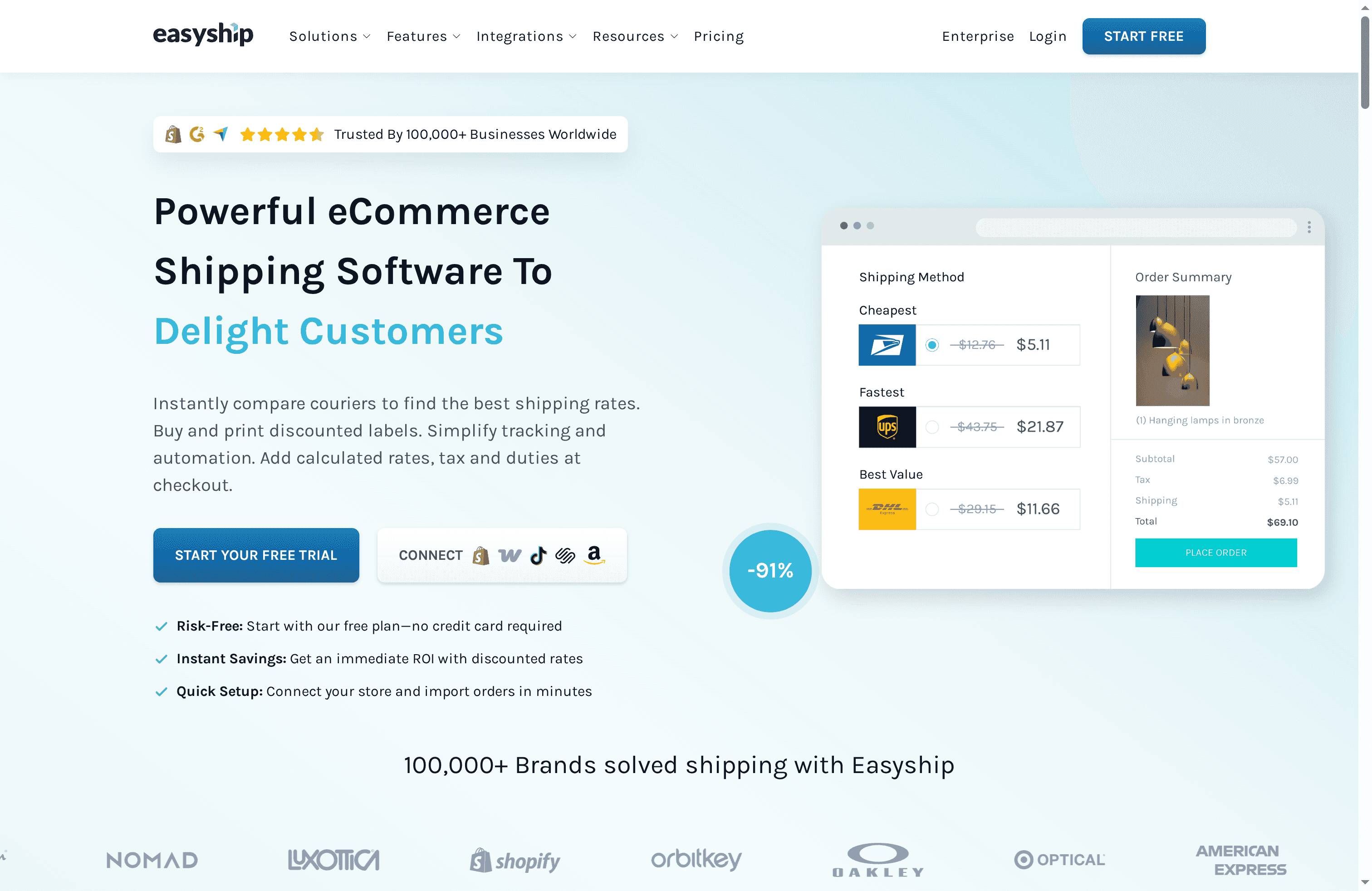
Easyship is a multi-carrier shipping platform built to help ecommerce sellers cut costs and automate international logistics. It excels at rate comparison across hundreds of couriers and automates label generation, customs calculation, and tracking to reduce manual work. The platform scales from single-store merchants to high-volume brands, but new users should expect a learning curve to unlock advanced features. Overall: a powerful shipping hub with measurable savings and meaningful automation.
Core Features
Easyship centralizes the shipping workflow: compare over 550 courier services, instantly generate discounted labels, schedule pickups, and automate tracking and finance monitoring. It calculates international taxes, duties, and tariffs automatically and supports customs documentation and clearance. Native integrations with 60+ ecommerce platforms (for example, Shopify and WooCommerce) plus APIs enable seamless store connections, while a global network of 3PL fulfillment centers speeds delivery and reduces landed costs. Branded tracking notifications and customizable packing slips round out the customer-facing features.
Pros
- Deep courier coverage and savings: Easyship lets you compare 550+ couriers and access significant discounts, with claims of savings up to 91%, which directly lowers your cost per shipment.
- Strong automation: Automating label generation, pickups, and tracking reduces manual errors and frees staff time for higher-value tasks.
- International-ready tooling: Automatic duties, taxes, and customs support simplify cross-border sales and reduce surprise fees for customers.
- Wide integrations and fulfillment options: Native connectors for 60+ platforms and a 3PL network help brands scale multi-channel operations without building custom flows.
- Support resources: Comprehensive documentation and support channels are available to help onboard and troubleshoot.
Cons
- Limited pricing transparency: Detailed costs and the full breakdown of paid-plan features aren’t fully visible without signing up, which complicates budgeting decisions.
- Feature complexity for newcomers: The breadth of capabilities can overwhelm small teams or first-time sellers and may require time to configure effectively.
- Potential extra costs for advanced features: Some higher-level tools and premium functionality may require paid upgrades or add-ons beyond the free tier.
Who It’s For
Easyship is suited to ecommerce retailers, high-volume brands, crowdfunding campaign managers, and enterprise platforms that need integrated, automated shipping with discounted rates. If you sell internationally or operate across multiple marketplaces, Easyship reduces friction and operational overhead. If you ship only a handful of parcels monthly, the platform’s complexity may be more than you need.
Unique Value Proposition
Easyship’s core value is combining a massive courier marketplace with automation and international compliance tools—so you get lower rates plus time savings in one place. That combination helps merchants convert shipping from a cost center into a predictable, optimized process.
Real World Use Case
A small online store connects its store to Easyship to automatically compare couriers, print discounted labels, and generate customs paperwork. The owner reduces per-shipment costs, eliminates manual label steps, and ships internationally with fewer rejected deliveries.
Pricing
Starts with a free plan with basic features; paid plans available with additional features and trial options.
Website: https://easyship.com
Logistics and Fulfillment Platforms Comparison
This table provides a comprehensive comparison of six logistics and fulfillment platforms highlighted in the article. It includes key features, pros, cons, pricing, and ideal users to help you make informed decisions.
| Product | Key Features | Pros | Cons | Ideal For |
|---|---|---|---|---|
| orner | End-to-end logistics, real-time tracking, customs clearance, Amazon integration | Comprehensive solutions, real-time visibility, supports all business sizes | Pricing not specified | Ecommerce sellers needing cross-border logistics |
| tdy cargo | Sea and air freight, customs brokerage, warehousing | Deep experience, comprehensive service, customized solutions | Limited pricing transparency, English content limitations | Importers/exporters needing local branch support |
| Flexport | Ocean and air freight, customs brokerage, trucking, DTC fulfillment | Integrated platform, customization, real-time tracking | Overwhelming features for new users, unclear customer support details | Businesses seeking data-driven global logistics |
| ShipBob | Global warehouse network, order management, international shipping | Extensive footprint, comprehensive service, competitive rates | Quote-based pricing, extra fees for special services | DTC brands requiring scalable fulfillment |
| Shippo | Multi-carrier shipping, discounted rates, developer-friendly APIs | Extensive carrier coverage, cost savings, scales with business | Pricing varies with usage, requires technical setup | Ecommerce merchants needing efficient shipping workflows |
| Easyship | Rate comparison across 550+ couriers, automation, customs calculation | Deep courier savings, strong automation, international-ready | Complexity for newcomers, limited pricing details | Brands needing integrated, automated shipping |
You can visit their respective websites for more details: orner (https://or-ner.com), tdy cargo (https://tdycargo.com), Flexport (https://flexport.com), ShipBob (https://shipbob.com), Shippo (https://goshippo.com), and Easyship (https://easyship.com).
Simplify Your Freight Forwarding Challenges with Reliable Courier Services from orner
The article highlights the complexities and critical need for seamless coordination in top freight forwarding services in 2025. You face challenges such as managing multi-modal shipments, navigating customs clearance, and maintaining real-time visibility to avoid costly delays and missed delivery windows. These pain points demand a logistics partner that streamlines freight booking, automates workflows, and provides clear, data-driven insights across ocean, air, and land transport.
At orner, we understand these challenges and offer a comprehensive platform designed specifically for ecommerce sellers and businesses striving for reliable courier services. Our end-to-end solutions bring together freight booking, real-time shipment tracking, customs clearance, and global warehousing to keep your supply chain visible and agile. Whether you are a growing retailer or a multinational brand, our platform scales with your needs to reduce manual coordination and speed delivery.
Unlock swift, predictable logistics with orner’s end-to-end platform and explore how our cross-border logistics expertise can power your ecommerce growth. Ready to transform your supply chain efficiency? Discover the difference today at orner.com.
Looking for seamless and reliable courier services to manage your freight forwarding needs?
Take control of your international shipments now by partnering with orner, the all-in-one logistics platform built to simplify your operations and accelerate delivery. Visit us at orner.com and get started on eliminating your freight forwarding headaches today.
Frequently Asked Questions
What are freight forwarding services?
Freight forwarding services facilitate the transportation of goods from one destination to another. They manage logistics, including customs clearance and warehousing, allowing businesses to focus on their core operations.
How do I choose the right freight forwarding service for my business?
To choose the right freight forwarding service, identify your specific logistics needs, such as shipping modes and destination ports. Then compare services based on their pricing, service offerings, and customer reviews to find a suitable match.
What factors affect the cost of freight forwarding?
The cost of freight forwarding is influenced by various factors including shipment size, shipping method (air, sea, land), and additional services like customs brokerage. Evaluate these components to estimate your total logistics expenses accurately.
How can I track my shipment through a freight forwarder?
Most freight forwarding services provide online tracking features that allow you to monitor your shipment’s progress in real-time. Look for platforms that offer detailed tracking information from departure to delivery to stay informed.
What documentation is required for international shipping with freight forwarders?
Key documentation for international shipping includes the commercial invoice, bill of lading, and customs declaration forms. Make sure to prepare these documents accurately to avoid delays at customs.
How can freight forwarding services help with customs clearance?
Freight forwarding services often include customs clearance as part of their offerings. They can assist by preparing necessary paperwork and ensuring compliance with local regulations, which can streamline the import/export process and reduce delays.