

Every American Ecommerce logistics manager faces mounting pressure to run sustainable operations that do more than just cut costs. With supply chains deeply linked to economic, environmental, and social systems, adopting strategic sustainability practices is becoming a vital part of long-term success. By addressing the triple focus of profitability, environmental responsibility, and social ethics, you can transform logistics from a compliance necessity into a powerful driver of business resilience and positive impact.
Table of Contents
- Defining Sustainability In Business Operations
- Types Of Sustainable Practices In Logistics
- Integrating Automation And Green Technology
- Regulatory Trends And Compliance In 2026
- Risks, Costs, And Roi Of Going Green
- Common Pitfalls And How To Avoid Them
Key Takeaways
| Point | Details |
|---|---|
| Sustainability Integration | Sustainability must be integrated into core business operations, balancing economic, social, and environmental responsibilities. |
| Technological Adoption | Leveraging automation and green technology can significantly enhance sustainability efforts and operational efficiency. |
| Regulatory Compliance | Adapting to evolving regulations is critical; businesses must proactively approach compliance as an opportunity for innovation. |
| Financial Considerations | Understand the upfront costs of sustainability initiatives as strategic investments that can yield long-term financial benefits. |
Defining Sustainability in Business Operations
Sustainability in business operations represents a strategic approach that transcends traditional profit-driven models by integrating economic, social, and environmental responsibilities. Modern business sustainability has evolved from a peripheral concept to a core strategic imperative for organizations worldwide.
At its fundamental level, sustainability involves creating business practices that balance three critical dimensions:
- Economic Sustainability: Maintaining financial viability and long-term economic performance
- Environmental Sustainability: Minimizing negative ecological impacts and reducing carbon footprint
- Social Sustainability: Ensuring fair labor practices, community engagement, and ethical responsibilities
Businesses committed to sustainability recognize that their operations do not exist in isolation but are deeply interconnected with broader societal and environmental systems. This holistic perspective means considering the complete lifecycle of products, supply chain practices, and the broader impact of organizational decisions.
Here’s a summary comparing the three pillars of sustainability in business operations:
| Dimension | Core Focus | Long-Term Benefit |
|---|---|---|
| Economic Sustainability | Profitability and responsible growth | Resilient financial performance |
| Environmental Sustainability | Resource efficiency, pollution prevention | Lowered ecological footprint |
| Social Sustainability | Fair labor, community integration | Improved brand trust and loyalty |
Sustainability is not just about reducing harm, but actively creating positive value for stakeholders and the planet.
Key implementation strategies for sustainability include:
- Measuring and reducing carbon emissions
- Investing in renewable energy technologies
- Implementing circular economy principles
- Developing transparent supply chain practices
- Prioritizing ethical labor standards
Pro tip: Start by conducting a comprehensive sustainability audit to identify your organization’s current environmental and social impact, creating a baseline for future improvements.
Types of Sustainable Practices in Logistics
Sustainable logistics practices have emerged as a critical strategy for ecommerce businesses seeking to reduce environmental impact while maintaining operational efficiency. Sustainable operations management encompasses a comprehensive approach that integrates environmental, economic, and social considerations throughout logistics processes.
Key sustainable practices in logistics include:
- Green Transportation: Utilizing electric vehicles, optimizing route planning, and reducing fuel consumption
- Efficient Packaging: Implementing recyclable materials, minimizing packaging waste, and designing right-sized packaging
- Carbon Emission Tracking: Measuring and reporting carbon footprint across supply chain operations
- Renewable Energy Integration: Powering warehouses and distribution centers with solar or wind energy
- Circular Economy Approaches: Developing reverse logistics systems for product recycling and reuse
The implementation of these practices requires a holistic approach that goes beyond simple compliance. Businesses must develop integrated strategies that consider the entire lifecycle of products and transportation systems.
Sustainable logistics is not a destination, but a continuous journey of improvement and innovation.
Advanced sustainable logistics strategies involve:
- Conducting comprehensive carbon footprint assessments
- Investing in energy-efficient transportation technologies
- Developing collaborative partnerships with eco-conscious suppliers
- Implementing advanced tracking and optimization systems
- Creating closed-loop supply chain models
Pro tip: Develop a comprehensive sustainability scorecard that tracks environmental impact, allowing for continuous measurement and improvement of your logistics operations.
Integrating Automation and Green Technology
The convergence of automation and green technology represents a transformative approach for sustainable business operations. Sustainable operations management demonstrates how digital technologies can drive environmental efficiency while enhancing operational performance.
Key technologies enabling sustainable automation include:
- Internet of Things (IoT): Enabling real-time monitoring and optimization of energy consumption
- Artificial Intelligence: Developing predictive algorithms for resource management
- Machine Learning: Creating intelligent routing and logistics optimization systems
- Cloud Computing: Reducing physical infrastructure and associated carbon footprint
- Advanced Analytics: Tracking and improving sustainability metrics across operations
Digital technologies provide unprecedented capabilities for reducing environmental impact while simultaneously improving business efficiency. Smart systems can now analyze complex operational data to identify waste reduction opportunities and optimize resource allocation with remarkable precision.

Below is a reference table showing examples of automation technologies and their impact on sustainability goals:
| Technology | Sustainability Benefit | Example Business Use |
|---|---|---|
| IoT Devices | Reduces energy consumption | Smart warehouse monitoring |
| Artificial Intelligence | Optimizes resource allocation | Automated supply chain planning |
| Machine Learning | Enhances logistics efficiency | Predictive delivery routing |
Green technology is not just an environmental strategy, but a competitive business advantage.
Strategic implementation steps for technology integration include:
- Conducting comprehensive technology audits
- Identifying automation opportunities with sustainability potential
- Investing in scalable green technology infrastructure
- Training employees on new technological systems
- Establishing continuous improvement protocols
Pro tip: Develop a cross-functional sustainability technology team that bridges IT, operations, and environmental management to drive holistic technological innovation.
Regulatory Trends and Compliance in 2026
The regulatory landscape for sustainability is rapidly evolving, with increasing pressure on businesses to demonstrate environmental accountability. Emerging sustainability regulations are reshaping corporate compliance strategies, creating new challenges and opportunities for ecommerce and logistics operations.
Key regulatory trends expected to impact businesses in 2026 include:
- Mandatory ESG Reporting: Comprehensive disclosure requirements for environmental, social, and governance performance
- Carbon Emissions Tracking: Stricter standards for measuring and reducing greenhouse gas emissions
- Supply Chain Transparency: Enhanced requirements for documenting environmental and social practices
- Waste Reduction Mandates: Increased regulations around packaging materials and circular economy principles
- Social Responsibility Standards: More rigorous compliance requirements for labor and ethical practices
Businesses must proactively adapt to these regulatory shifts, transforming compliance from a checkbox exercise to a strategic competitive advantage. The most successful organizations will view these regulations as opportunities for innovation and operational improvement.
Regulatory compliance is no longer optional – it’s a fundamental business imperative.
Strategic approaches for navigating 2026 regulatory landscapes include:
- Conducting comprehensive compliance audits
- Developing robust reporting and tracking systems
- Investing in sustainable technology infrastructure
- Training leadership on emerging regulatory requirements
- Creating adaptive compliance management protocols
Pro tip: Establish a dedicated cross-functional compliance team that combines legal, sustainability, and operational expertise to anticipate and proactively address regulatory changes.
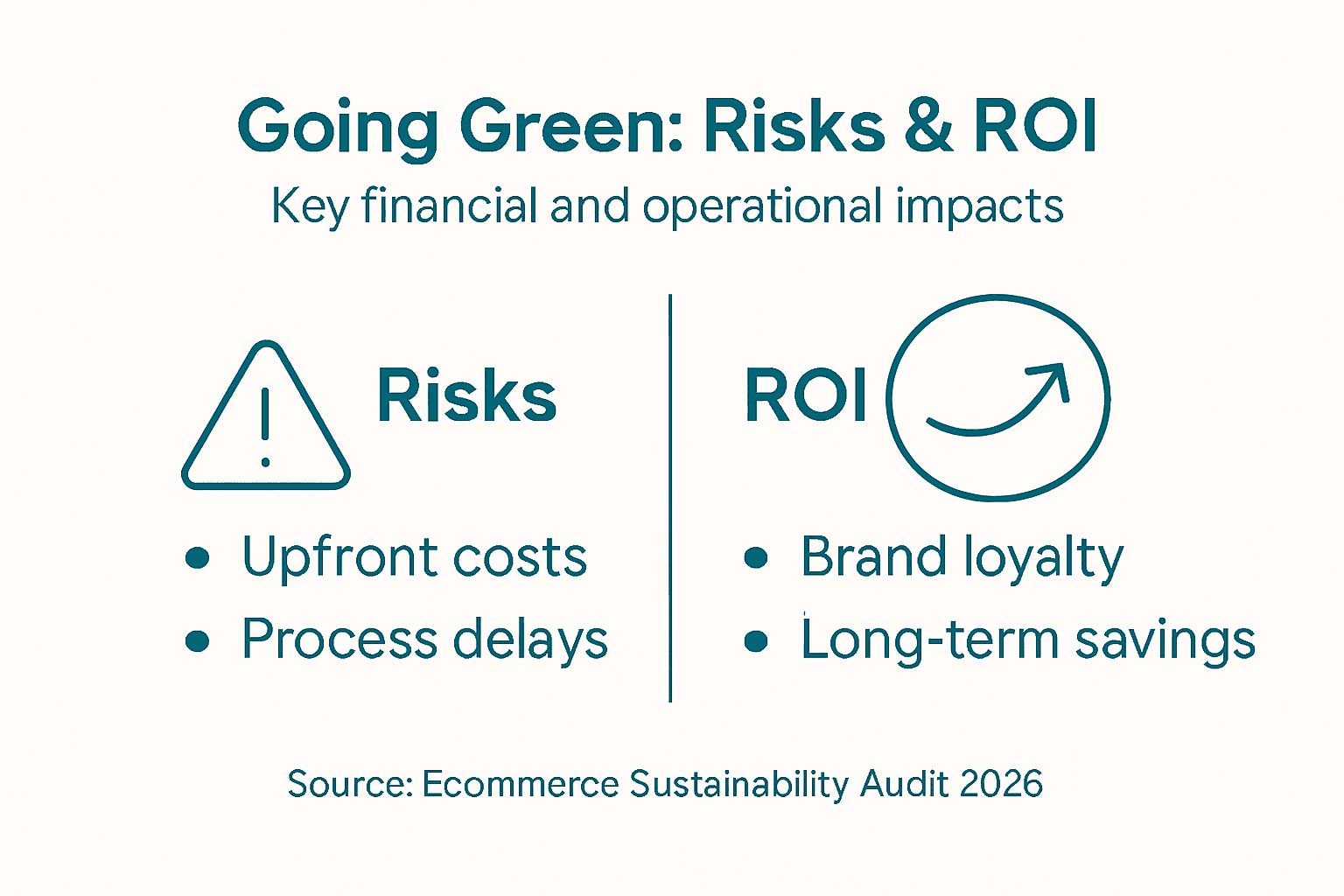
Risks, Costs, and ROI of Going Green
Implementing sustainable practices requires a nuanced understanding of the financial implications and strategic considerations. Sustainable business transformation involves carefully analyzing potential risks, upfront costs, and long-term returns on investment.
Key financial considerations for green initiatives include:
- Initial Capital Expenditure: Technology investments and infrastructure upgrades
- Operational Transition Costs: Training, process redesign, and system modifications
- Supply Chain Reconfiguration: Expenses related to sustainable sourcing and partnerships
- Potential Revenue Opportunities: Enhanced brand reputation and customer loyalty
- Regulatory Compliance Investments: Avoiding penalties and meeting emerging standards
While the upfront costs can seem substantial, businesses are increasingly recognizing that sustainability is not just an expense, but a strategic investment with measurable financial benefits. The most successful organizations view green initiatives as opportunities for innovation, efficiency, and competitive differentiation.
Sustainability is not a cost center, but a value creation strategy.
Strategic approaches to managing green investment risks include:
- Conducting comprehensive financial impact assessments
- Implementing phased implementation strategies
- Identifying measurable key performance indicators
- Exploring government incentives and tax credits
- Developing flexible adaptation mechanisms
Pro tip: Create a dedicated sustainability ROI tracking system that quantifies both direct financial returns and indirect benefits like brand reputation and risk mitigation.
Common Pitfalls and How to Avoid Them
Sustainability efforts in business operations often encounter significant challenges that can undermine their effectiveness and credibility. Sustainable business practices require a strategic and holistic approach to overcome common implementation barriers.
Primary sustainability pitfalls include:
- Greenwashing: Making superficial environmental claims without substantive changes
- Fragmented Implementation: Treating sustainability as an isolated initiative rather than a comprehensive strategy
- Insufficient Data Tracking: Lack of robust metrics and accountability mechanisms
- Limited Stakeholder Engagement: Failing to involve employees, suppliers, and customers
- Short-Term Thinking: Prioritizing immediate financial gains over long-term sustainability goals
Successful organizations recognize that sustainable transformation requires deep organizational commitment, systemic thinking, and continuous improvement. These approaches go beyond surface-level changes, embedding sustainability into core business processes and cultural values.
Meaningful sustainability is about fundamental organizational transformation, not cosmetic adjustments.
Strategies for avoiding common sustainability pitfalls include:
- Developing comprehensive sustainability frameworks
- Creating cross-functional accountability teams
- Implementing rigorous performance measurement systems
- Fostering a culture of continuous learning
- Maintaining transparency and authentic communication
Pro tip: Conduct regular sustainability audits that assess both quantitative performance metrics and qualitative cultural indicators to ensure holistic and genuine sustainable development.
Elevate Your Ecommerce Sustainability with Reliable Courier Services
The challenges of embedding sustainability into ecommerce operations are real and complex. From minimizing carbon emissions in logistics to ensuring transparent supply chain practices and seamless automation, businesses need a partner who understands these demands. If you are striving to balance environmental responsibility with operational efficiency and customer satisfaction, or-ner.com offers tailored logistics solutions built precisely for ecommerce sellers aiming to make a measurable impact.
Our platform supports sustainable business goals with features like real-time shipment tracking, cross-border logistics optimization, and a global network of eco-conscious warehouses. By integrating green technology and reliable courier services, we enable you to reduce your carbon footprint while maintaining fast and scalable delivery workflows. Discover how our end-to-end fulfillment services turn sustainability intentions into actionable outcomes without sacrificing growth or compliance.
Take control of your ecommerce sustainability journey today with or-ner.com.

Explore the future of responsible ecommerce by choosing reliable courier services designed for sustainability and efficiency. Connect with us now to streamline your operations, enhance cross-border trade, and exceed evolving regulatory demands while driving long-term value.
Frequently Asked Questions
What is sustainability in business operations?
Sustainability in business operations refers to a strategic approach that integrates economic, social, and environmental responsibilities, aiming for long-term viability while minimizing ecological impact and promoting fair practices.
How can e-commerce businesses implement sustainable logistics practices?
E-commerce businesses can adopt sustainable logistics practices by utilizing green transportation, optimizing packaging, tracking carbon emissions, integrating renewable energy, and developing circular economy approaches for product reuse.
What technologies can aid in achieving sustainability in business operations?
Technologies such as IoT for real-time monitoring, artificial intelligence for resource optimization, machine learning for logistics efficiency, and cloud computing for reducing infrastructure impact can significantly enhance sustainability efforts.
What are the financial implications of adopting sustainable practices?
Adopting sustainable practices involves initial capital expenditures and operational transition costs, but it can lead to long-term benefits such as enhanced brand reputation, regulatory compliance, and new revenue opportunities, making it a strategic investment rather than just an expense.
Recommended
- Just in Time Delivery: Essential Guide for 2025 Success – ORNER
- What Is Same Day Delivery? 2025 Guide for Online Retailers – ORNER
- What Is Freight Forwarding? Guide for Modern Supply Chains 2025 – ORNER
- Green Logistics Strategies: Complete Guide for Ecommerce – ORNER
- Community-Based Movers Explained: Why Local Roots Matter