Supply chain disruptions cost American ecommerce businesses over 50 billion dollars each year, with unexpected risks threatening even the most established brands. In the fast-paced world of online retail, making smart decisions often hinges on understanding where vulnerabilities can strike. Learning how to assess and manage these supply chain risks puts American sellers in a stronger position to protect profits and keep customers satisfied even during unpredictable times.
Table of Contents
- Defining Supply Chain Risk Assessment In Ecommerce
- Types Of Risks In Modern Supply Chains
- Key Steps And Tools For Risk Evaluation
- Regulatory Compliance And Industry Standards
- Common Pitfalls And Costly Errors To Avoid
Key Takeaways
| Point | Details |
|---|---|
| Importance of Risk Assessment | Supply chain risk assessment is crucial for ecommerce businesses to identify vulnerabilities and maintain operational resilience. |
| Types of Risks | Modern supply chains face diverse risks, including operational, environmental, technological, geopolitical, economic, and compliance risks. |
| Effective Risk Management | A proactive and comprehensive approach is necessary for risk evaluation and mitigation to ensure supply chain continuity. |
| Compliance and Regulation | Understanding and integrating regulatory compliance is vital for managing risks and maintaining a secure supply chain. |
Defining Supply Chain Risk Assessment in Ecommerce
In the rapidly evolving world of online commerce, supply chain risk assessment has emerged as a critical strategic process for businesses seeking to maintain operational resilience. The National Institute of Standards and Technology defines this approach as a systematic examination of supply chain risks, their likelihoods, and potential impacts, highlighting its fundamental importance in identifying vulnerabilities before they escalate.
For ecommerce businesses, supply chain risk assessment goes beyond traditional inventory management. It represents a comprehensive strategy to anticipate, analyze, and mitigate potential disruptions that could compromise product availability, delivery timelines, and overall customer satisfaction. Supply Chain Risk Management (SCRM) involves identifying, assessing, and mitigating risks associated with the distributed and interconnected nature of modern supply chains, making it an essential practice for online sellers navigating complex global logistics networks.
Effective supply chain risk assessment typically involves several key components:- Comprehensive Risk Identification: Mapping potential vulnerabilities across procurement, transportation, manufacturing, and distribution channels- Quantitative Impact Analysis: Evaluating the potential financial and operational consequences of identified risks- Mitigation Strategy Development: Creating proactive plans to minimize disruption probability and potential negative outcomes- Continuous Monitoring: Implementing real-time tracking and adaptive response mechanisms to address emerging challenges
By integrating robust risk assessment protocols, ecommerce businesses can transform potential supply chain vulnerabilities into strategic opportunities for resilience and competitive advantage.
Types of Risks in Modern Supply Chains
Modern supply chains face an increasingly complex landscape of risks that can significantly disrupt business operations. Technological advancements and digital transformations have introduced multiple new vulnerabilities, including cyber threats, data theft, and systemic network interconnectedness, challenging ecommerce businesses to develop sophisticated risk mitigation strategies.

The range of potential supply chain disruptions is remarkably diverse. According to the Organisation for Economic Co-operation and Development, these risks span from natural catastrophes to intentional human actions. Critical risks include natural disasters like earthquakes and floods, industrial accidents such as fires and explosions, geopolitical tensions, international crises, and deliberate disruptions like terrorist attacks.
Key categories of supply chain risks include:- Operational Risks: Equipment failures, process breakdowns, workforce shortages- Environmental Risks: Natural disasters, climate change impacts, resource scarcity- Technological Risks: Cybersecurity breaches, system incompatibilities, digital infrastructure failures- Geopolitical Risks: Trade restrictions, political instability, international conflicts- Economic Risks: Currency fluctuations, market volatility, sudden economic downturns- Compliance Risks: Regulatory changes, legal framework modifications, international trade policy shifts
Successful risk management requires a proactive, comprehensive approach that anticipates potential disruptions and develops flexible, adaptive strategies to maintain supply chain resilience and operational continuity.
Key Steps and Tools for Risk Evaluation
Supply chain risk evaluation requires a systematic and comprehensive approach to identifying, analyzing, and mitigating potential vulnerabilities. Thorough risk assessments help organizations identify critical systems and components that demand additional protective measures, including analyzing events such as disruptions, defective components, counterfeits, and potential security threats.
The process of risk evaluation involves multiple strategic steps designed to create a robust defense mechanism. Cybersecurity and infrastructure experts recommend conducting detailed assessments of hardware and software acquisitions to uncover potential risks like vendor insolvency, cyber terrorism, malware infiltration, and advanced persistent threats, enabling businesses to develop targeted mitigation strategies.
Key steps in effective supply chain risk evaluation include:- Comprehensive Data Collection: Gather detailed information about suppliers, logistics networks, and technological infrastructure- Risk Identification: Map potential vulnerabilities across procurement, transportation, and digital systems- Threat Probability Analysis: Quantify the likelihood and potential impact of identified risks- Vulnerability Scoring: Develop a systematic method for ranking and prioritizing risks- Mitigation Strategy Development: Create actionable plans to address and minimize identified vulnerabilities- Continuous Monitoring: Implement real-time tracking and adaptive response mechanisms
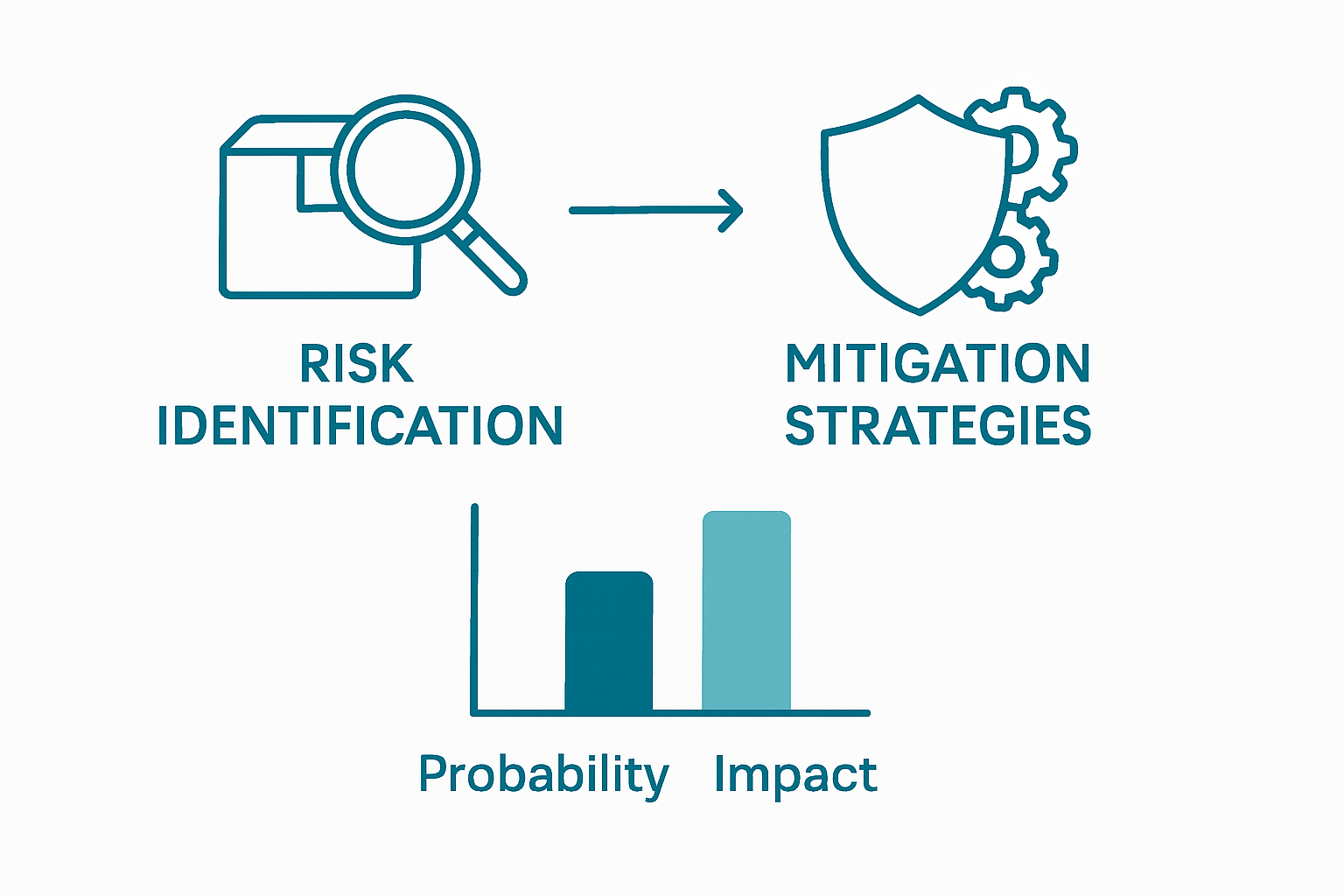
Successful risk evaluation is not a one-time event but a dynamic, ongoing process that requires continuous adaptation, technological awareness, and proactive strategic planning to maintain supply chain resilience in an increasingly complex global business environment.
Regulatory Compliance and Industry Standards
Supply chain regulatory compliance represents a critical framework for managing potential risks and maintaining operational integrity. The National Institute of Standards and Technology defines supply chain risk as a complex ecosystem of potential exposures, threats, and vulnerabilities that require systematic management and proactive mitigation strategies.
Navigating the intricate landscape of industry standards demands a comprehensive approach that goes beyond simple checklist compliance. Organizations must integrate robust risk management frameworks that ensure secure sourcing, adherence to regulatory requirements, and continuous monitoring of potential vulnerabilities, creating a holistic strategy for maintaining supply chain security and reliability.
Key components of effective regulatory compliance include:- Legal Framework Understanding: Comprehensively map relevant national and international regulations- Documentation Management: Maintain rigorous, transparent records of supply chain processes- Vendor Compliance Assessment: Regularly evaluate and validate supplier regulatory adherence- Risk Mitigation Protocols: Develop flexible strategies for addressing potential compliance gaps- Continuous Education: Keep teams updated on evolving regulatory landscapes- Technology Integration: Implement advanced tracking and reporting systems to ensure real-time compliance monitoring
Successful regulatory compliance is not merely about avoiding penalties, but about building a resilient, transparent, and trustworthy supply chain ecosystem that can adapt to increasingly complex global business environments.
Common Pitfalls and Costly Errors to Avoid
Supply chain management demands meticulous attention to detail and proactive risk mitigation. Legal and compliance risks represent significant potential vulnerabilities, including complex challenges such as sanctions, export controls, tariffs, customs compliance, anti-bribery regulations, and potential human rights violations, which can result in substantial financial and reputational damage.
Operational risks pose another critical set of challenges, encompassing production issues, equipment breakdowns, human errors, and inefficiencies that can dramatically disrupt supply chain performance. These potential pitfalls can lead to unexpected delays, escalating costs, and compromised product quality.
Common supply chain errors to vigilantly avoid include:- Insufficient Vendor Screening: Failing to thoroughly evaluate supplier backgrounds and capabilities- Inadequate Risk Documentation: Not maintaining comprehensive records of potential vulnerabilities- Poor Communication Protocols: Allowing information silos between supply chain stakeholders- Neglecting Contingency Planning: Operating without robust backup strategies- Overlooking Compliance Updates: Ignoring evolving regulatory requirements- Technology Integration Gaps: Resisting technological modernization and automation
Successful supply chain management requires constant vigilance, adaptive strategies, and a commitment to continuous improvement, transforming potential risks into opportunities for operational excellence.
Strengthen Your Ecommerce Supply Chain with Reliable Courier Services
Supply chain risk assessment shows that ecommerce companies face complex challenges like disruptions, compliance issues, and operational inefficiencies which can threaten timely delivery and customer satisfaction. Key pain points include forecasting risks, managing vendor reliability, and maintaining compliance with regulations. At Or-Ner, we understand the critical need for reliable courier services and end-to-end logistics solutions that reduce disruption impact and boost resilience across your supply chain.
Take control of your ecommerce logistics today with Or-Ner’s comprehensive platform. Benefit from real-time shipment tracking, customs clearance expertise, and a global network of warehouses designed to keep your operations scalable and flexible. Don’t let supply chain risks slow your growth. Visit Or-Ner to explore trusted solutions crafted for businesses like yours. Discover how our reliable courier services and integrated fulfillment support can safeguard your supply chain now.
Frequently Asked Questions
What is supply chain risk assessment in ecommerce?
Supply chain risk assessment in ecommerce is a systematic examination of potential risks, their likelihood, and possible effects, aimed at identifying vulnerabilities and mitigating disruptions that can affect product availability and customer satisfaction.
What are the types of risks associated with modern supply chains?
Modern supply chains face various risks, including operational risks (e.g., equipment failures), environmental risks (e.g., natural disasters), technological risks (e.g., cybersecurity breaches), geopolitical risks (e.g., trade restrictions), economic risks (e.g., currency fluctuations), and compliance risks (e.g., regulatory changes).
How can ecommerce businesses evaluate supply chain risks effectively?
Ecommerce businesses can evaluate supply chain risks by conducting comprehensive data collection, identifying vulnerabilities, analyzing the probability and impact of threats, prioritizing risks, developing mitigation strategies, and continuously monitoring the supply chain environment.
Why is regulatory compliance important in supply chain risk management?
Regulatory compliance is crucial for maintaining operational integrity and security in supply chain risk management. It ensures that businesses adhere to relevant regulations, manage potential exposures effectively, and maintain a transparent and trustworthy supply chain ecosystem.
Recommended
- Just in Time Delivery: Essential Guide for 2025 Success – ORNER
- Top Benefits of Freight Forwarding for Growing Businesses 2025 – ORNER
- Understanding Supply Chain Risk Management for Businesses – ORNER
- Global Supply Chain Risks: Challenges and Smart Solutions – ORNER
- Confidential Waste Risk Management: Essential Guide for UK Businesses 2025 – Venture Waste