Most consumers would be surprised to learn that over 80 percent of global brands have faced ethical risks in their supply chains. Responsible sourcing, fair labor, and sustainability now shape the expectations of both customers and investors. As supply chains stretch across continents, misconceptions remain about the true cost and value of ethical practices. Understanding the real principles behind supply chain ethics helps businesses protect their reputation, reduce risks, and build lasting trust in a fast-changing world.
Table of Contents
- Defining Supply Chain Ethics And Misconceptions
- Types Of Ethical Issues In Supply Chains
- Key Principles And Global Standards
- Real-World Examples Of Ethical Supply Chains
- Compliance, Obligations, And Legal Risks
Key Takeaways
| Point | Details |
|---|---|
| Ethical Supply Chain Management | Involves fair, transparent, and sustainable practices throughout sourcing and production, focusing on environmental sustainability and corporate social responsibility. |
| Common Ethical Challenges | Organizations face labor violations, environmental degradation, wage inequity, and corruption, requiring robust strategies to mitigate these issues. |
| Global Standards | Effective ethical management aligns with principles of human rights protection, environmental safeguards, and anti-corruption measures to build competitive advantages. |
| Legal Compliance | Companies must proactively manage legal risks linked to ethics, incorporating continuous improvement strategies to protect against potential violations and reputational damage. |
Defining Supply Chain Ethics and Misconceptions
Supply chain ethics represents a complex landscape of responsible business practices that go far beyond simple transactional relationships. Ethical supply chain management is fundamentally about ensuring fair, transparent, and sustainable processes from sourcing raw materials to delivering final products to consumers. According to icttm.org, this approach emphasizes critical elements like environmental sustainability, corporate social responsibility, and transparent supplier relationships.
At its core, supply chain ethics involves multiple interconnected considerations. Key focus areas include:
- Ensuring safe working conditions for all laborers
- Providing fair wages across production networks
- Minimizing environmental impact through responsible resource utilization
- Maintaining transparent communication with suppliers and stakeholders
- Implementing robust accountability mechanisms
Many organizations mistakenly believe that implementing ethical supply chain practices is prohibitively expensive or operationally complex. As nonprofitquarterly.org explains, this misconception overlooks the substantial long-term benefits of ethical management. Companies that prioritize ethical practices often experience improved brand reputation, increased customer loyalty, reduced operational risks, and more resilient supplier relationships.
The evolution of global commerce demands a proactive approach to supply chain ethics. Modern businesses cannot afford to view ethical considerations as optional or peripheral. Instead, they must integrate responsible practices into their core strategic planning, recognizing that transparency, fairness, and sustainability are not just moral imperatives but critical competitive advantages in today’s interconnected global marketplace.
Types of Ethical Issues in Supply Chains
Supply chain ethics encompasses a wide range of complex challenges that organizations must navigate carefully and strategically. According to openstax.org, these challenges fundamentally involve balancing consumer demands with maintaining rigorous ethical standards across global production networks.
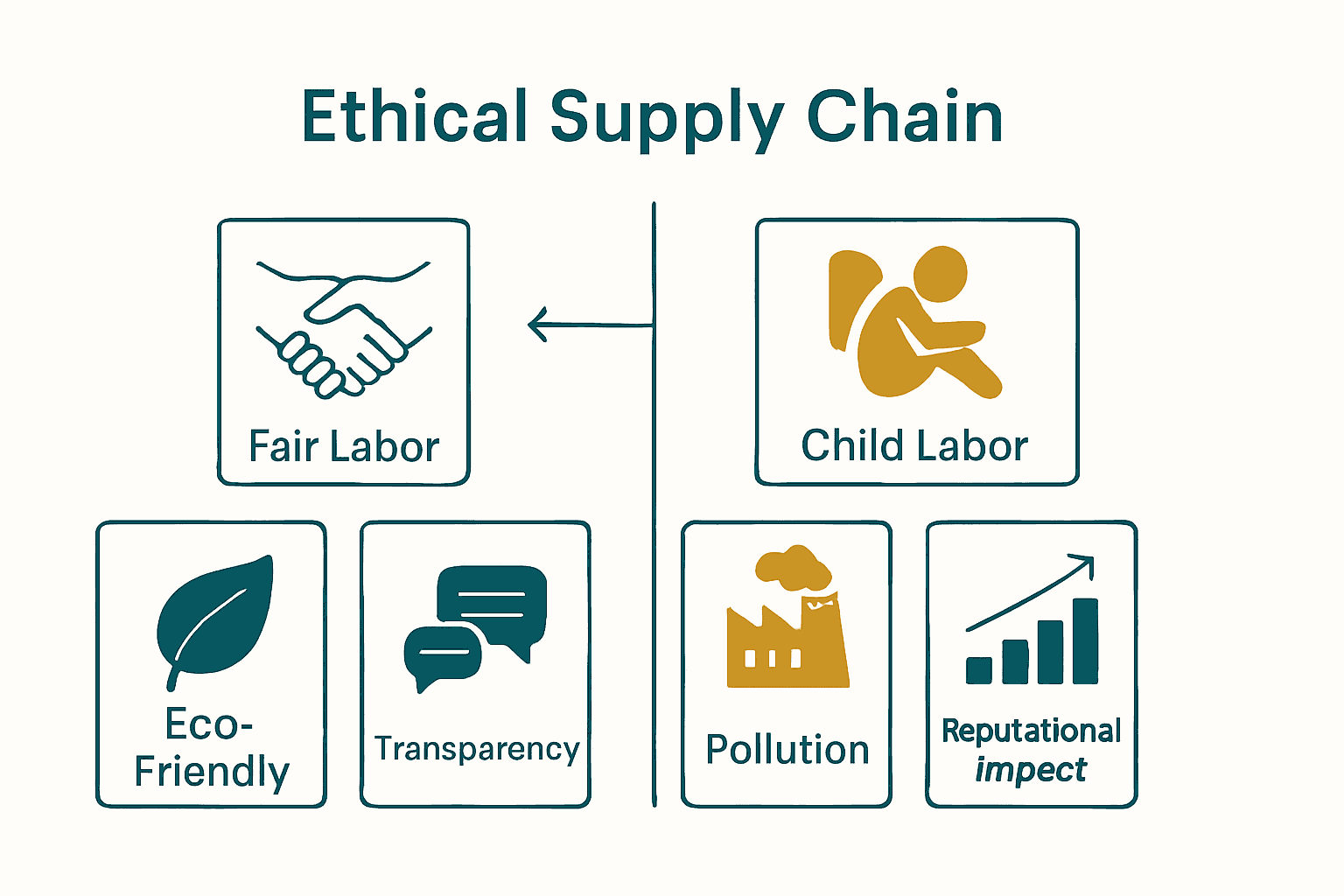
The most prevalent ethical issues in supply chains can be categorized into several critical areas:
- Labor Rights Violations: Preventing exploitative working conditions
- Environmental Degradation: Minimizing ecological damage from production processes
- Forced and Child Labor: Ensuring no workforce includes involuntary or underage workers
- Wage Inequity: Maintaining fair compensation across international supply networks
- Corruption and Bribery: Eliminating unethical financial practices
As apu.edu highlights, addressing these challenges requires comprehensive strategies. Organizations must implement robust codes of conduct, conduct regular supplier audits, and provide ongoing training to ensure ethical standards are consistently met. Proactive management involves not just identifying potential issues, but creating systemic approaches to prevention and accountability.

Moreover, modern supply chain ethics extends beyond compliance. Successful companies recognize that ethical practices are not just moral obligations but strategic advantages. By prioritizing transparency, human rights, and environmental sustainability, businesses can build stronger relationships with consumers, investors, and global partners who increasingly demand responsible corporate behavior.
Key Principles and Global Standards
Ethical supply chain management is guided by a comprehensive set of principles that transcend traditional business practices. According to icttm.org, these principles fundamentally revolve around environmental sustainability, transparency, fair trade practices, and social responsibility. Organizations committed to ethical supply chains must develop robust frameworks that integrate these core values into every aspect of their operational strategy.
The key global standards for ethical supply chain management typically encompass:
- Comprehensive human rights protection
- Strict environmental conservation measures
- Transparent financial reporting
- Fair labor compensation and working conditions
- Rigorous anti-corruption protocols
- Regular independent supply chain audits
- Continuous improvement mechanisms
As businessstories.sandiego.edu emphasizes, implementing these standards requires more than theoretical commitment. Companies must develop practical strategies including detailed supplier assessments, third-party certifications, and systematic monitoring processes. These approaches ensure that ethical standards are not just documented, but actively enforced throughout complex global supply networks.
Ultimately, global standards in supply chain ethics represent a dynamic ecosystem of accountability.
They demand a holistic approach that balances economic efficiency with human dignity, environmental stewardship, and long-term sustainable development. Successful organizations recognize that these principles are not constraints, but opportunities to build more resilient, innovative, and respected business models that create value for all stakeholders.
Real-World Examples of Ethical Supply Chains
Leading companies around the globe are demonstrating that ethical supply chain management is not just a theoretical concept, but a practical and transformative business strategy. According to incit.org, Patagonia stands out as a prime example of comprehensive ethical supply chain practices, meticulously assessing and minimizing the environmental footprint of its entire product lifecycle.
Some remarkable examples of ethical supply chain implementation include:
- Patagonia: Pioneering sustainable material sourcing and transparent production processes
- Unilever: Committed to 100% sustainable sourcing and reducing carbon emissions
- Eileen Fisher: Implementing circular fashion models with recycled and organic materials
- IKEA: Investing in renewable energy and responsible forestry practices
- Ben & Jerry’s: Ensuring fair trade and sustainable agricultural practices
As businessstories.sandiego.edu highlights, these companies are not just pursuing ethical practices out of moral obligation, but recognizing substantial business advantages. By choosing suppliers who use renewable energy, redesigning packaging to reduce waste, and implementing rigorous sustainability standards, these organizations are creating more resilient, innovative, and competitive business models.
These real-world examples demonstrate that ethical supply chain management is a strategic imperative. Companies that embrace transparency, sustainability, and social responsibility are not only mitigating risks but also creating significant value. They are proving that economic success and ethical principles are not mutually exclusive, but can be powerfully integrated to drive meaningful global change.
Compliance, Obligations, and Legal Risks
Navigating the complex landscape of supply chain compliance requires a comprehensive understanding of legal frameworks and potential risks. According to weforum.org, supply chain disruptions can rapidly escalate into significant legal vulnerabilities, particularly when organizations fail to establish robust ethical codes of conduct and proactive risk management strategies.
Key compliance obligations and potential legal risks include:
- Violations of international labor standards
- Environmental regulation non-compliance
- Human rights infringement penalties
- Data privacy and protection breaches
- Anti-corruption and bribery legal consequences
- Intellectual property protection failures
- Product safety and quality regulation violations
As ethicaltrade.org emphasizes, consumer demand for low-cost goods can inadvertently create substantial legal pressure points within supply networks. Organizations must develop progressive and transparent procurement strategies that not only mitigate risks but also demonstrate a genuine commitment to ethical practices.
Ultimately, legal compliance in supply chain management is not a static checklist but a dynamic, ongoing process of assessment, adaptation, and continuous improvement. Companies must invest in comprehensive legal frameworks, regular audits, and proactive risk management to protect themselves from potential litigation, reputational damage, and significant financial penalties. The most successful organizations view legal compliance not as a burden, but as an opportunity to build more resilient, transparent, and trustworthy business ecosystems.
Build an Ethical Supply Chain with Reliable Courier Services
Navigating the complex demands of supply chain ethics means committing to transparency, fair labor practices, and sustainability throughout your operations. Yet maintaining these standards can feel overwhelming when logistics challenges threaten timely deliveries or obscure visibility creates uncertainty. You need partners who understand that ethical supply chain management goes beyond compliance — it is about building trust and resilience at every stage of your fulfillment journey.
Discover how Reliable courier services from Or-Ner empower ecommerce sellers and global brands to uphold the highest ethical standards with full transparency and real-time shipment tracking. From seamless freight booking to cross-border logistics and inventory management, Or-Ner offers scalable, data-driven solutions that reduce risk and promote responsible sourcing. Act now to strengthen your supply chain integrity by partnering with professionals who prioritize sustainability, fairness, and accountability. Explore trusted logistics strategies by visiting Or-Ner’s platform today and create a supply chain you can be proud of.
Frequently Asked Questions
What is supply chain ethics?
Supply chain ethics refers to responsible business practices that ensure fair, transparent, and sustainable processes in managing the supply chain, from sourcing materials to delivering products.
Why is ethical supply chain management important?
Ethical supply chain management improves brand reputation, increases customer loyalty, reduces operational risks, and fosters more resilient supplier relationships, ultimately providing a competitive advantage.
What are common ethical issues faced in supply chains?
Common ethical issues include labor rights violations, environmental degradation, forced and child labor, wage inequity, and corruption and bribery.
How can companies ensure compliance with supply chain ethics?
Companies can ensure compliance by implementing codes of conduct, conducting regular supplier audits, providing ongoing training, and integrating ethical principles into their operational strategies.