
Almost every American business faces growing pressure to deliver faster and more accurately in a world where even small delays can mean losing customers. With global logistics networks growing more complex, gaining real-time insight has become a key differentiator. More than 80 percent of American companies now rely on advanced supply chain analytics to drive smarter decisions and cut costs. Explore how these powerful tools change the game for logistics, helping businesses stay agile, efficient, and customer focused.
Table of Contents
- Defining Supply Chain Analytics In Logistics
- Key Types Of Supply Chain Analytics Tools
- How Analytics Improve Delivery Speed And Accuracy
- Cost Savings Through Predictive Analytics
- Risk Reduction And Real-Time Exception Management
- Enhancing Customer Experience With End-To-End Visibility
Key Takeaways
| Point | Details |
|---|---|
| Supply Chain Analytics Enhances Decision-Making | Utilizing advanced data analysis transforms raw data into strategic insights, improving logistics performance and operational efficiency. |
| Key Analytical Approaches | Descriptive, diagnostic, predictive, and prescriptive analytics are essential for understanding logistics dynamics and optimizing supply chain operations. |
| Predictive Analytics for Cost Reduction | By forecasting demand and identifying risks, predictive analytics allows businesses to minimize expenses and streamline supply chain processes. |
| Customer Experience through Transparency | End-to-end visibility in logistics fosters trust and enhances customer satisfaction by enabling real-time updates and personalized communication. |
Defining Supply Chain Analytics in Logistics
Supply chain analytics transforms raw operational data into strategic insights that drive logistics performance. By leveraging advanced data analysis techniques, businesses can understand complex supply chain dynamics and make precise, informed decisions.
According to research from Coursera, supply chain analytics represents the systematic application of data analysis to manage and optimize supply chain operations. This approach goes beyond traditional reporting by enabling businesses to diagnose current challenges, predict future trends, and prescribe targeted actions that enhance overall logistics efficiency.
The core components of supply chain analytics typically include:
- Descriptive Analytics: Understanding what has happened in past logistics operations
- Diagnostic Analytics: Identifying why specific logistics outcomes occurred
- Predictive Analytics: Forecasting potential future supply chain scenarios and risks
- Prescriptive Analytics: Recommending specific strategies to optimize supply chain performance
By integrating these analytical approaches, companies can transform complex logistics data into actionable intelligence. Advanced supply chain analytics tools help organizations track key performance indicators, minimize operational risks, reduce costs, and create more responsive, adaptive logistics networks that can quickly adjust to market changes and customer demands.
Key Types of Supply Chain Analytics Tools
Supply chain analytics tools are sophisticated software platforms designed to transform complex logistics data into actionable strategic insights. These advanced technologies enable businesses to analyze, predict, and optimize their supply chain operations with unprecedented precision and efficiency.
According to research from Coursera, several key analytics platforms have emerged as critical tools for modern logistics management. These include:
- Microsoft Power BI: A powerful visualization and reporting tool that helps organizations create interactive dashboards
- Tableau: An analytics platform known for its robust data visualization capabilities
- SAP Integrated Business Planning: An advanced solution for comprehensive supply chain forecasting
- Oracle Analytics Cloud: A cloud-based platform offering predictive and prescriptive analytics
- Azure Machine Learning: An AI-driven tool for complex predictive modeling
These tools support different analytical approaches, ranging from descriptive analytics that examine historical data to predictive and prescriptive analytics that help businesses anticipate future challenges and develop proactive strategies. By integrating multiple data sources and applying advanced algorithms, supply chain analytics tools enable companies to make data-driven decisions that reduce operational risks, optimize inventory management, and improve overall logistics performance.
How Analytics Improve Delivery Speed and Accuracy
Delivery performance is critical for ecommerce success, and supply chain analytics provides unprecedented capabilities to optimize logistics operations. Modern businesses are transforming their delivery strategies by leveraging sophisticated data analysis techniques that dramatically enhance speed and accuracy.
Predictive analytics enables businesses to forecast potential disruptions and proactively adjust logistics strategies. By analyzing historical data patterns, companies can anticipate demand fluctuations, optimize routing algorithms, and create more responsive delivery networks that minimize delays and improve overall customer satisfaction.
Key strategies for improving delivery performance through analytics include:
- Route Optimization: Using machine learning to identify the most efficient delivery paths
- Demand Forecasting: Predicting inventory requirements and potential supply chain bottlenecks
- Real-Time Tracking: Monitoring shipments with granular precision to prevent potential delays
- Performance Benchmarking: Comparing delivery metrics across different transportation channels and providers
These analytical approaches allow ecommerce businesses to create intelligent, adaptive logistics systems that continuously learn and improve. By integrating advanced data analysis techniques, companies can reduce delivery times, minimize transportation costs, and create more predictable, reliable shipping experiences that meet and exceed customer expectations.
Cost Savings Through Predictive Analytics
Predictive analytics represents a powerful financial strategy for ecommerce businesses seeking to minimize operational expenses and optimize resource allocation. By transforming complex data into actionable insights, companies can dramatically reduce unnecessary spending and create more efficient supply chain management approaches.

Predictive analytics enables businesses to anticipate future demand and potential supply chain disruptions, allowing for strategic cost reduction across multiple operational dimensions. This proactive approach helps organizations make precise procurement decisions, minimize inventory waste, and streamline production processes.
Key cost-saving strategies enabled by predictive analytics include:
- Inventory Optimization: Reducing excess stock and associated holding costs
- Demand Forecasting: Preventing overproduction and minimizing wastage
- Supplier Performance Management: Identifying and addressing inefficient vendor relationships
- Transportation Cost Reduction: Optimizing shipping routes and carrier selection
By implementing sophisticated predictive analytics tools, businesses can transform raw data into a strategic asset. These advanced techniques not only identify potential cost-saving opportunities but also create more resilient, adaptable supply chain models that can quickly respond to changing market conditions and minimize financial risks.
Risk Reduction and Real-Time Exception Management
Supply chain risk management represents a critical strategic imperative for modern ecommerce businesses navigating increasingly complex global logistics networks. Advanced analytics technologies provide unprecedented capabilities to identify, predict, and mitigate potential operational disruptions before they escalate into significant challenges.
Real-time exception management enables businesses to proactively identify potential supply chain risks and develop sophisticated contingency strategies. By leveraging predictive modeling and sophisticated data analysis techniques, organizations can create adaptive systems that quickly detect anomalies, assess potential impacts, and implement immediate corrective actions.
Key risk reduction strategies through advanced analytics include:
- Predictive Risk Modeling: Identifying potential disruption scenarios before they occur
- Anomaly Detection: Monitoring supply chain performance for unexpected variations
- Scenario Planning: Developing multiple contingency approaches for different risk environments
- Supplier Risk Assessment: Evaluating and ranking vendor reliability and performance
These advanced analytical approaches transform risk management from a reactive process into a proactive, intelligence-driven strategy. By continuously monitoring complex logistics networks and integrating machine learning algorithms, businesses can create more resilient, responsive supply chains that can rapidly adapt to unexpected challenges and minimize potential operational and financial impacts.
Enhancing Customer Experience with End-to-End Visibility
Supply chain transparency has become a critical differentiator for modern ecommerce businesses seeking to build trust and deliver exceptional customer experiences. By creating comprehensive, real-time visibility across all logistics operations, companies can transform traditional transactional relationships into dynamic, engaging customer interactions.
Supply chain analytics provides comprehensive end-to-end visibility by integrating data across multiple operational stages, enabling businesses to monitor and optimize each touchpoint of the customer journey. This holistic approach allows companies to provide precise, proactive communication and create more predictable, reliable delivery experiences.
Key strategies for enhancing customer experience through end-to-end visibility include:
- Real-Time Tracking: Offering customers precise, moment-by-moment shipment updates
- Predictive Notifications: Proactively communicating potential delays or issues
- Transparent Performance Reporting: Providing clear insights into delivery timelines
- Personalized Communication: Tailoring delivery information to individual customer preferences
By implementing advanced analytics-driven visibility solutions, businesses can create more responsive, customer-centric logistics networks. These sophisticated systems not only provide transparency but also demonstrate a commitment to customer satisfaction, transforming complex supply chain operations into compelling, trust-building experiences that differentiate brands in a competitive ecommerce landscape.
Unlock Ecommerce Success with Reliable Courier Services and Advanced Supply Chain Analytics
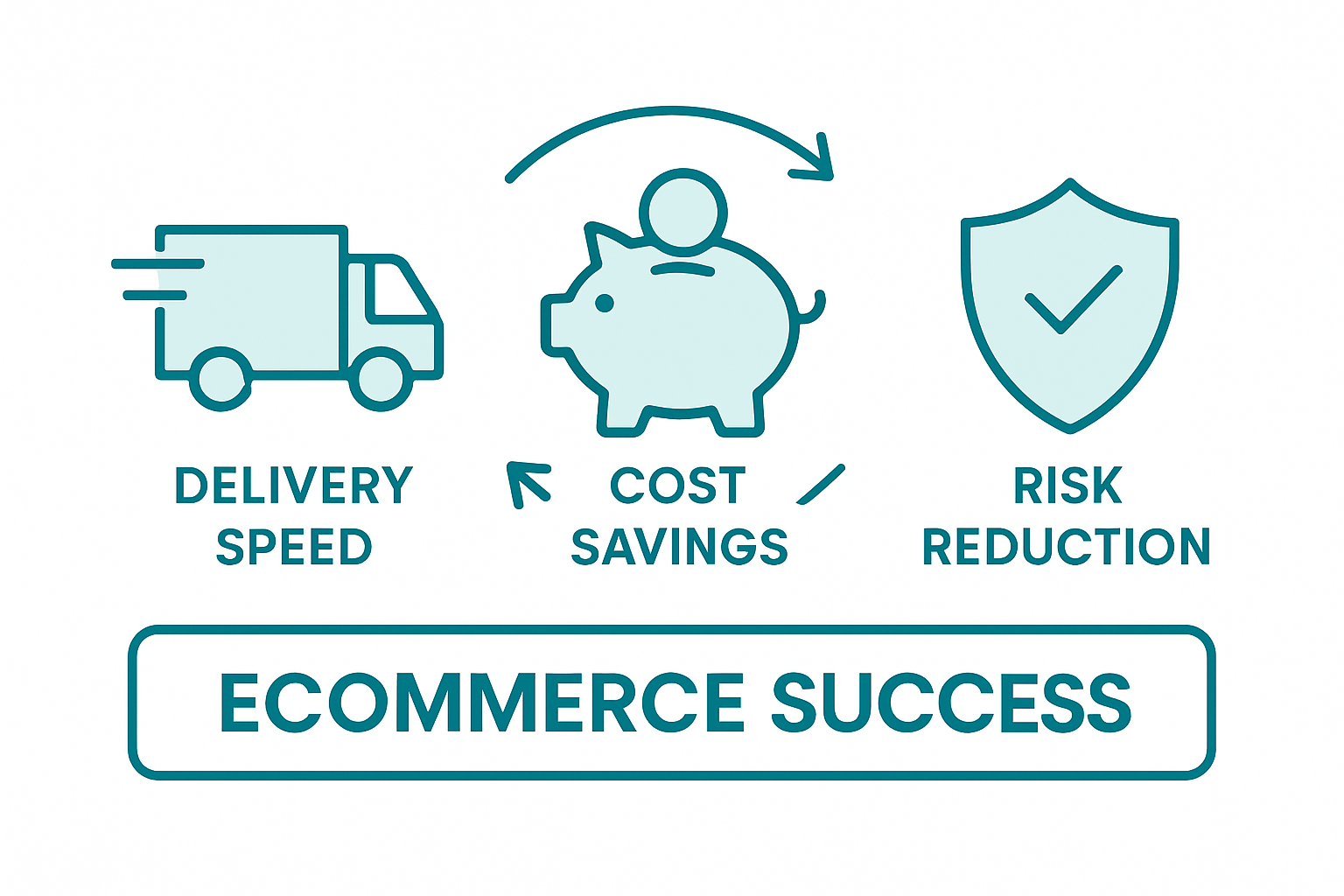
The article highlights key challenges like delivery speed, cost management, risk mitigation, and end-to-end visibility that ecommerce businesses face. By leveraging supply chain analytics tools such as predictive modeling and real-time tracking, companies can transform these challenges into competitive advantages. If you aim to boost delivery accuracy, reduce operational costs, and create transparent, responsive logistics networks, aligning with a partner who offers integrated solutions is vital.
At or-ner.com, we specialize in providing ecommerce sellers with comprehensive logistics services including reliable courier services that support seamless freight booking, real-time shipment tracking, and customs clearance. Our platform empowers you with data-driven insights and exception management tools to proactively manage supply chain risks while enhancing customer experience across all transport modes.
Experience smarter supply chain management tailored for your business.
Explore how our end-to-end solutions can elevate your ecommerce logistics. Visit our homepage now to streamline your supply chain with trusted reliable courier services and unlock operational efficiency through actionable analytics.
Frequently Asked Questions
What is supply chain analytics?
Supply chain analytics involves the systematic application of data analysis to optimize supply chain operations, helping businesses diagnose challenges, predict trends, and prescribe actions for improved logistics efficiency.
How can supply chain analytics improve delivery speed and accuracy?
By utilizing predictive analytics, businesses can forecast demand fluctuations, optimize delivery routes, and monitor shipments in real time, resulting in reduced delays and enhanced customer satisfaction.
What are the key tools used in supply chain analytics?
Key tools include Microsoft Power BI for reporting, Tableau for data visualization, SAP Integrated Business Planning for forecasting, Oracle Analytics Cloud for predictive analytics, and Azure Machine Learning for advanced modeling.
How does predictive analytics lead to cost savings in logistics?
Predictive analytics helps businesses anticipate demand and identify inefficiencies, enabling strategic inventory management, reduced waste, and optimized procurement processes that ultimately lower operational costs.