

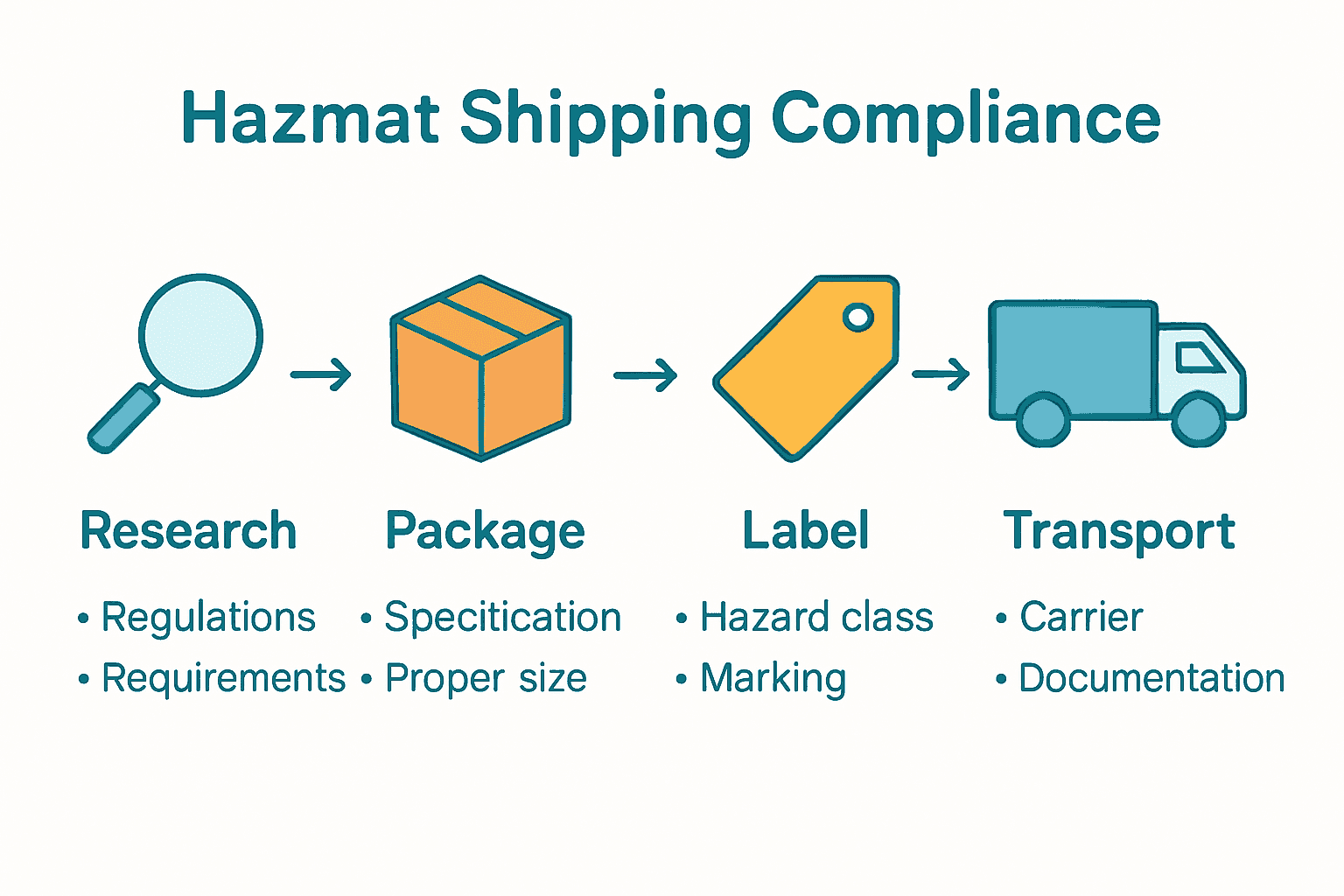
Each year, more than 1.6 billion tons of hazardous materials are shipped across the United States. That means every misstep in handling or documentation brings real danger and legal risk. If you work with these materials, knowing the exact steps for safe shipping protects people, property, and your business from costly mistakes. This guide shows you how to identify, package, label, and transport hazardous shipments with full compliance and peace of mind.
Table of Contents
- Step 1: Identify and Classify Hazardous Materials
- Step 2: Prepare Appropriate Packaging and Documentation
- Step 3: Label and Mark Packages Accurately
- Step 4: Select Certified Carriers and Arrange Transport
- Step 5: Verify Compliance Before Dispatch
Quick Summary
| Key Point | Explanation |
|---|---|
| 1. Accurately classify hazardous materials | Proper classification prevents legal issues and ensures safety during transport. Review characteristics of substances thoroughly before classifying them. |
| 2. Follow packaging and documentation standards | Use leak-proof and chemically resistant packaging while ensuring all required shipping documents are complete and accurate. This avoids fines and shipping delays. |
| 3. Ensure accurate labeling of packages | Labels must clearly display hazard class, UN number, and handling instructions. Proper labeling promotes safety and regulatory compliance during transport. |
| 4. Select certified carriers for transport | Choose carriers with valid HazMat certifications and relevant experience to mitigate risks associated with transport and ensure compliance. |
| 5. Conduct final compliance verification | Before dispatch, verify all aspects, including classification, packaging, labeling, and documentation. This final check helps prevent serious transportation issues. |
Step 1: Identify and Classify Hazardous Materials
In this critical step, you will learn how to accurately identify and classify hazardous materials for safe shipping. Understanding these classifications is essential for legal compliance and preventing potential transportation risks.
According to the Federal Motor Carrier Safety Administration, hazardous materials are systematically categorized into nine distinct classes defined under 49 CFR Part 172. These classes help shippers and carriers quickly understand the specific risks associated with different substances. The primary classifications include:
- Explosives
- Compressed gases
- Flammable liquids
- Flammable solids
- Oxidizing substances
- Toxic materials
- Radioactive materials
- Corrosive materials
- Miscellaneous dangerous goods
To properly classify your materials, start by reviewing the specific characteristics of your substance. Check its physical state, chemical properties, and potential reactivity. HSI recommends consulting multiple regulatory bodies like OSHA, EPA, and DOT to ensure comprehensive understanding.
Warning: Misclassification can result in significant legal penalties, potential safety hazards, and shipping restrictions. When in doubt, consult a certified hazardous materials expert who can provide definitive guidance for your specific substance.
Once you have accurately identified and classified your materials, you will be ready to move forward with proper packaging and documentation requirements in the next step of the shipping process.
Step 2: Prepare Appropriate Packaging and Documentation
In this critical step, you will learn how to correctly package and document hazardous materials for safe and compliant shipping. Proper preparation is essential to prevent potential transportation risks and legal complications.
According to the Federal Motor Carrier Safety Administration, preparing hazardous materials for shipment requires meticulous attention to packaging standards and documentation requirements. You will need to select packaging materials that can safely contain your specific hazardous substance while meeting regulatory specifications. This involves choosing containers that are:
- Leak proof
- Chemically resistant
- Structurally sound
- Appropriate for the specific material class
- Capable of withstanding potential transportation stresses
The Pipeline and Hazardous Materials Safety Administration emphasizes the importance of comprehensive documentation. Your shipping papers must include detailed information such as:

- UN identification number
- Proper shipping name
- Hazard class
- Packing group
- Total quantity of hazardous material
- Emergency contact information
Warning: Incomplete or incorrect documentation can result in shipment delays, significant fines, and potential safety risks. Always double check your paperwork and packaging before transportation.
With your materials properly packaged and documented, you are now prepared to proceed to the next stage of shipping hazardous materials safely and legally.
Step 3: Label and Mark Packages Accurately
In this crucial step, you will learn how to precisely label and mark hazardous material packages to ensure clear communication of potential risks and regulatory compliance. Accurate labeling is your first line of defense in safe transportation.
According to the Federal Motor Carrier Safety Administration, proper package labeling involves several critical elements that communicate the nature and potential dangers of your hazardous materials. Your labels must clearly display:
- Hazard class identification
- UN identification number
- Proper shipping name
- Orientation arrows for liquid containers
- Handling instructions
- Emergency contact information
When applying labels, pay special attention to placement and visibility. The FMCSA recommends ensuring labels are:
- Placed on a clear background
- Large enough to be easily read
- Positioned away from other markings
- Securely attached to prevent falling off during transit
- Protected from environmental damage
Warning: Improperly labeled packages can lead to serious safety risks, transportation delays, and substantial financial penalties. Always double check your labels for accuracy and compliance before shipping.
With your packages accurately labeled and marked, you are now prepared to move forward in the hazardous materials shipping process, ensuring safety and regulatory adherence at every step.
Step 4: Select Certified Carriers and Arrange Transport
In this essential step, you will learn how to choose a qualified carrier for transporting hazardous materials and arrange safe, compliant transportation. Your selection of a carrier can make the difference between a smooth shipment and potential regulatory complications.
According to the Federal Motor Carrier Safety Administration, selecting a carrier requires careful verification of their hazardous materials transportation credentials. You should thoroughly investigate potential carriers by:
- Confirming their HazMat transportation certification
- Verifying their DOT registration number
- Checking their safety performance history
- Reviewing their specific experience with your material class
- Ensuring they have appropriate insurance coverage
The Pipeline and Hazardous Materials Safety Administration emphasizes the importance of comprehensive carrier documentation. When arranging transport, request and carefully review:
- Carrier’s current HazMat registration certificate
- Detailed transport and handling protocols
- Emergency response plan
- Vehicle inspection and maintenance records
- Driver training documentation
Warning: Choosing an uncertified or inexperienced carrier can result in significant legal penalties, potential safety risks, and shipment interruptions. Always conduct thorough due diligence before finalizing your transportation arrangements.
With a certified carrier selected and transportation details confirmed, you are now prepared to move forward with the final stages of shipping your hazardous materials safely and legally.
Step 5: Verify Compliance Before Dispatch
In this critical final step, you will conduct a comprehensive compliance check to ensure your hazardous materials shipment meets all regulatory requirements before leaving your facility. This meticulous verification process is your last line of defense against potential transportation risks and legal complications.
According to the Department of Transportation, a thorough compliance verification involves systematically reviewing multiple aspects of your shipment. Your final checklist should include:
- Confirming accurate material classification
- Verifying proper packaging integrity
- Double checking all labeling requirements
- Ensuring complete and accurate shipping documentation
- Validating carrier certifications and preparedness
- Reviewing emergency response information
The Pipeline and Hazardous Materials Safety Administration recommends creating a comprehensive pre dispatch verification protocol that includes:
- Physical inspection of packaging
- Cross referencing shipping papers
- Confirming weight and quantity limits
- Reviewing material compatibility
- Verifying driver training and equipment readiness
Warning: Even a single overlooked detail can lead to significant delays, substantial fines, or potentially dangerous transportation scenarios. Treat this verification process as your final critical checkpoint.
Once you have completed this exhaustive compliance verification, your hazardous materials shipment is ready for safe and legal dispatch.
Simplify Your Hazardous Materials Shipping with Reliable Courier Services
Shipping hazardous materials demands precision from classification through packaging, labeling, carrier selection, and compliance verification. With so many regulatory details and safety risks involved, even a small mistake can cause shipment delays, fines, or worse. You need a logistics partner who understands the critical steps outlined in this guide and can support you every step of the way.
Partner with or-ner.com to gain access to end-to-end solutions tailored for shipping hazardous goods safely and legally. Our platform offers reliable courier services that ensure certified carriers handle your packages with care. Manage documentation, track your shipment in real time, and leverage expert support to prevent costly errors before dispatch. Don’t let compliance challenges hold your business back. Visit or-ner.com now to streamline your hazardous materials shipping and stay fully compliant every step of the way.
Frequently Asked Questions
How do I identify and classify hazardous materials for shipping?
You can identify and classify hazardous materials by reviewing the substance’s physical and chemical properties. Begin by checking its state, reactivity, and consulting regulatory resources to categorize it accurately before packing.
What are the requirements for packaging hazardous materials?
Packaging hazardous materials requires using containers that are leak-proof, chemically resistant, and structurally sound. Ensure that your chosen materials comply with regulatory packaging standards to protect both the substances and those transporting them.
What information do I need for shipping documentation?
Your shipping documentation must include specific details, such as the UN identification number, proper shipping name, hazard class, packing group, and total quantity. Compile this information accurately to avoid potential shipment delays or legal complications.
What should I check when labeling hazardous material packages?
When labeling, ensure that each package displays the hazard class, UN identification number, proper shipping name, and emergency contact information clearly. Labels should be adequately placed for visibility and secured against wear during transit.
How can I verify a carrier’s qualifications for transporting hazardous materials?
To verify a carrier’s qualifications, check their hazardous materials transportation certification and DOT registration number. Request their safety performance history and ensure they have specific experience handling your type of hazardous material.
What compliance checks should I perform before dispatching hazardous materials?
Before dispatching, confirm the material classification, packaging integrity, labeling accuracy, and completeness of shipping documentation. Conduct a physical inspection of all these elements to ensure full compliance with regulations to prevent potential risks.