TL;DR:
- Shipping fragile goods safely requires using double-wall boxes with at least two inches of cushioning on all sides to absorb impact. Proper packaging includes filling all voids, labeling the package clearly, and selecting a carrier suited to the product’s weight and value. Most damage results from packaging mistakes rather than carrier mishandling, emphasizing the importance of thorough packing and testing before shipping at scale.
Shipping fragile goods safely is defined as the practice of selecting appropriate packaging materials, applying correct cushioning techniques, and choosing reliable courier services to prevent product damage during transit. For ecommerce sellers, this is not optional. US shipping damage causes roughly $1 billion in annual losses, and the vast majority of those losses are preventable. The right box, two inches of cushioning, and a carrier matched to your product type are the three variables that determine whether your customer receives a working product or files a claim. This guide covers every step, from packing materials to carrier selection, so you can ship fragile items with confidence.
What packaging materials do you need for shipping fragile goods safely?
The foundation of safe fragile shipping is the box itself. Double-wall corrugated boxes sized slightly larger than the item reduce damage risk significantly. The extra space is not wasted. It holds the cushioning layer that absorbs impact during drops, stacking, and vibration.
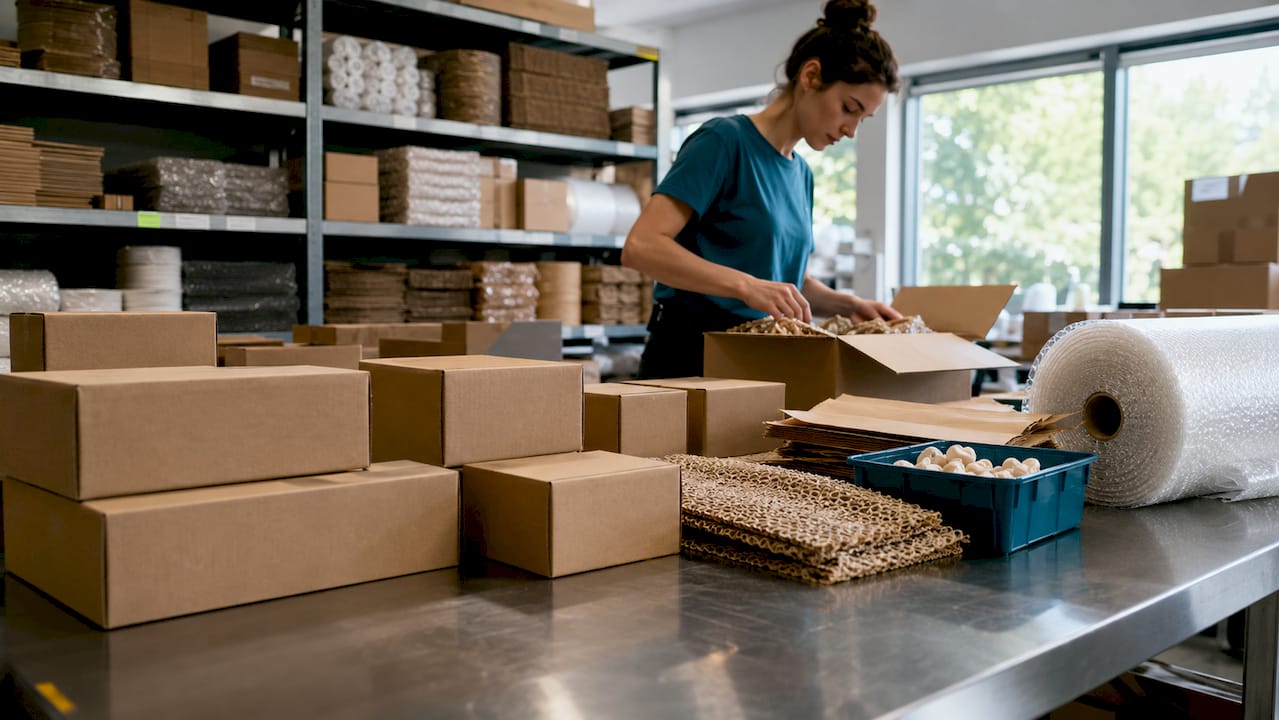
Beyond the box, your material choices determine how much protection the item actually receives. Each material serves a specific function, and using the wrong one for a given product type is a common source of damage.
| Material | Best for | Limitation |
|---|---|---|
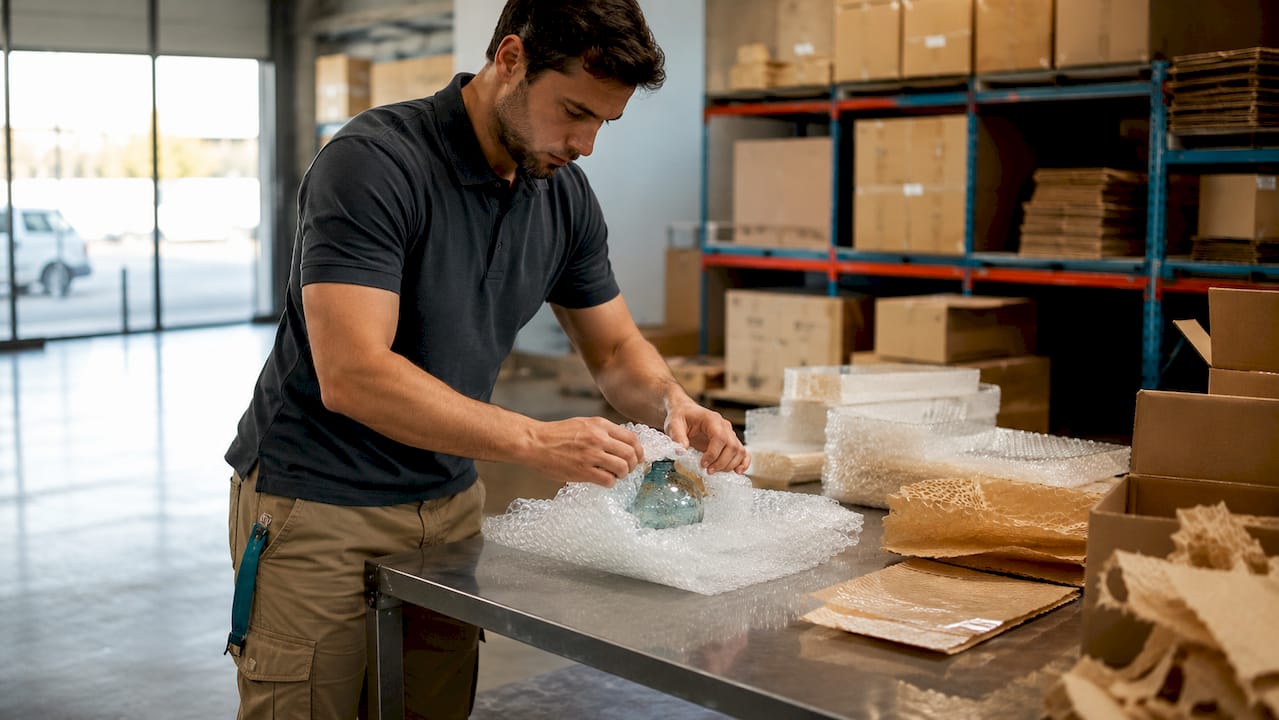
| Bubble wrap | Glass, ceramics, electronics | Compresses over time under heavy weight |
| Foam sheets | Flat items, picture frames, mirrors | Less effective for irregular shapes |
| Packing peanuts | Filling voids around wrapped items | Can shift during transit if underfilled |
| Air pillows | Lightweight items, void fill | Not suitable as primary cushioning |
| Foam-in-place | High-value, irregular shapes | Higher cost per shipment |
The right combination depends on your product. A ceramic mug ships well with bubble wrap plus packing peanuts. A large mirror needs foam sheets cut to size plus a custom-fit box. Musical instruments and electronics often require foam-in-place or custom foam inserts.
Pro Tip: Choose sustainable cushioning materials like recycled paper fill or biodegradable packing peanuts where possible. These materials improve the unboxing experience and build customer trust without sacrificing protection.
Sealing materials matter too. Use heavy-duty packing tape at least 2 inches wide. Apply it along all seams and edges, not just the center strip. Fragile labels and “This Side Up” stickers add a layer of handling guidance, though their effectiveness depends on the carrier.
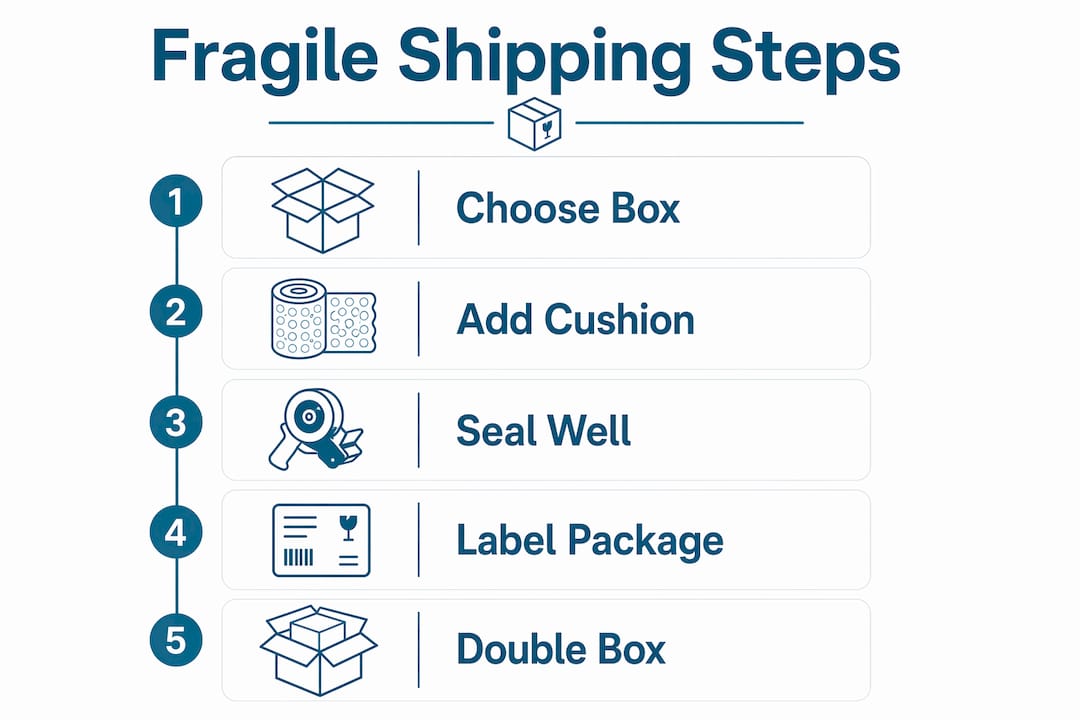
How to pack fragile items step by step
Packing fragile items correctly follows a repeatable process. Skipping any step increases the chance of damage, even if the other steps are done well.
- Wrap the item completely. Apply at least 2 inches of bubble wrap or foam around every surface. Pay extra attention to corners and protruding parts, which absorb the most impact during drops.
- Choose the right box. The box should be slightly larger than the wrapped item. A box that is too tight leaves no room for cushioning. A box that is too large lets the item shift.
- Add a base layer of cushioning. Place 2 inches of packing peanuts or foam at the bottom of the box before placing the item inside.
- Fill all empty spaces. Pack peanuts, air pillows, or crumpled paper around the item on all sides. Filling empty voids inside hollow fragile items is equally critical. A hollow ceramic vase, for example, needs internal fill to prevent the walls from flexing and cracking.
- Seal the box with heavy-duty tape. Run tape along every seam. The H-tape method, covering the center seam and both side seams, provides the strongest seal.
- Label clearly. Mark the box as fragile on multiple sides. Add “This Side Up” if orientation matters for the item.
Pro Tip: Test your padding by pressing gently on the box walls after sealing. You should not be able to feel the item through the cardboard. If you can, add more cushioning before shipping.
For high-value or extra fragile items, double boxing is the standard. Place the packed inner box inside a larger outer box with at least 2 inches of cushioning between the two. This method is common for antiques, fragile electronics, and collectibles. The outer box absorbs the initial impact. The inner box and its padding handle the rest.
Which carriers are best for shipping fragile items?
Carrier selection is one of the most consequential decisions in fragile goods shipping. Not all carriers handle packages the same way, and the best shipping service for fragile items depends on your product weight, value, and destination.
USPS, FedEx, and UPS each have distinct strengths for fragile shipments. USPS is widely regarded as the best option for lightweight fragile parcels. FedEx offers detailed tracking and express delivery options that reduce time in transit. UPS excels with larger shipments and freight, making it a strong choice for shipping large fragile items like furniture or appliances.
| Carrier | Strength for fragile shipping | Consideration |
|---|---|---|
| USPS | Lightweight parcels, cost-effective | Limited freight options |
| FedEx | Express delivery, detailed tracking | Higher cost for ground services |
| UPS | Large items, freight, strong claims process | Dimensional weight pricing |
| DHL | International fragile shipments | Best for cross-border, not domestic |
One counterintuitive fact about fragile labeling: marking packages as fragile can sometimes result in rougher handling. Carrier staff have noted this pattern. The label draws attention, but not always the kind you want. Internal protection is always more reliable than a sticker.
For oversized or extremely high-value items, standard carrier services are not enough. Custom crating services use precise internal bracing, weight distribution engineering, and shock protection to secure fragile goods that cannot be protected by standard packaging. This applies to large sculptures, industrial equipment, and high-end audio gear. The cost is higher, but so is the protection.
Pro Tip: When evaluating courier services for fragile items, check each carrier’s damage claims history for your product category. A carrier with strong tracking and a clear claims process protects your business even when damage does occur.
What mistakes should you avoid when shipping fragile items?
Most fragile goods damage is not caused by carrier mishandling alone. It starts with packaging errors made before the box leaves your warehouse.
- Insufficient cushioning. Using less than 2 inches of padding on any side leaves the item exposed to impact. This is the single most common cause of transit damage.
- Wrong box size. A box that fits too tightly around the item leaves no room for cushioning. A box that is too large lets the item move freely inside, which causes damage on every bump and drop.
- Low-quality materials. Thin single-wall boxes and thin bubble wrap compress quickly under the weight of other packages. The cost savings are not worth the claims cost.
- Skipping double boxing for valuables. High-value fragile items shipped in a single box have no backup layer of protection. One bad drop can result in a total loss.
- Not filling internal voids. Hollow items like vases, bottles, and speakers need internal fill. Without it, the walls flex and crack under external pressure.
- Over-relying on fragile labels. Labels are a supplement to good packaging, not a substitute for it. Build your protection from the inside out.
Pro Tip: Before scaling up a new fragile product shipment, do a drop test. Pack the item exactly as you would for shipping, then drop the box from waist height onto a hard floor. Open it and inspect for damage. If the item is damaged, improve the packaging before sending real orders.
Packaging inspection should be part of your standard fulfillment workflow. A quick check before sealing each box catches errors that would otherwise result in damage claims, refunds, and negative reviews.
Key takeaways
Shipping fragile goods safely requires double-wall boxes, at least 2 inches of cushioning on all sides, complete void fill, and a carrier matched to your product’s weight and value.
| Point | Details |
|---|---|
| Use double-wall corrugated boxes | Choose a box slightly larger than the item to allow room for 2 inches of cushioning on all sides. |
| Fill every void | Pack around and inside hollow items to prevent movement and internal wall flex during transit. |
| Match carrier to product type | Use USPS for lightweight parcels, FedEx for express, UPS for large items, and DHL for international. |
| Double box high-value items | Place the packed inner box inside a larger outer box with cushioning between both layers. |
| Test before scaling | Drop test new packaging configurations before shipping at volume to catch failures early. |
What I’ve learned about fragile shipping that most guides skip
The conversation around fragile shipping almost always focuses on materials. Use bubble wrap. Use a sturdy box. Label it fragile. That advice is correct, but it misses the real cost driver.
The damage I see most often in ecommerce operations does not come from carrier mishandling. It comes from sellers who cut packaging costs to improve margins and then absorb the damage claims on the back end. The math never works in their favor. A $0.50 savings on thinner bubble wrap can cost $30 in a replacement shipment, a refund, and a lost customer.
The second thing most guides skip is the relationship between packaging and brand perception. Sustainable cushioning materials like recycled paper fill and biodegradable peanuts do more than protect the product. They signal to the customer that you thought carefully about the unboxing experience. That signal builds repeat purchase behavior in ways that are hard to quantify but very real.
Carrier selection is also more nuanced than most comparison articles suggest. The best shipper for fragile items is not a universal answer. It depends on your product weight, your customer geography, and your average order value. A seller shipping handmade ceramics domestically has different needs than a seller shipping electronics internationally. Spend time mapping your actual shipment profile before committing to a single carrier.
Finally, proactive shipment tracking changes how you manage damage. When you catch a shipment exception in real time, you can contact the customer before they contact you. That single shift in timing turns a potential negative review into a demonstration of good service.
— Maayan
Ship fragile goods with confidence using Or-ner
Or-ner is built for ecommerce sellers who need more than a label printer and a carrier account. The Or-ner global logistics platform connects you to reliable courier services across ocean, air, and land transport, with real-time shipment tracking and exception management built in.
For fragile goods specifically, Or-ner gives you visibility at every stage of transit, so you know exactly where your shipment is and can act before a problem becomes a claim. The platform integrates with Amazon and other major ecommerce operators, making it straightforward to manage fragile product fulfillment at scale. If you are ready to reduce damage claims and improve delivery reliability, explore Or-ner’s freight booking tools and carrier network today.
FAQ
What is the best way to ship something fragile?
The best way to ship something fragile is to use a double-wall corrugated box with at least 2 inches of cushioning on all sides, fill all empty spaces to prevent movement, and choose a carrier matched to your item’s weight and value.
Does marking a package “fragile” actually help?
Fragile labels can sometimes result in rougher handling by carrier staff. Internal protection through proper cushioning and box selection is always more reliable than relying on a sticker.
What is the best shipping service for fragile items?
USPS is widely regarded as best for lightweight fragile parcels, FedEx excels at express delivery with detailed tracking, and UPS is the strongest option for larger or heavier fragile shipments.
When should I use double boxing for fragile shipments?
Double boxing is the standard for antiques, fragile electronics, and high-value collectibles. Place the packed inner box inside a larger outer box with at least 2 inches of cushioning between the two layers.
How do I know if my packaging is strong enough?
Press gently on the sealed box walls. If you can feel the item through the cardboard, add more cushioning. For new product lines, perform a waist-height drop test before shipping at volume.