Over forty percent of online shoppers say that a smooth return process influences their decision to buy. As more businesses face rising volumes of returns, mastering reverse logistics becomes crucial for saving money, reducing environmental impact, and keeping customers happy. With better strategies, companies turn costly returns into valuable opportunities—capturing value while supporting a sustainable future.
Table of Contents
- Defining Reverse Logistics And Its Importance
- Types Of Reverse Logistics Processes In Ecommerce
- Operational Complexities In Returns And Remanufacturing
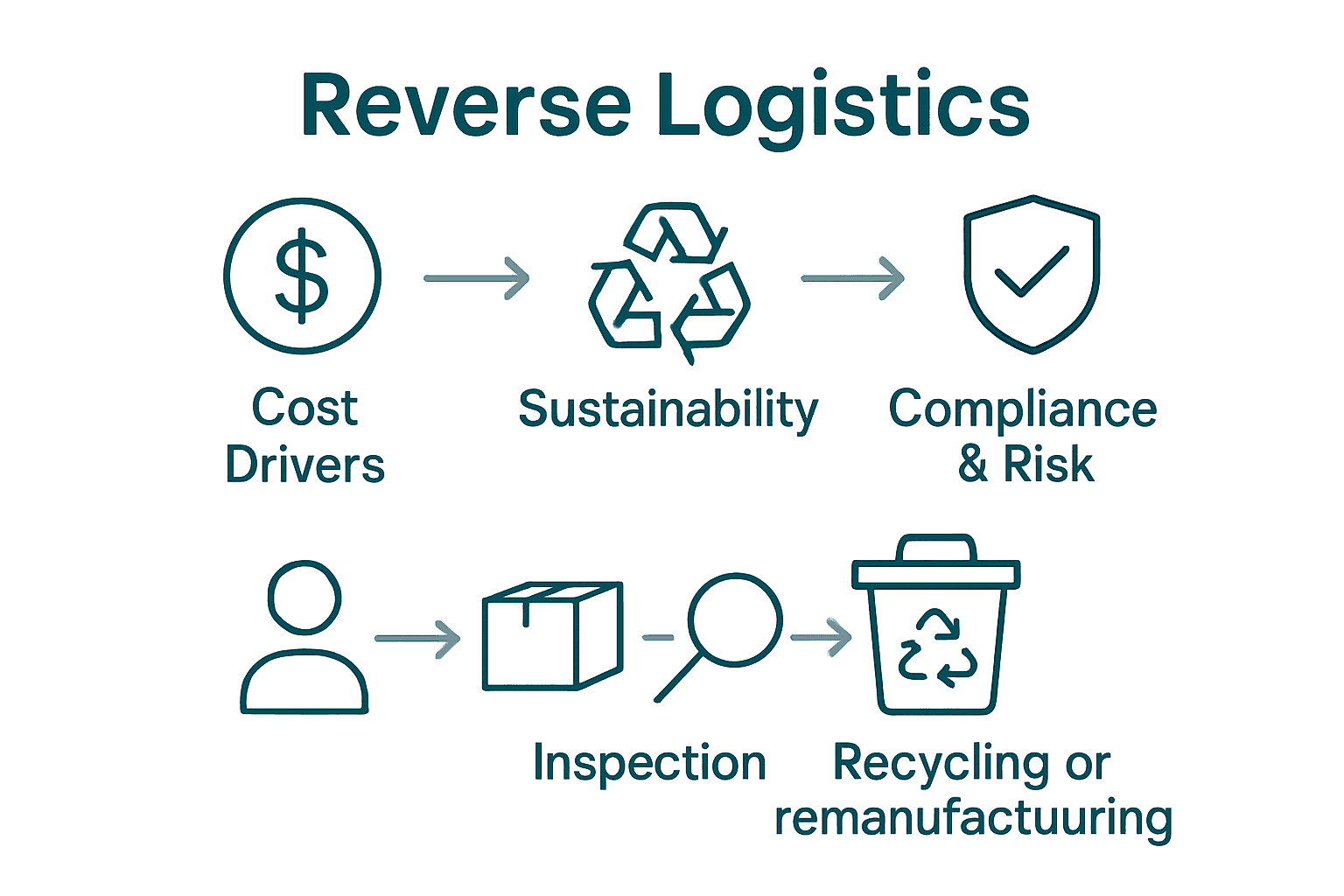
- Cost Drivers And Financial Implications
- Compliance, Sustainability, And Risk Management
Key Takeaways
| Point | Details |
|---|---|
| Reverse Logistics Significance | Reverse logistics transforms returns from a cost center into opportunities for value recovery and sustainability improvements. |
| Operational Strategies | Implementing streamlined returns management, refurbishment, and recycling strategies is crucial for enhancing customer satisfaction and reducing waste. |
| Financial Impact | Understanding cost drivers, including transportation and processing, is essential for optimizing reverse logistics and improving the bottom line. |
| Compliance and Risk Management | A robust reverse logistics framework ensures adherence to regulatory standards and promotes sustainability while managing potential risks effectively. |
Defining Reverse Logistics and Its Importance
Reverse logistics represents a strategic process that transforms product returns from a potential cost center into a valuable operational opportunity. According to amu.apus.edu, this process involves moving goods from their final destination back to the manufacturer or distributor with the primary goal of capturing value or ensuring proper disposal.
At its core, reverse logistics encompasses a comprehensive range of activities that track products after their initial sale, managing their journey back through the supply chain. Logcluster.org highlights that these activities include critical functions such as:
- Product returns processing
- Recycling and waste management
- Value recovery strategies
- Customer satisfaction handling
- Repair and refurbishment operations
The importance of reverse logistics extends far beyond simple return management. By implementing robust reverse logistics strategies, businesses can significantly reduce waste, recover potential lost value, and enhance overall customer experience. Effective reverse logistics enables companies to recapture value from returned products, minimize environmental impact, and create more sustainable supply chain practices.
For ecommerce sellers looking to optimize their return processes, understanding comprehensive reverse logistics strategies becomes crucial in maintaining competitive advantage and operational efficiency.
Types of Reverse Logistics Processes in Ecommerce
E-commerce businesses employ a diverse range of reverse logistics processes that are critical for maintaining operational efficiency and customer satisfaction. According to ccsenet.org, these processes fundamentally include returns management, remanufacturing, recycling, and disposal, each serving a unique purpose in the product lifecycle management.
The primary reverse logistics processes can be categorized into several key strategies:
Here’s a comparison of the main reverse logistics processes in ecommerce:
| Process Type | Key Activities | Primary Benefits |
|---|---|---|
| Product Returns Processing | Return intake Condition assessment Refund/exchange |
Customer satisfaction Brand loyalty |
| Refurbishment & Remanufacturing | Inspection Repair Resale at discount |
Value recovery Waste reduction |
| Recycling & Waste Management | Material separation Environmental disposal Minimizing landfill |
Sustainability Regulatory compliance |
- Product Returns Processing
- Handling customer-initiated product returns
- Assessing product condition
- Determining return authorization
- Managing refund or exchange procedures
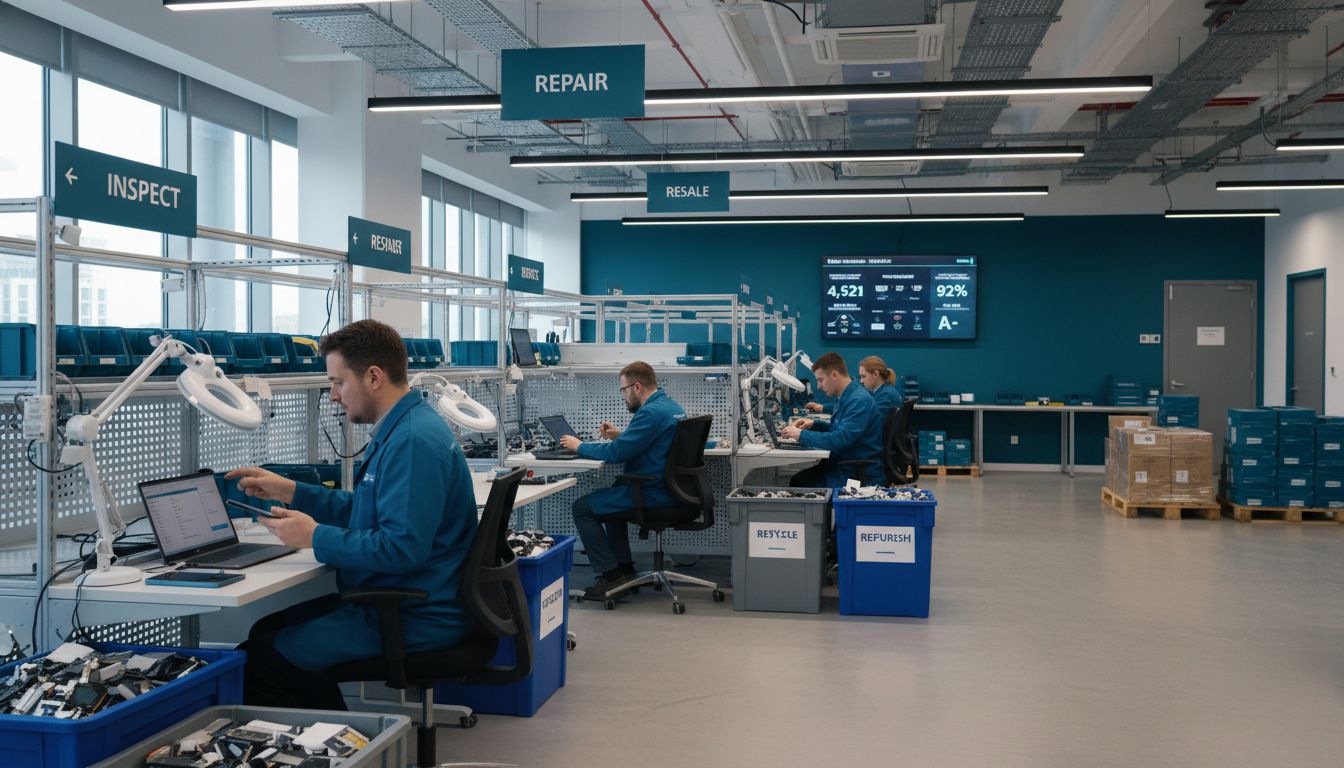
- Refurbishment and Remanufacturing
- Inspecting returned products
- Repairing and restoring items to sellable condition
- Preparing products for resale at discounted rates
- Recycling and Waste Management
- Identifying recyclable product components
- Separating materials for environmental sustainability
- Minimizing waste and reducing environmental impact
Index.org emphasizes that efficient management of these reverse logistics processes is critical for cost reduction and maintaining high customer satisfaction levels. By implementing sophisticated tracking and processing systems, ecommerce businesses can transform what might otherwise be considered a logistical challenge into a strategic opportunity.
For deeper insights into optimizing these complex processes, understanding the comprehensive reverse logistics process in e-commerce becomes essential for modern online retailers seeking to streamline their operations.
Operational Complexities in Returns and Remanufacturing
Reverse logistics presents a labyrinth of operational challenges that demand sophisticated strategic planning and execution. According to etd.auburn.edu, managing returns and remanufacturing involves intricate processes that require businesses to navigate diverse product conditions, coordinate complex logistics, and maintain rigorous quality control standards.
The key operational complexities in returns and remanufacturing can be categorized into several critical dimensions:
Product Variability Challenges
- Inconsistent product conditions upon return
- Varying levels of wear and damage
- Diverse product categories requiring different handling
- Complex assessment and categorization processes
Logistical Coordination Barriers
- Tracking and routing multiple return streams
- Managing decentralized return points
- Implementing efficient sorting mechanisms
- Minimizing transportation and processing costs
So05.tci-thaijo.org highlights that addressing these operational complexities is crucial for developing a sustainable circular economy, particularly in ensuring compliance with increasingly stringent environmental regulations.
To effectively manage these intricate processes, businesses must invest in advanced third-party logistics solutions that can provide the technological infrastructure and expertise required to transform return challenges into strategic opportunities.
Cost Drivers and Financial Implications
Reverse logistics represents a complex financial ecosystem with multiple interconnected cost drivers that can significantly impact a company’s bottom line. Index.ieomsociety.org highlights that the financial implications of reverse logistics are fundamentally influenced by three critical components: transportation expenses, processing costs, and value recovery potential.
The primary cost drivers in reverse logistics can be systematically broken down into several key categories:
Direct Financial Costs
- Transportation and return shipping expenses
- Product inspection and assessment costs
- Refurbishment and repackaging investments
- Inventory management overhead
Indirect Financial Implications
- Customer service and return authorization processing
- Quality control and product evaluation
- Potential loss of future sales from unsatisfactory return experiences
- Environmental disposal and recycling expenses
Beyond the immediate financial metrics, reverse logistics costs extend far beyond simple monetary calculations. Companies must consider the holistic economic impact, including customer retention, brand reputation, and long-term sustainability strategies. Smart businesses view these expenses not as pure overhead but as strategic investments in customer experience and circular economy principles.
To optimize these complex financial dynamics, forward-thinking organizations are increasingly turning to benefits of freight forwarding solutions that can help streamline and reduce the overall economic burden of reverse logistics processes.
Compliance, Sustainability, and Risk Management
Reverse logistics has evolved from a mere operational process to a critical strategic framework that intersects complex domains of regulatory compliance, environmental sustainability, and comprehensive risk management. Log.logcluster.org highlights that this multifaceted approach involves meticulously adhering to environmental regulations, managing waste standards, and proactively addressing potential liabilities associated with product returns and disposal.
Key strategic considerations in this integrated approach include:
Compliance Imperatives
- Tracking evolving environmental regulations
- Ensuring proper documentation of return processes
- Maintaining transparent audit trails
- Implementing robust compliance monitoring systems
Sustainability Strategies
- Minimizing waste generation
- Promoting circular economy principles
- Developing closed-loop recycling mechanisms
- Reducing carbon footprint through efficient return logistics
Risk Management Framework
- Identifying potential legal and financial vulnerabilities
- Developing comprehensive product return protocols
- Mitigating potential environmental liability risks
- Creating contingency plans for complex return scenarios
Wisdomlib.org emphasizes that effective reverse logistics plays a pivotal role in sustainability by not just minimizing waste but actively supporting recycling initiatives and ensuring compliance with increasingly stringent environmental policies.
To navigate these complex intersections, forward-thinking organizations are increasingly adopting just in time delivery strategies that can help integrate compliance, sustainability, and risk management into their core operational model.
Overcome Your Reverse Logistics Challenges with Trusted Solutions
Navigating the complexities of reverse logistics can be overwhelming with product variability, cost drivers, and stringent compliance demands all in play. If you want to transform returns and remanufacturing headaches into smooth, cost-effective operations you need a partner who understands these challenges inside and out. The article highlights key issues like processing difficulties, transportation costs, and sustainability pressures that can stall ecommerce growth without the right infrastructure.
Discover how reliable courier services and expert fulfillment solutions at ORNER can streamline your returns process and reduce operational costs. Tap into advanced supply chain tools designed for ecommerce sellers to manage returns, handle inventory, and maintain customer satisfaction effortlessly. Start turning reverse logistics from a burden into a competitive advantage today. Get your answers from our QA Archives – ORNER and connect with the full range of services at ORNER to scale with confidence and control.
Frequently Asked Questions
What is reverse logistics?
Reverse logistics is the process of managing product returns and moving goods from their final destination back to the manufacturer or distributor to capture value or ensure proper disposal.
Why is reverse logistics important for e-commerce businesses?
Reverse logistics is crucial for e-commerce as it helps reduce waste, recover lost value from returned products, and enhance customer satisfaction, thus creating a more sustainable supply chain.
What are the key processes involved in reverse logistics?
The main processes in reverse logistics include product returns processing, refurbishment and remanufacturing, and recycling and waste management, each serving to optimize the returns workflow and improve operational efficiency.
What are the challenges faced in reverse logistics?
Key challenges in reverse logistics include managing diverse product conditions upon return, coordinating complex logistics, maintaining quality control, and addressing compliance with environmental regulations.