

Nearly half of American shoppers say a confusing returns policy stops them from buying again. For any business, especially in the fast-growing American e-commerce market, clear and flexible returns are no longer optional. If your returns process leaves customers frustrated or second-guessing, it’s time for a change. This guide breaks down exactly how to build a returns system that grows customer trust, streamlines operations, and sets your brand apart.
Table of Contents
- Step 1: Establish A Robust Returns Policy
- Step 2: Integrate Flexible Return Options With Couriers
- Step 3: Automate Return Authorization And Tracking
- Step 4: Coordinate Reverse Logistics And Warehousing
- Step 5: Verify And Analyze Return Process Performance
Quick Summary
| Key Takeaway | Explanation |
|---|---|
| 1. Create a Clear Returns Policy | A transparent returns policy sets customer expectations and trusts while streamlining operations. |
| 2. Offer Multiple Return Options | Integrating courier services provides customers with flexibility, simplifying the return process. |
| 3. Automate Returns Management | Implementing automated systems enhances efficiency, allowing real-time tracking and streamlined authorizations. |
| 4. Optimize Reverse Logistics | Coordinate logistics and warehousing to efficiently process returns, reclaim value, and minimize costs. |
| 5. Analyze Return Performance | Regularly review return metrics to identify trends and improve product quality and customer satisfaction. |
Step 1: Establish a Robust Returns Policy
Creating a clear and comprehensive returns policy is your first line of defense in managing customer expectations and protecting your business. A well-designed policy not only helps customers understand their options but also streamlines your operational workflow. The Better Business Bureau emphasizes the importance of establishing transparent return guidelines that provide clarity and build customer trust.
To craft an effective returns policy, start by defining key parameters. Learn Business recommends setting a generous return window of at least 30 days and clearly specifying refund or exchange options. This means outlining exactly what conditions qualify for returns, what condition items must be in, and how customers can initiate the process. Consider including details such as whether you offer full refunds or store credit, who pays return shipping, and any potential restocking fees. Make sure your policy covers scenarios like damaged goods, defective products, and items that do not meet customer expectations.
Your returns policy should be easily accessible on your website, preferably on a dedicated page and linked in your footer. Use clear, straightforward language that avoids legal jargon. Include step-by-step instructions for customers, and consider creating a simple flowchart or visual guide to make the process even more user-friendly.
Pro tip: Develop a quick internal workflow chart for processing returns that includes steps for inspection, restocking, refunding, and tracking return reasons. This will help you continuously improve your product offerings and customer experience.
Here’s a summary of key components for an effective returns policy and their impact on business and customer experience:
| Policy Component | Purpose | Benefit to Business |
|---|---|---|
| Return Window | Defines how long returns are accepted | Reduces disputes, sets clear rules |
| Refund/Exchange Terms | Specifies available options for returns | Manages expectations, builds trust |
| Shipping Responsibility | Clarifies who pays for return shipping | Controls costs, avoids confusion |
| Item Condition Rules | Details acceptable conditions for returns | Protects against abuse, streamlines process |
| Return Instructions | Guides customers through the process | Reduces errors, enhances satisfaction |
Step 2: Integrate Flexible Return Options with Couriers
Streamlining your returns process by partnering with couriers can dramatically improve customer satisfaction and operational efficiency. The U.S. Postal Service has developed innovative return services designed to accommodate the growing e-commerce returns landscape, offering solutions like QR code package pickups and doorstep return options that can transform your logistics strategy.
When integrating return options with courier services, focus on creating multiple convenient channels for customers. Supply Chain Community highlights emerging technologies like standalone drop-off solutions that enable customers to complete returns in just 10 seconds, reducing both operational costs and environmental impact. Consider implementing options such as prepaid return labels, in-store drop-off, scheduled pickups, and integration with local carrier locations. Your goal is to provide flexibility that makes returning products as simple and stress-free as possible for your customers.
Ensure your chosen courier services offer real-time tracking, quick processing, and clear communication throughout the return journey. Negotiate contracts that provide volume discounts and prioritize carriers with robust tracking systems and multiple return entry points. This approach allows you to offer customers seamless return experiences while maintaining tight control over your reverse logistics workflow.
Pro tip: Create a returns decision matrix that maps different product types to their most cost-effective and convenient return method, helping you optimize both customer experience and operational efficiency.
This table compares various return options with couriers based on customer convenience and business value:
| Return Option | Customer Convenience | Business Value |
|---|---|---|
| QR Code Package Pickups | No printer needed, quick return | Reduces friction and boosts loyalty |
| In-Store Drop-Off | Instant resolution, no shipping | Drives store traffic, lowers shipping costs |
| Scheduled Pickup | Maximum flexibility, no travel | Personalized service, enhances brand image |
| Prepaid Return Label | Simple process, easy shipping | Streamlined logistics, predictable cost |
Step 3: Automate Return Authorization and Tracking
Streamlining your returns management requires implementing robust automation technologies that transform complex logistics into seamless operations. Ecom Global Systems introduces ReverseGear, a cloud-based platform designed to optimize global e-commerce returns processes, offering retailers an integrated solution for managing return authorizations across multiple channels and carriers.

Innovative tracking technologies enable real-time visibility and intelligent processing of returned items, allowing businesses to implement data-driven return strategies. Modern automation platforms can integrate with existing warehouse management systems, providing instant return labels, tracking updates, and comprehensive reporting. Implement an authorization workflow that includes automatic customer communication, instant refund processing, and intelligent routing of returned products based on their condition and potential resale value.
Consider investing in AI-powered return management systems that can categorize returns, predict potential issues, and provide actionable insights into product performance. These technologies not only reduce manual processing time but also help identify patterns in customer returns that can inform future product development and inventory management strategies.
Pro tip: Configure your return automation system to generate detailed analytics reports that track return rates by product category, helping you proactively address quality control and customer satisfaction challenges.
Step 4: Coordinate Reverse Logistics and Warehousing
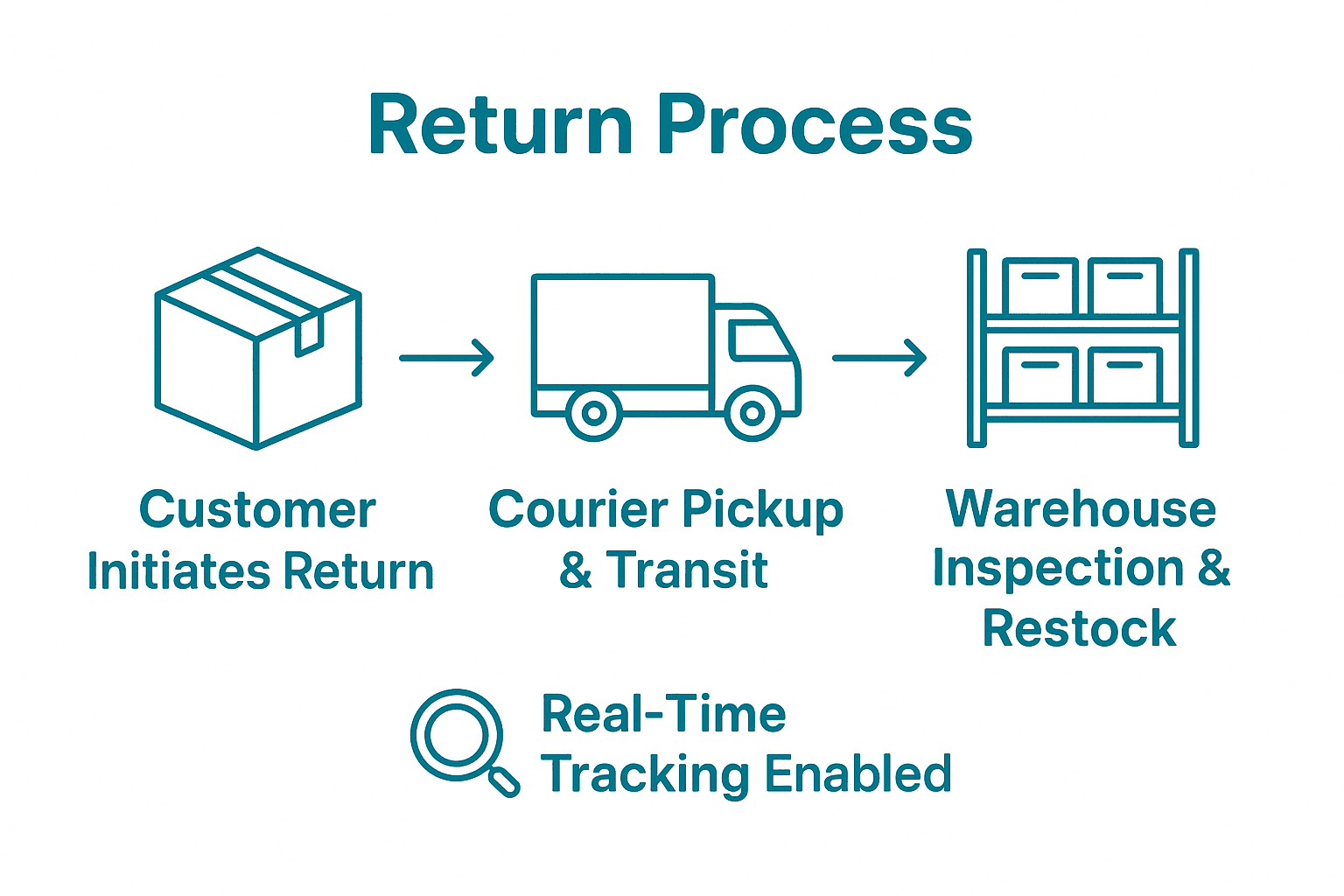
The Reverse Logistics Association highlights the critical importance of efficiently managing returned products, transforming what many consider a costly process into a strategic opportunity for value recapture. Effective coordination between your logistics and warehousing teams requires developing a comprehensive system that tracks, processes, and redirects returned merchandise with precision and speed.
Circular Economy principles emphasize creating efficient flows of materials and information during product returns, which means establishing clear protocols for different return scenarios. Design a warehousing workflow that quickly categorizes returns into distinct channels: resalable items, products requiring repair, goods eligible for refurbishment, and materials needing disposal. Implement color coded zones, digital tracking systems, and specialized handling procedures that allow rapid assessment and routing of returned merchandise.
Your reverse logistics strategy should integrate technology that provides real-time visibility across all stages of the return process. This includes barcode scanning, automated condition assessment tools, and inventory management systems that can instantly update stock levels and trigger appropriate actions. Develop cross-functional communication protocols that enable seamless information sharing between customer service, warehousing, and inventory management teams.
Pro tip: Create a standardized return disposition matrix that assigns precise handling instructions for different product categories, reducing processing time and minimizing decision making complexity.
Step 5: Verify and Analyze Return Process Performance
Academic research reveals critical insights into the complex dynamics of e-commerce returns, highlighting the importance of developing a sophisticated performance verification system. Effective return process analysis goes beyond simple tracking metrics to understand the deeper motivations and patterns driving customer return behaviors.
The International Air Cargo Association recommends implementing comprehensive data analytics strategies for return route optimization. Develop a robust performance measurement framework that tracks key performance indicators such as return rate, processing time, refund speed, and customer satisfaction scores. Utilize advanced analytics tools to segment returns by product category, reason for return, and customer demographic to uncover actionable insights that can improve product quality and reduce future return rates.
Establish a continuous improvement cycle by conducting regular performance reviews that correlate return data with broader business metrics. This means creating detailed dashboards that connect return information with inventory management, product development, and customer experience teams. Pay special attention to identifying patterns that might indicate systemic issues with specific product lines or potential improvements in packaging, product description, or customer communication.
Pro tip: Implement a quarterly cross functional review meeting where teams from customer service, warehouse, product development, and marketing analyze return trends and collaborate on targeted improvement strategies.
Simplify Ecommerce Returns with Reliable Courier Services and Smart Logistics Solutions
Managing ecommerce returns is complex and challenging. This article highlights key hurdles like establishing transparent return policies, integrating flexible return options with couriers, automating authorization and tracking, and coordinating reverse logistics for seamless operations. If you want to turn returns from a headache into a competitive advantage you need more than just good intentions—you need a trusted logistics partner that offers end-to-end solutions.
At ORNER, we specialize in providing reliable courier services combined with scalable fulfillment, warehousing, and real-time tracking tools that remove friction from your entire returns management process. Whether you are a merchant handling cross-border returns or a brand needing sophisticated automation and inventory control, our platform adapts to your needs and helps you deliver flawless customer experiences. Learn more about how to optimize returns with expert Q&A insights at our QA Archives.
Ready to transform your returns management and build loyalty? Visit ORNER now to explore solutions designed specifically for ecommerce sellers and start streamlining your reverse logistics with confidence.
Frequently Asked Questions
How can I create an effective returns policy for my eCommerce business?
Creating an effective returns policy involves defining clear parameters such as the return window, refund options, and item condition rules. Start by setting a minimum return window of at least 30 days and outline specific guidelines for returns and exchanges to manage customer expectations effectively.
What courier options can enhance my eCommerce returns process?
Integrating flexible courier options such as QR code package pickups, in-store drop-offs, and scheduled pickups can significantly enhance your returns process. Choose several methods that maximize convenience for customers, aiming to reduce their return time by up to 50% and improve their overall satisfaction.
How can I automate return authorization and tracking?
To automate return authorization and tracking, implement a cloud-based system that provides instant return labels and real-time tracking updates. Streamline the process by establishing an automated workflow for customer communication and instant refunds, which can reduce manual effort by approximately 30%.
What steps can I take to improve my reverse logistics and warehousing for returns?
Improving reverse logistics and warehousing involves designing a workflow that quickly categorizes returned items for resale, repair, or disposal. Create clear protocols and use technology like barcode systems to ensure items are processed efficiently, aiming to reduce processing time by 25%.
How do I track and analyze return process performance?
To track and analyze return process performance, establish a framework that measures key performance indicators like return rate and processing time. Regularly review this data to identify patterns and opportunities for improvement, which can help enhance your product quality and customer satisfaction.
What best practices should I follow for continuous improvement in returns management?
Follow best practices such as conducting quarterly cross-functional reviews of return data and trends. Collaborate with teams across customer service, warehousing, and product development to identify systemic issues, aiming for at least one significant improvement per quarter.
Recommended
- Understanding the Reverse Logistics Process in E-commerce – ORNER
- Understanding Reverse Logistics Strategies for eCommerce – ORNER
- Just in Time Delivery: Essential Guide for 2025 Success – ORNER
- Ecommerce Catalog Management: Complete Guide – ORNER
- Master the Gaming Product Shopping Workflow Step-by-Step – Moonlight Dreams