
More than 70 percent of logistics expenses can be traced back to decisions about how goods move from one point to another. For ecommerce sellers, choosing the best transportation mode is about far more than just shipping costs. With every shipment, businesses must weigh speed, reliability, and total supply chain impact. Understanding how these choices shape efficiency and profitability arms you with the insights needed to build a smarter, more resilient logistics strategy.
Table of Contents
- Defining Transportation Mode Selection In Logistics
- Major Types Of Transportation Modes Explained
- Key Criteria For Selecting A Transport Mode
- Industry Use Cases And Practical Scenarios
- Comparing Costs, Risks, And Performance
Key Takeaways
| Point | Details |
|---|---|
| Holistic Transportation Evaluation | Effective mode selection requires consideration of total logistics costs, transit times, and service reliability, rather than just shipping expenses. |
| Tailored Mode Selection | Businesses should choose transportation methods that align with product characteristics, delivery requirements, and customer expectations to optimize logistics efficiency. |
| Risk and Performance Metrics | A sophisticated evaluation framework must incorporate risk assessment and performance indicators alongside cost to inform transportation decisions. |
| Adaptable Logistics Strategies | Implementing adaptive, data-driven transportation models can transform logistics from a cost center into a competitive advantage for ecommerce businesses. |
Defining Transportation Mode Selection in Logistics
Transportation mode selection represents a strategic decision process where ecommerce businesses determine the most appropriate method of moving goods from origin to destination. According to research from Ops FHWA, mode choice involves significantly more complexity than simply comparing transportation costs. Logistics professionals must evaluate multiple interconnected variables to make optimal transportation decisions.
The core elements of transportation mode selection extend beyond basic price comparisons. As detailed by AIU Students Resource, the comprehensive decision-making process includes several critical components:
- Identifying relevant transportation performance variables
- Selecting appropriate transport modes and carriers
- Negotiating service rates and performance levels
- Continuously evaluating carrier performance
Key considerations in transportation mode selection include total logistics costs, which encompass more than just direct shipping expenses. Transit time, warehousing costs, inventory management, and safety stock requirements all play pivotal roles in determining the most efficient transportation strategy. Ecommerce sellers must conduct thorough analyses that consider not just immediate shipping expenses, but the holistic impact on their supply chain efficiency and overall operational expenses.
For businesses seeking to optimize their logistics strategy, understanding these nuanced selection criteria becomes paramount. By developing a comprehensive approach to transportation mode selection, companies can significantly enhance their supply chain resilience, reduce unnecessary expenses, and create more predictable and efficient shipping workflows.
For a deeper exploration of strategic shipping approaches, check out our freight forwarding guide that provides additional insights into modern logistics strategies.
Major Types of Transportation Modes Explained
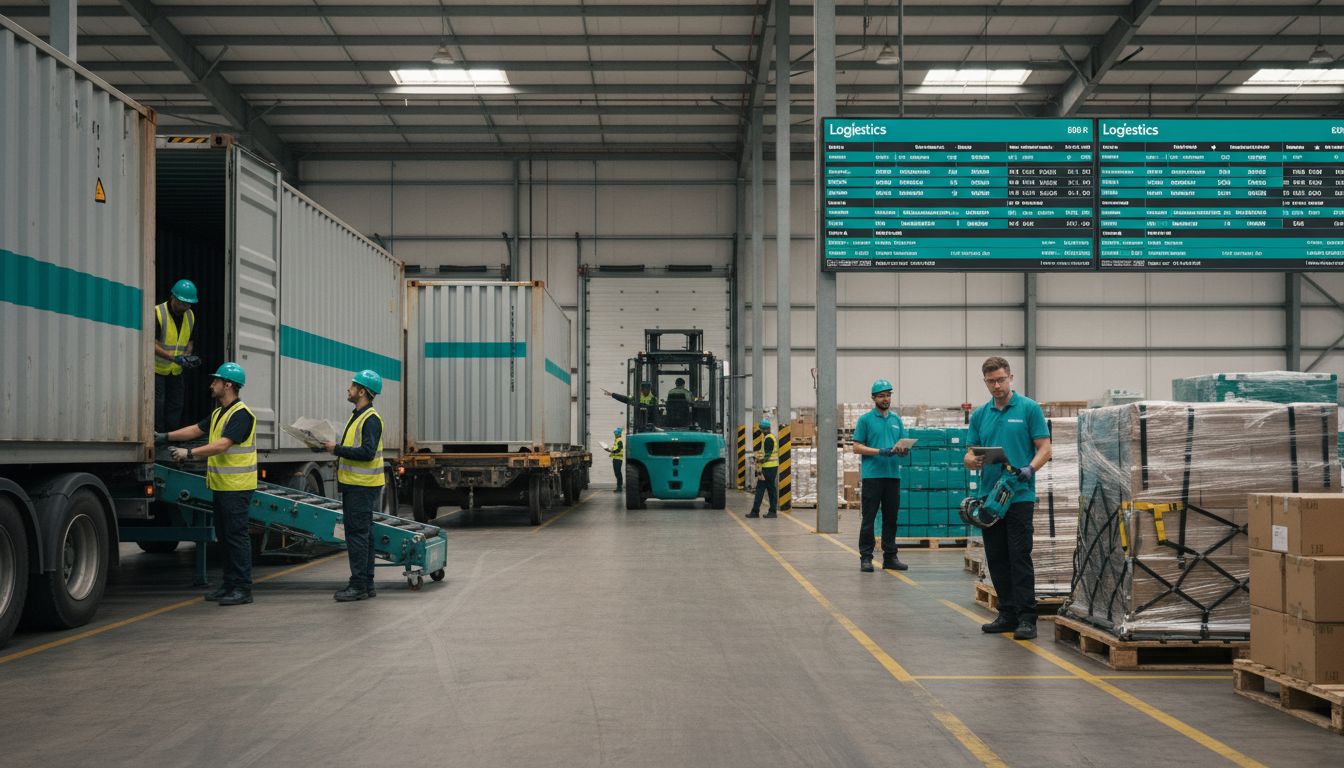
Transportation modes represent the fundamental channels through which goods move across global supply chains. According to Banotes Logistics Management, modern logistics encompasses five primary transportation modes: road, rail, air, water, and pipeline, each with unique characteristics and strategic applications for ecommerce businesses.
Road Transportation:
- Most flexible mode for short and medium-distance shipping
- Ideal for last-mile delivery and door-to-door services
- Supports various vehicle types from small vans to large trucks
- Best for time-sensitive and fragmented shipments
Rail Transportation:
- Highly cost-effective for bulk and heavy goods
- Supports long-distance transportation efficiently
- Lower carbon footprint compared to road transport
- Excellent for standardized container shipments
Air Transportation:
- Fastest transportation mode available
- Critical for high-value, time-sensitive goods
- Supports global reach with minimal transit time
- Higher cost per kilogram compared to other modes
As detailed by Transport Geography, transportation mode selection isn’t solely about cost. Factors like service level, frequency, and cargo value play significant roles in determining the most appropriate shipping method.
Water and Pipeline Transportation offer specialized solutions for specific industry needs. Water transportation supports massive bulk cargo movements, while pipeline transportation provides continuous delivery for liquids and gases, making them crucial for industries like petroleum and chemical manufacturing.
For ecommerce sellers, understanding these transportation modes allows strategic decision-making that balances speed, cost, reliability, and specific product requirements. By matching cargo characteristics with the most suitable transportation mode, businesses can optimize their logistics efficiency and maintain competitive advantage.
Learn more about strategic shipping approaches in our comprehensive freight forwarding guide.
Key Criteria for Selecting a Transport Mode
Selecting the right transportation mode is a complex decision that goes far beyond simple cost comparisons. According to Log Cluster, businesses should create a comprehensive matrix ranking multiple influential factors before making a final transportation selection. Strategic transport decision-making requires a holistic approach that considers numerous interconnected variables.
Critical Evaluation Criteria:
- Required Delivery Date: Time-sensitivity of shipment
- Transport Service Cost: Total financial investment
- Reliability and Service Quality: Consistency of delivery performance
- Shipment Size and Item Type: Physical characteristics of goods
- Anticipated Transit Time: Speed of transportation
- Transshipment Points: Number of transfers during transport
- Third-Party Provider Service Range: Comprehensive logistics capabilities
As highlighted by Banotes Logistics Management, three fundamental factors dramatically influence modal selection: speed requirements, cost sensitivity, and product characteristics. Ecommerce businesses must carefully balance these elements to optimize their logistics strategy.
For instance, high-value electronics might demand air transportation for rapid delivery and minimal handling, while bulk industrial materials could benefit from cost-effective rail or maritime transport. The nuanced decision requires deep understanding of each product’s unique shipping needs, potential risks, and overall supply chain impact.
Ultimately, successful transport mode selection is about creating a tailored approach that aligns with specific business objectives. By developing a systematic evaluation process that considers multiple variables, companies can develop a resilient and efficient logistics strategy that reduces costs, minimizes risks, and ensures timely product delivery.
For more insights into strategic shipping approaches, explore our freight forwarding guide that provides comprehensive logistics management strategies.
Industry Use Cases and Practical Scenarios
Transportation mode selection represents a critical strategic decision with profound implications across diverse industries. According to IEOM Society, the primary objectives of transportation mode selection consistently revolve around two fundamental goals: reducing operational costs and maximizing customer satisfaction.
Industry-Specific Transportation Mode Scenarios:
- Electronics Manufacturing:
- Prioritize air freight for time-sensitive components
- Use express courier services for prototype and replacement parts
- Leverage sea freight for bulk manufacturing equipment
- Minimize transit time and potential product damage
- Automotive Sector:
- Utilize rail transportation for heavy machinery and vehicle components
- Implement specialized trucking for just-in-time manufacturing needs
- Combine multimodal transportation strategies
- Optimize cost-efficiency and delivery reliability
- Pharmaceutical Logistics:
- Exclusively use temperature-controlled air freight
- Implement strict tracking and monitoring systems
- Ensure minimal handling and maximum product integrity
- Prioritize speed and environmental conditions
Research from RSIS International reveals that transport mode reliability emerges as the most critical factor in selection. This reliability can vary significantly based on geographical location, economic conditions, and specific cargo characteristics.
For ecommerce businesses, understanding these nuanced scenarios becomes crucial. Each industry demands a unique approach to transportation, considering factors like product sensitivity, value, weight, and destination. Successful logistics strategies require continuous adaptation, leveraging data-driven insights to optimize transportation mode selection.
The complexity of transportation mode selection underscores the need for sophisticated decision-making frameworks that balance cost, speed, reliability, and product-specific requirements. By developing flexible, intelligent logistics strategies, businesses can transform transportation from a mere operational necessity into a competitive advantage.
For deeper insights into strategic shipping approaches, explore our freight forwarding guide that provides comprehensive logistics management strategies.
Comparing Costs, Risks, and Performance
Transportation mode selection demands a sophisticated approach that goes beyond simplistic cost comparisons. According to CTL MIT, businesses must consider not just freight costs and average transit times, but also the transit variability associated with each transportation mode, which indirectly impacts overall transportation expenses.
Key Performance Comparison Metrics:
- Cost Considerations:
- Direct shipping expenses
- Fuel and operational costs
- Handling and transfer expenses
- Long-term infrastructure investment
- Risk Assessment:
- Potential cargo damage probability
- Transit time unpredictability
- Insurance and liability factors
- Environmental and regulatory compliance risks
- Performance Indicators:
- Average and variability of transit times
- Cargo integrity maintenance
- Flexibility and adaptability
- Technological integration capabilities
Interestingly, research from OECD reveals that modern logistics increasingly involves synchro-modality – where shipments can leverage multiple transportation modes simultaneously, with the ability to dynamically adjust routes and schedules based on real-time information.
Ecommerce businesses must develop nuanced evaluation frameworks that balance quantitative metrics with qualitative performance assessments. This holistic approach allows for more intelligent transportation strategy development, transforming logistics from a cost center into a strategic competitive advantage.
The most successful organizations will be those that can create adaptive, data-driven transportation selection models.
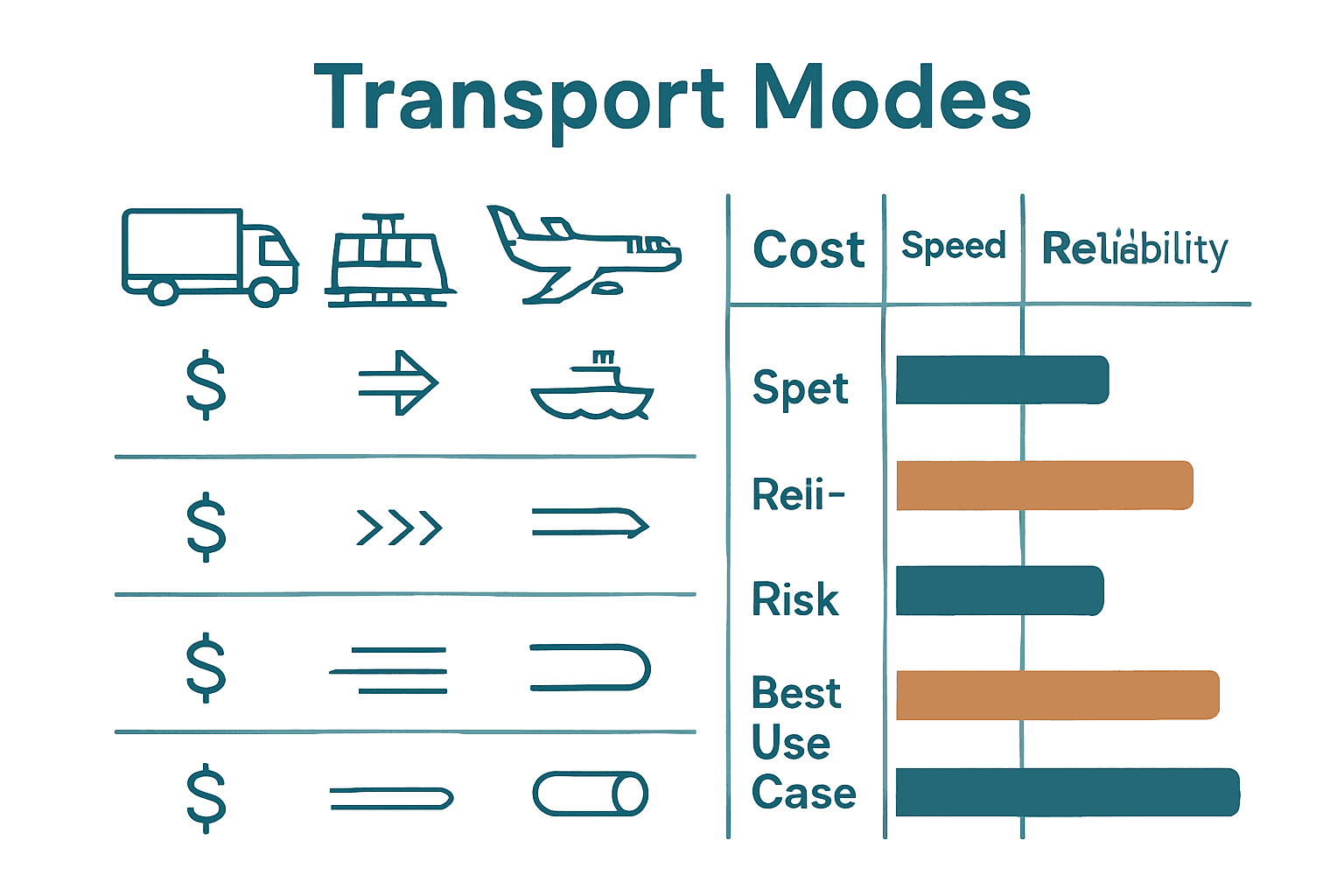 These models must integrate complex variables like cost, reliability, speed, and risk tolerance, enabling more sophisticated and responsive logistics management.
For more comprehensive insights into strategic shipping approaches, explore our freight forwarding guide that provides advanced logistics management strategies.
Optimize Your Ecommerce Shipping with Reliable Courier Services
Choosing the right transportation mode is a complex challenge that can make or break your ecommerce logistics. This article highlights critical pain points such as balancing speed, cost, and reliability while managing multiple shipping variables like transit times, cargo safety, and service quality. Ecommerce sellers often struggle with unpredictable delivery, hidden costs, and inefficient supply chain workflows. These obstacles can delay customer satisfaction and increase operational expenses.
At or-ner.com, we understand these pressures and offer comprehensive logistics solutions tailored to your unique needs. Our platform supports end-to-end freight booking across air, ocean, and land transport modes, backed by real-time shipment tracking and streamlined customs clearance. Whether you need reliable courier services for last-mile delivery or scalable warehousing options, our global network ensures your products move swiftly and securely. Our automated tools and data analytics help you make smarter transport mode selections that reduce costs and boost efficiency.
Take control of your logistics today and transform complex mode selection decisions into clear, manageable steps.
Start optimizing your ecommerce supply chain now with or-ner.com. Visit our homepage to explore tailored shipping solutions and experience the difference of a truly integrated logistics partner.
Frequently Asked Questions
What factors should be considered when selecting a transportation mode in logistics?
Businesses should consider factors such as required delivery date, transport service cost, reliability and service quality, shipment size, anticipated transit time, transshipment points, and the service range of third-party providers.
How do different transportation modes impact logistics costs and efficiency?
Different transportation modes have unique characteristics that affect costs and efficiency. For example, air transport is fastest but more expensive, while rail is cost-effective for bulk goods but slower. Balancing speed, cost, and reliability is key in logistics planning.
What are the main types of transportation modes used in ecommerce?
The main transportation modes used in ecommerce include road, rail, air, water, and pipeline. Each has specific applications depending on factors such as shipment type and destination.
How can ecommerce businesses optimize their transportation mode selection?
Ecommerce businesses can optimize transportation mode selection by conducting thorough analyses of logistics costs, transit times, cargo characteristics, and service levels. Utilizing data-driven insights can help create a tailored logistics strategy that enhances supply chain efficiency.