
Nearly 90 percent of Fortune 500 companies use logistics providers to streamline their supply chains and stay competitive. These specialists handle the intricate details of shipping, warehousing, and inventory so businesses can focus on growth. Understanding what logistics providers do can reveal smarter ways to cut costs, reduce risks, and meet customer demands with confidence.
Table of Contents
- What Are Logistics Providers? Core Concepts
- Types of Logistics Partnerships Explained
- Key Benefits For Ecommerce And Retailers
- Cost Implications And Risk Management
- Comparing Alternatives: In-House Vs Partnering
Key Takeaways
| Point | Details |
|---|---|
| Logistics Providers Enhance Supply Chain | They manage transportation, warehousing, and supply chain operations, allowing businesses to focus on core competencies. |
| Types of Partnerships Matter | Horizontal and vertical alliances can create more resilient supply chains and optimize logistics effectiveness. |
| Cost and Risk Management Benefits | Outsourcing logistics reduces capital investment and operational risks, leading to more flexible cost structures. |
| In-House vs. Partnering Choice | Companies must weigh operational control against the benefits of specialized logistics expertise and scalability in their decision. |
What Are Logistics Providers? Core Concepts
Logistics providers are specialized companies that manage complex transportation, warehousing, and supply chain operations for businesses across various industries. According to research from Wikipedia’s Third-Party Logistics entry, these providers specialize in integrated operations that can be scaled and customized to meet specific customer needs.
Third-party logistics (3PL) providers handle much more than simple shipping and storage. They strategically manage entire segments of a company’s supply chain, offering services like:
- Warehousing and inventory management
- Transportation and freight coordination
- Customs clearance and documentation
- Order fulfillment and distribution
- Value-added services related to production and procurement
These providers function within what’s known as an extended enterprise – a network of interconnected firms that combine their economic capabilities to deliver products and services. Research indicates this network extends beyond the primary company to include suppliers, distributors, and strategic partners who collectively contribute to market value.
By partnering with logistics providers, businesses can leverage specialized expertise, reduce operational complexity, and focus on their core competencies. A robust logistics partner transforms supply chain management from a potential headache into a strategic advantage, enabling companies to scale rapidly and efficiently across global markets.
Types of Logistics Partnerships Explained
Logistics partnerships are strategic collaborations that help businesses optimize their supply chain operations. According to research on strategic alliances, these partnerships can be categorized into two primary types: horizontal alliances and vertical alliances.
Horizontal Alliances occur when companies operating in the same business area collaborate to improve their market position. These partnerships might involve:
- Sharing transportation resources
- Combining warehouse networks
- Joint procurement strategies
- Coordinating distribution channels
- Reducing overall operational costs
Vertical Alliances involve partnerships between companies at different stages of the supply chain. These strategic connections link upstream suppliers with downstream partners to enhance overall efficiency. Such alliances can include manufacturers connecting with logistics providers, distributors partnering with retailers, or technology companies integrating with transportation networks.
By understanding and leveraging these partnership models, businesses can create more resilient, flexible, and cost-effective supply chain ecosystems. For a deeper exploration of how these partnerships can transform your logistics strategy, check out our guide on third-party logistics advantages. The right partnership can turn logistical challenges into competitive advantages, enabling companies to scale rapidly and respond dynamically to market demands.
Key Benefits for Ecommerce and Retailers
Logistics providers offer transformative advantages for ecommerce businesses and retailers seeking to optimize their supply chain operations. According to research on third-party logistics, these partnerships deliver substantial cost and time savings by leveraging specialized expertise and global networks.
Key benefits for ecommerce and retail businesses include:
- Cost Optimization: Reducing operational expenses through shared resources
- Scalability: Quickly adapting logistics services to market demands
- Global Reach: Accessing international shipping and distribution networks
- Technology Integration: Implementing advanced tracking and management systems
- Risk Mitigation: Distributing potential supply chain disruptions
Strategic freight partnerships provide additional advantages like long-term commitment, shared risk management, and enhanced transparency. These collaborations enable businesses to create predictable pricing models and maintain consistent supply chain performance.
For online retailers facing complex logistics challenges, partnering with the right logistics provider can be a game-changer.
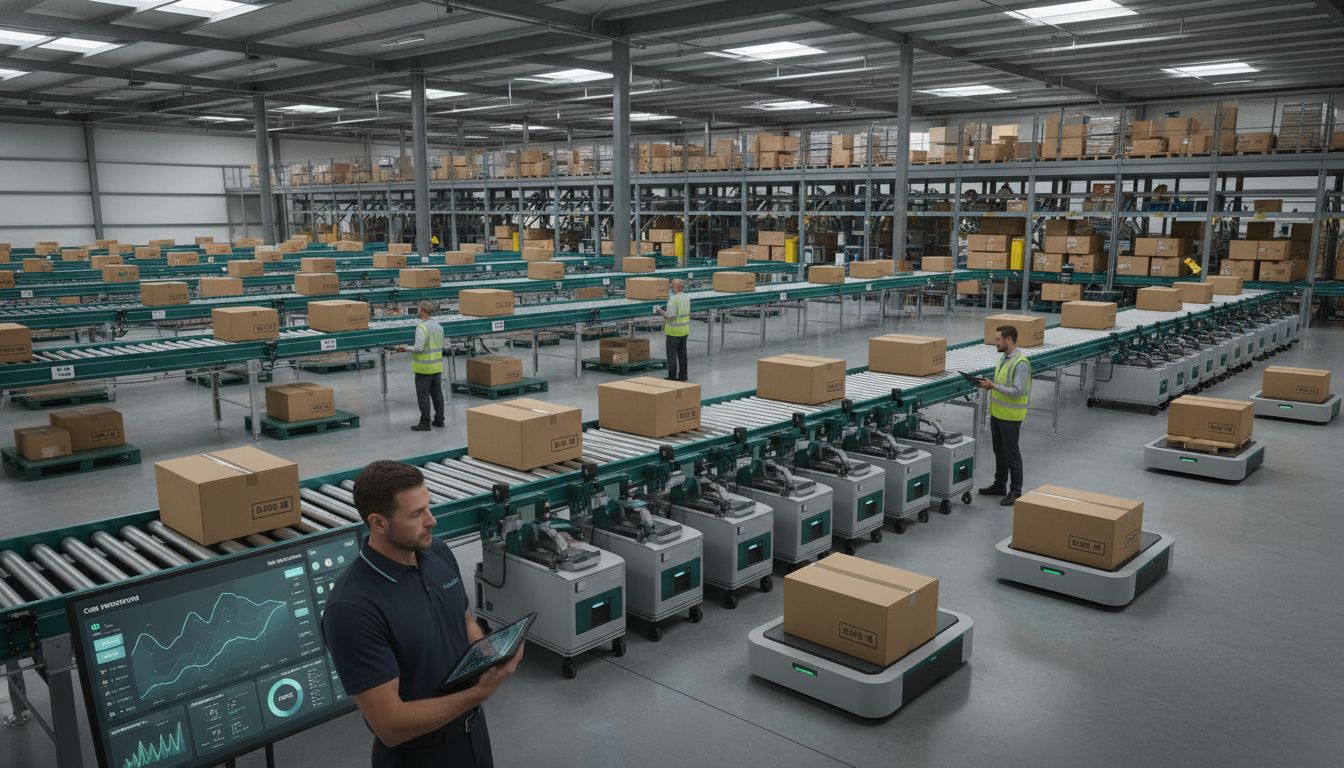 Our comprehensive guide on ecommerce fulfillment solutions can help you navigate these critical decisions, transforming logistical complexities into competitive advantages that drive business growth and customer satisfaction.
Cost Implications and Risk Management
According to research on third-party logistics, outsourcing logistics operations can significantly reduce capital commitment and mitigate operational risks for businesses. By partnering with specialized providers, companies can avoid substantial upfront investments in infrastructure and leverage expert management of complex supply chain challenges.
Key cost and risk management strategies include:
- Reduced Capital Expenditure: Eliminating the need to own warehouses, transportation vehicles, and logistics technology
- Flexible Cost Structure: Converting fixed logistics costs into variable, scalable expenses
- Risk Distribution: Sharing operational risks with experienced logistics partners
- Expertise-Driven Mitigation: Accessing professional risk management techniques
- Performance Optimization: Leveraging data-driven insights to minimize potential disruptions
Strategic freight partnerships take risk management a step further by creating shared accountability between shippers and carriers. This approach ensures both parties are collectively responsible for costs, service levels, and operational outcomes, promoting a more balanced and transparent supply chain ecosystem.
By carefully selecting logistics providers who offer comprehensive risk management and cost-effective solutions, businesses can transform potential vulnerabilities into strategic advantages.
Our guide on freight forwarding benefits provides deeper insights into how smart partnerships can drive financial efficiency and operational resilience.
Comparing Alternatives: In-House vs Partnering
According to research on third-party logistics, businesses face a critical decision when choosing between managing logistics in-house or partnering with specialized providers. The core challenge lies in balancing operational control with efficiency and expertise.
Comparing key factors reveals significant differences:
Here’s a comparison of in-house logistics versus partnering with a logistics provider:
| Key Factor | In-House Logistics | Logistics Partnership |
|---|---|---|
| Operational Control | Full control | Shared with provider |
| Capital Investment | High infrastructure costs | Lower upfront expenditure |
| Technology | Internal setup required | Advanced provider systems |
| Scalability | Limited, slower adaptation | Flexible, rapid scaling |
| Management | High oversight, complex hiring | Streamlined, provider managed |
| Cost Structure | Fixed, harder to adjust | Variable, based on usage |
In-House Logistics:
- Full operational control
- Higher infrastructure investments
- Complex technology requirements
- Increased management overhead
- Limited scalability
Logistics Partnership:
- Specialized expertise
- Reduced capital expenditure
- Advanced technological infrastructure
- Flexible scaling capabilities
- Streamlined operational management
Strategic freight partnerships offer additional advantages like long-term commitment and predictable pricing, which are challenging to achieve through internal logistics management. These partnerships enable companies to focus on core business competencies while leveraging external logistics expertise.
Ultimately, the decision depends on your business’s unique needs, growth trajectory, and operational complexity. Our guide on ecommerce fulfillment solutions can help you navigate this critical strategic choice, ensuring you select the most appropriate logistics approach for your specific business requirements.
Unlock Seamless Supply Chain Success with Trusted Logistics Partners
The article highlights how partnering with specialized logistics providers can eliminate costly headaches like high capital investment, operational risks, and scaling challenges. If you are feeling overwhelmed managing in-house logistics or seeking to boost ecommerce fulfillment with reliable courier services that truly deliver, or-ner.com offers a tailored, end-to-end platform designed just for you. Our solutions empower merchants and global brands to optimize inventory, automate shipment tracking, and tap into a global network of warehouses for fast, scalable distribution.
Start turning complex logistics into your strongest asset today. Explore how our industry-specific tools and freight booking services simplify supply chain management by visiting our comprehensive platform, learn more about ecommerce fulfillment solutions, and connect with experts ready to help you scale efficiently through reliable courier services. The future of seamless shipping is just a click away.
Frequently Asked Questions
What are logistics providers?
Logistics providers are specialized companies that manage transportation, warehousing, and supply chain operations for businesses, offering services such as inventory management, freight coordination, customs clearance, and order fulfillment.
What are the benefits of partnering with logistics providers?
Partnering with logistics providers can lead to cost optimization, scalability, global reach, risk mitigation, and technology integration, allowing businesses to focus on their core competencies while enhancing supply chain efficiency.
How do I choose between in-house logistics and a logistics partnership?
Choosing between in-house logistics and a logistics partnership depends on factors like operational control, capital investment, scalability, and management complexity. A logistics partnership often provides specialized expertise and reduced upfront costs, allowing for more flexible and efficient operations.
What are the types of logistics partnerships?
Logistics partnerships can be categorized into horizontal alliances, where companies at the same stage collaborate, and vertical alliances, which involve partnerships among companies at different stages of the supply chain to improve overall efficiency.
Recommended
- Top Benefits of Freight Forwarding for Growing Businesses 2025 – ORNER
- What Is Freight Forwarding? Guide for Modern Supply Chains 2025 – ORNER
- Essential courier services for small businesses – ORNER
- Reliable Courier Services in the USA – ORNER
- Green Supply Chain Practices: Complete Guide For 2025 | USPL – US Pro Logistics
- The Benefits of Agnostic Software in Hospital Patient Logistics | VectorCare