

Shipping costs can quietly eat away at your profits and leave business owners searching for answers. Most are shocked to find that companies waste thousands each year simply by using boxes that are too big or not tracking rates. But what really changes the game is not just picking a new carrier or squeezing everything into smaller packages. The biggest savings often hide in habits you probably never thought to question.
Table of Contents
- Step 1: Analyze Your Current Shipping Expenses
- Step 2: Evaluate And Compare Shipping Carriers
- Step 3: Optimize Packaging To Decrease Costs
- Step 4: Implement A Shipping Software Solution
- Step 5: Negotiate Shipping Rates With Providers
- Step 6: Monitor And Adjust Shipping Strategies Regularly
Quick Summary
| Key Point | Explanation |
|---|---|
| 1. Analyze Current Shipping Expenses | Gather all shipping invoices and compile them to identify potential cost reductions. |
| 2. Evaluate Shipping Carriers | Create a comparison matrix to analyze different carriers’ rates, services, and technology. |
| 3. Optimize Packaging Solutions | Standardize and reduce packaging sizes to minimize dimensional weight and material costs. |
| 4. Implement Shipping Software | Utilize shipping software for rate comparison and efficiency improvements in logistics operations. |
| 5. Regularly Monitor Shipping Strategies | Establish a dashboard for ongoing analysis and adjustments to your shipping methods and costs. |
Step 1: Analyze Your Current Shipping Expenses
Reducing shipping costs starts with a comprehensive understanding of your current shipping expenses. This critical first step involves digging deep into your existing logistics spending to uncover potential savings opportunities. By meticulously examining your shipping data, you can identify patterns, inefficiencies, and areas where strategic improvements can significantly cut expenses.
Begin by gathering all shipping invoices, carrier agreements, and transportation spending records from the past 12 months. Compile these documents into a centralized spreadsheet that allows you to track spending across different carriers, shipping modes, and destinations. Look for detailed information such as shipping volumes, average package weights, shipping zones, and frequency of shipments. Check out our guide on courier services for small businesses to understand how detailed tracking can reveal hidden cost optimization opportunities.
As you analyze the data, pay special attention to key metrics that impact shipping expenses. Calculate your average cost per shipment, shipping weight ratios, and zone distribution. These metrics will help you understand where your shipping budget is being allocated most heavily. For instance, you might discover that long-distance shipments or oversized packages are driving up your overall shipping costs more than expected.
Dont overlook the importance of comparing carrier rates and negotiating better terms. Some businesses find that they can save significant money by switching carriers or renegotiating existing contracts based on their shipping volume. Break down your shipping expenses by carrier and examine the price differences. Are you consistently paying premium rates for services you might not actually need? Could consolidating shipments or choosing slower shipping methods save money without dramatically impacting delivery times?
Verify your analysis by creating a baseline report that captures your current shipping cost structure. This report should include:
- Total annual shipping expenses
- Average shipping cost per package
- Breakdown of expenses by carrier
- Primary shipping zones and their associated costs
By completing this detailed analysis, youll have a clear roadmap for identifying potential savings and making informed decisions about your shipping strategy in the subsequent steps of reducing shipping costs.
Step 2: Evaluate and Compare Shipping Carriers
After thoroughly analyzing your current shipping expenses, the next critical step in reducing shipping costs is to evaluate and compare shipping carriers strategically. This process goes beyond simply looking at price tags and requires a nuanced approach to understanding the full value each carrier provides. Explore our guide on international parcel shipping to gain deeper insights into carrier selection strategies.
Comprehensive carrier comparison starts with creating a detailed comparison matrix that captures more than just base rates. Consider factors such as delivery speed, service reliability, geographical coverage, additional fees, and potential volume discounts. Dont just focus on the largest national carriers research regional and smaller shipping providers who might offer more competitive rates for your specific shipping needs.
Request detailed rate sheets and service agreements from multiple carriers. Pay close attention to their pricing structures, including base rates, fuel surcharges, dimensional weight pricing, and any accessorial fees. Some carriers offer significant discounts for businesses shipping high volumes, so be prepared to negotiate based on your shipping frequency and package characteristics. Look for carriers that provide transparent pricing and flexible shipping options that align with your business model.
Beyond pricing, evaluate the technological capabilities of each carrier. Modern shipping solutions should offer robust tracking systems, seamless integration with your existing ecommerce platforms, and user friendly online management tools. Consider carriers that provide real time tracking, automatic shipping label generation, and comprehensive reporting features. These technological advantages can indirectly contribute to reducing shipping costs by minimizing administrative overhead and improving operational efficiency.
Verify your carrier evaluation by creating a comprehensive scorecard that includes:
- Total shipping costs per carrier
- Delivery speed and reliability metrics
- Geographic coverage
- Technology and integration capabilities
- Customer support quality
- Potential volume discount opportunities
Remember that the cheapest carrier isnt always the best choice. The goal is to find a shipping partner that offers the most value for your specific business needs, balancing cost effectiveness with service quality and reliability.
Here is a comparative table to help evaluate and select the best shipping carrier for your business based on multiple key factors.
| Carrier Feature | Importance | What to Look For | Potential Impact on Costs |
|---|---|---|---|
| Base Rates | High | Transparent, regularly updated rates | Direct influence on expenses |
| Delivery Speed & Reliability | High | Timely delivery, low error rate | Can prevent added costs |
| Geographic Coverage | Medium | Suitable for your main shipping zones | Enables route optimization |
| Technology & Integration | Medium | Real-time tracking, software compatibility | Improves efficiency |
| Volume Discounts | High | Discounts for higher shipping frequency/volume | Substantial annual savings |
| Additional Fees & Surcharges | Medium | Fuel surcharges, accessorial charges | Avoids surprise expenses |
| Customer Support Quality | Medium | Responsive, dedicated support staff | Faster issue resolution |
Step 3: Optimize Packaging to Decrease Costs
Packaging optimization represents a critical yet often overlooked strategy for reducing shipping expenses. Smart packaging decisions can dramatically lower transportation costs by minimizing dimensional weight, reducing material expenses, and improving overall shipping efficiency. Learn more about strategic delivery approaches that complement effective packaging strategies.
Start by conducting a comprehensive packaging audit that examines your current packaging materials, sizes, and shipping methods. Standardize your packaging approach by selecting the smallest possible container that safely protects your product. Many businesses waste significant money using oversized boxes that increase shipping weight and dimensional pricing. Invest in custom packaging solutions that precisely fit your products, eliminating unnecessary air space and reducing material costs.
Explore lightweight packaging alternatives that maintain product protection while minimizing overall weight. Consider transitioning from traditional cardboard boxes to padded mailers, poly bags, or custom-fitted packaging materials that provide adequate protection with minimal excess. Advanced packaging materials like honeycomb kraft paper, air pillows, and molded pulp can offer excellent product protection at a fraction of the weight of traditional cushioning materials.
Implement a systematic approach to packaging optimization that involves precise measurements and continuous refinement. Utilize digital tools and scales to accurately measure package dimensions and weights, ensuring you select the most cost effective shipping solutions. Many carriers charge based on dimensional weight, so even small reductions in packaging size can translate into substantial shipping cost savings over time.
Verify your packaging optimization efforts by tracking key performance indicators:
- Total packaging material costs per shipment
- Average package weight and dimensional weight
- Reduction in shipping expenses
- Product damage rates
- Material waste percentage
Remember that packaging optimization is an ongoing process. Continuously experiment with different packaging materials, sizes, and techniques to find the most cost effective solution for your specific product line.
The table below serves as a checklist to verify your packaging optimization efforts and track progress toward lowering shipping costs over time.
| Verification KPI | Description | Why it Matters |
|---|---|---|
| Total Packaging Cost per Shipment | Total spent on packaging for each sent package | Reveals material savings |
| Average Package Weight | Mean parcel weight after optimization | Impacts carrier pricing |
| Dimensional Weight | Measured volume-based shipping weight | Helps minimize surcharges |
| Product Damage Rate | Frequency of damaged goods in transit | Ensures protection quality |
| Packaging Material Waste % | Portion of unused or excess material | Indicates cost/eco-efficiency |
| Reduction in Shipping Expenses | Overall shipping cost savings achieved | Validates optimization result |
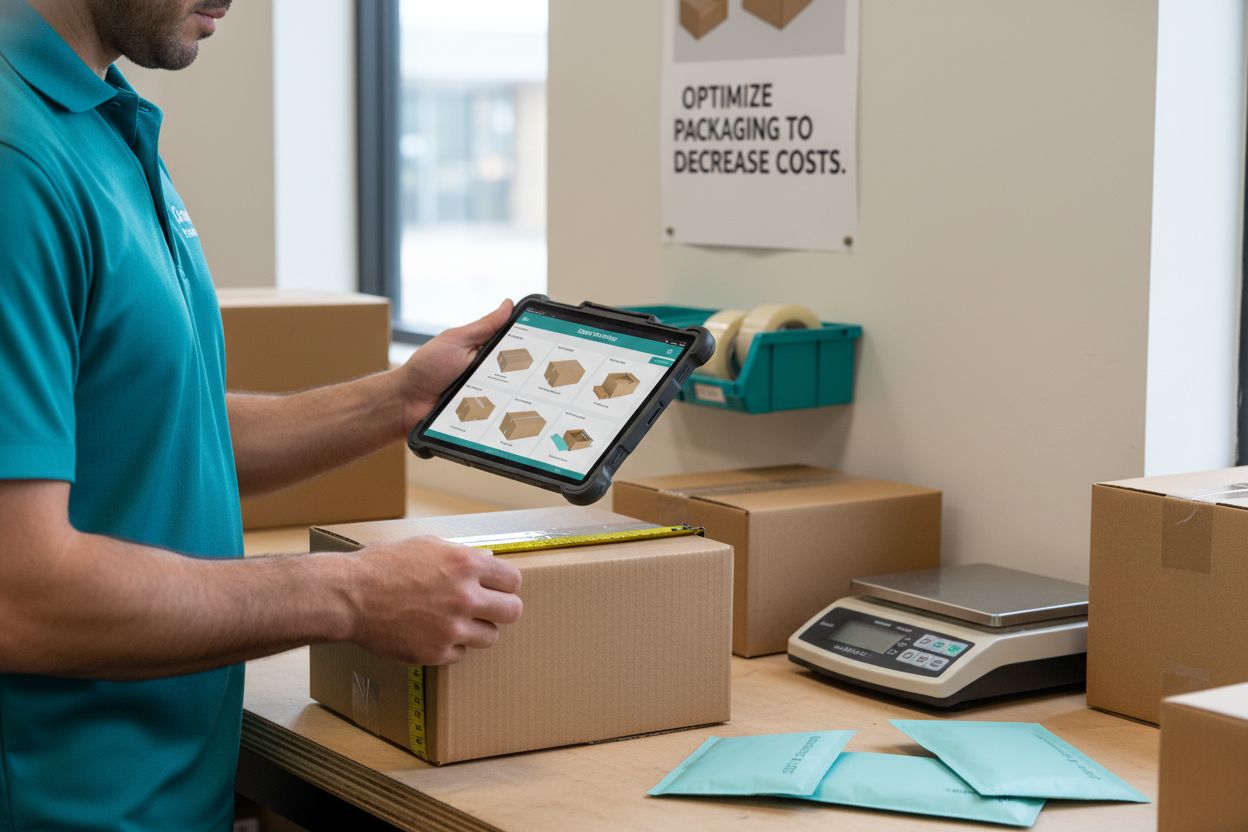 By treating packaging as a strategic element of your shipping process, you can unlock significant savings and improve your overall logistics efficiency.
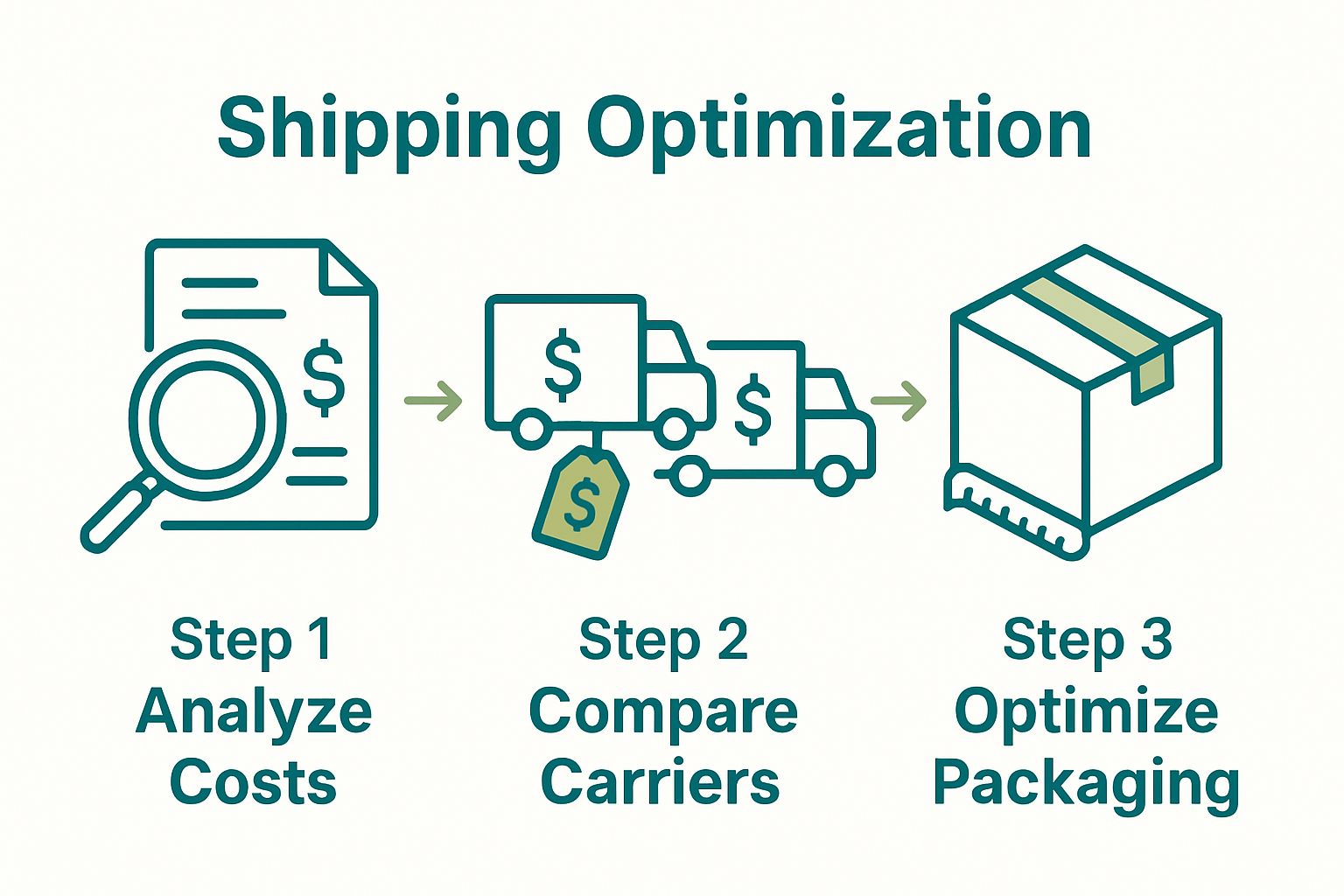
Step 4: Implement a Shipping Software Solution
Implementing a robust shipping software solution represents a transformative strategy for reducing shipping costs and streamlining logistics operations. Automated shipping platforms can dramatically simplify complex shipping processes while providing powerful cost optimization tools. Learn more about advanced freight management strategies that complement sophisticated shipping software solutions.
Begin by thoroughly researching shipping software platforms that integrate seamlessly with your existing ecommerce and inventory management systems. Look for solutions that offer comprehensive features such as rate comparison across multiple carriers, automatic label generation, real time tracking, and detailed shipping analytics. The right software can help you instantly compare shipping rates, select the most cost effective shipping method, and eliminate manual data entry errors that typically increase operational expenses.
When evaluating shipping software, prioritize platforms that provide advanced rate negotiation and optimization features. Some sophisticated solutions can automatically select the most economical shipping method based on package characteristics, destination, and delivery timeframe. These intelligent systems analyze your shipping patterns and recommend strategies for reducing costs, such as consolidating shipments, selecting more efficient carriers, or leveraging volume based discounts.
Implement a strategic onboarding process that includes comprehensive staff training and gradual system integration. Start by running the new shipping software parallel to your existing systems to ensure smooth transition and validate its performance. Configure the software to match your specific business requirements, including custom shipping rules, preferred carriers, and specific packaging constraints. Take time to customize the platform to align perfectly with your unique shipping workflows and cost reduction objectives.
Verify the effectiveness of your shipping software implementation by tracking key performance indicators:
- Total shipping cost reductions
- Time saved in shipping process management
- Accuracy of shipping label generation
- Carrier rate comparison efficiency
- Integration performance with existing systems
Remember that shipping software is not a one time solution but an ongoing tool for logistics optimization. Continuously explore new features, update your configuration, and leverage the platforms analytical capabilities to drive consistent improvements in your shipping strategy.
Step 5: Negotiate Shipping Rates with Providers
Negotiating shipping rates is a strategic process that can yield substantial cost savings for businesses willing to invest time and effort into building strong carrier relationships. Effective rate negotiations go beyond simply asking for a discount and require a comprehensive understanding of your shipping volume, patterns, and potential value to carriers. Explore our insights on freight forwarding benefits to understand the broader context of logistics negotiations.
Preparation is the cornerstone of successful shipping rate negotiations. Compile a detailed report of your shipping history, including total annual shipping volume, average package characteristics, primary shipping destinations, and current rates with existing carriers. Carriers are more likely to offer competitive rates when they understand the potential long term value of your business. Approach negotiations with a professional and data driven mindset, treating it as a collaborative partnership rather than an adversarial interaction.
Develop a strategic negotiation approach that leverages your shipping data and business potential. Identify multiple carriers and be prepared to discuss alternative options. Many businesses make the mistake of negotiating with only one carrier, which limits their bargaining power. Create a competitive environment where carriers understand they need to offer compelling rates to win or retain your business. Focus on total shipping costs, not just base rates, by discussing potential discounts on fuel surcharges, accessorial fees, and dimensional weight pricing.
Consider consolidating your shipping volume across fewer carriers to increase your negotiating leverage. Carriers are more likely to offer significant discounts to businesses that can commit to higher shipping volumes. If you work with multiple brands or have multiple shipping departments, explore opportunities to centralize and aggregate your shipping requirements. This approach can transform your negotiating position and unlock more substantial rate reductions.
Verify the success of your rate negotiation efforts by tracking these key indicators:
- Percentage reduction in overall shipping costs
- Improvements in carrier service level agreements
- Negotiated discounts across different shipping services
- Long term cost savings projections
- Flexibility in shipping rate structures
Remember that rate negotiations are an ongoing process. Regularly review your shipping agreements, stay informed about market rates, and be prepared to renegotiate as your business evolves. Successful shipping rate negotiations require persistence, data driven insights, and a strategic approach to building carrier relationships.
Step 6: Monitor and Adjust Shipping Strategies Regularly
Constant monitoring and strategic adjustment of your shipping strategies are crucial for maintaining cost effectiveness and operational efficiency. Shipping logistics are dynamic environments that require continuous refinement to stay competitive and minimize expenses. Implementing a systematic approach to tracking and analyzing your shipping performance ensures that your cost reduction efforts remain relevant and impactful.
Develop a comprehensive shipping analytics dashboard that provides real time insights into your logistics performance. This dashboard should integrate data from multiple sources, including carrier reports, shipping software platforms, and internal shipping records. Look for key performance indicators that reveal potential optimization opportunities, such as average shipping costs per package, delivery times, carrier performance, and seasonal shipping variations. By creating a centralized view of your shipping metrics, you can quickly identify trends and make data driven decisions.
Schedule regular monthly or quarterly shipping strategy review sessions that bring together key stakeholders from logistics, finance, and operations departments. During these sessions, critically examine your current shipping approaches, analyze performance metrics, and brainstorm potential improvements. Consider external factors that might impact shipping costs, such as changes in carrier pricing structures, new shipping technologies, or shifts in your business model. Be prepared to experiment with alternative strategies and remain flexible in your approach to reducing shipping expenses.
Utilize advanced predictive analytics tools that can help forecast potential shipping cost trends and identify proactive optimization strategies. Many modern shipping software platforms offer machine learning capabilities that can predict potential cost increases, recommend carrier switches, and suggest packaging modifications. These intelligent systems can provide actionable insights that go beyond traditional reporting, helping you stay ahead of potential shipping expense challenges.
Verify the effectiveness of your ongoing shipping strategy monitoring through these key indicators:
- Percentage of shipping cost reductions achieved
- Consistency in carrier performance metrics
- Speed of strategy adaptation
- Accuracy of shipping cost predictions
- Reduction in shipping related operational expenses
Remember that reducing shipping costs is an ongoing journey, not a one time achievement. Maintain a curious and innovative mindset, continuously educate yourself about emerging logistics technologies, and be willing to challenge existing practices. Your commitment to regular monitoring and strategic adjustment will be the key to long term shipping cost optimization.
Unlock Reliable Courier Services and Slash Your Shipping Costs
Are you feeling overwhelmed trying to balance affordable shipping with reliable delivery? Many businesses struggle with high transportation expenses, inefficient carrier choices, and complex packaging processes. The strategies from “Mastering Reducing Shipping Costs: 6 Effective Strategies” highlight just how challenging it can be to optimize every part of your logistics chain. But what if you could streamline your entire operation and tap into proven, industry-specific solutions?
At or-ner.com, we empower ecommerce sellers and brands to reduce shipping costs while ensuring dependable courier services. Our platform offers end-to-end support including real-time shipment tracking, seamless carrier integration, and automated analytics so you can quickly identify savings and make confident decisions. Ready to see how our reliable courier services can transform your shipping approach? Visit our QA Archives for in-depth guides and get started on reducing costs now. Take control of your shipping expenses today with or-ner.com and let your business grow without limits.
Frequently Asked Questions
How can analyzing my current shipping expenses help reduce costs?
Understanding your current shipping expenses allows you to identify patterns and inefficiencies in your logistics spending. Begin by compiling shipping data from the past year into a spreadsheet to pinpoint high costs and potential savings opportunities, aiming for a reduction of around 10-15% within months.
What factors should I consider when evaluating shipping carriers?
When comparing shipping carriers, look beyond just base rates. Assess delivery speed, service reliability, geographic coverage, and any additional fees. Create a comparison matrix to evaluate each carrier comprehensively and identify which one best aligns with your specific shipping needs.
How can I optimize my packaging to decrease shipping costs?
To lower shipping expenses through packaging optimization, use the smallest container that adequately protects your products. Conduct a packaging audit, switch to lightweight yet protective materials, and aim to minimize excess space to potentially reduce costs by 15-20% over time.
What features should I look for in shipping software solutions?
Select shipping software that integrates with your current systems and offers rate comparison, automatic label generation, and detailed analytics. Prioritize platforms that can optimize shipping methods automatically based on your shipping patterns, which can lead to significant cost savings with every shipment.
What are the best practices for negotiating shipping rates?
Prepare for negotiations by gathering comprehensive shipping data, including volume and existing rates. Approach multiple carriers to foster competition, aiming to consolidate shipping across fewer providers to enhance your negotiating leverage and target a 5-10% reduction in rates.
How can I monitor and adjust my shipping strategies effectively?
Implement a shipping analytics dashboard that tracks key performance indicators in real time. Review these metrics regularly, such as monthly or quarterly, to refine your strategies, ensuring you adapt quickly to changing costs or logistics challenges for ongoing improvement.