Nearly 30 percent of American warehouses experience costly errors due to outdated layouts and inefficient picking methods. In a highly competitive marketplace where speed and accuracy directly impact customer loyalty, optimizing warehouse operations has become a top priority for American businesses of all sizes. This guide reveals practical strategies to transform your picking process and unlock measurable gains in productivity, precision, and employee satisfaction.
Table of Contents
- Step 1: Assess Warehouse Layout And Inventory Flow
- Step 2: Select The Optimal Picking Method For Your Needs
- Step 3: Train Staff On Standardized Picking Procedures
- Step 4: Implement Digital Tracking And Automation Tools
- Step 5: Verify Picking Accuracy And Resolve Discrepancies
Quick Summary
| Key Insight | Explanation |
|---|---|
| 1. Optimize Warehouse Layout | Create a detailed floor plan and strategically position high-volume items near packing stations to enhance picking efficiency. |
| 2. Choose the Right Picking Method | Evaluate and select a picking method that suits your specific operations, like batch or zone picking, to improve productivity. |
| 3. Standardize Staff Training | Develop a thorough training program that covers procedures and best practices, ensuring all workers perform consistently. |
| 4. Implement Digital Tools | Use warehouse management software and automation to improve real-time inventory tracking and reduce errors during order processing. |
| 5. Establish Accuracy Checks | Create a systematic process for verifying picking accuracy and resolving discrepancies, fostering a culture of precision and reliability. |
Step 1: Assess Warehouse Layout and Inventory Flow
Understanding your warehouse layout is crucial for creating an efficient picking strategy that minimizes unnecessary movement and maximizes productivity. Your goal in this step is to map out your current inventory configuration and identify potential optimization opportunities.
Start by creating a detailed floor plan that captures every storage area, aisle, and rack location. Case studies have demonstrated that implementing ABC analysis can dramatically improve picking efficiency by strategically positioning inventory based on frequency of use. High volume products should be placed closest to packing stations, while slower moving items can be stored in more distant locations. Organize your inventory using a systematic approach that considers product weight, dimensions, and turnover rates.
To enhance your layout assessment, integrate a digital inventory management system that provides real time tracking and location optimization. Research indicates that such systems can significantly improve warehouse storage allocation and inventory flow, enabling more precise product placement and faster retrieval times. Consider using heat mapping technology to visualize product movement patterns and identify potential bottlenecks in your current layout.
Pro Tip: Walk your warehouse physically after creating your initial layout map. Sometimes physical observation reveals inefficiencies that digital planning might miss. Look for congestion points, awkward picking paths, and areas where workers frequently cross paths.
By meticulously assessing your warehouse layout, you set the foundation for a streamlined picking process that can dramatically reduce order processing times and improve overall operational efficiency.
Step 2: Select the Optimal Picking Method for Your Needs
Choosing the right picking method is critical for maximizing warehouse efficiency and reducing order processing time. Your selection will directly impact worker productivity, order accuracy, and overall operational performance.

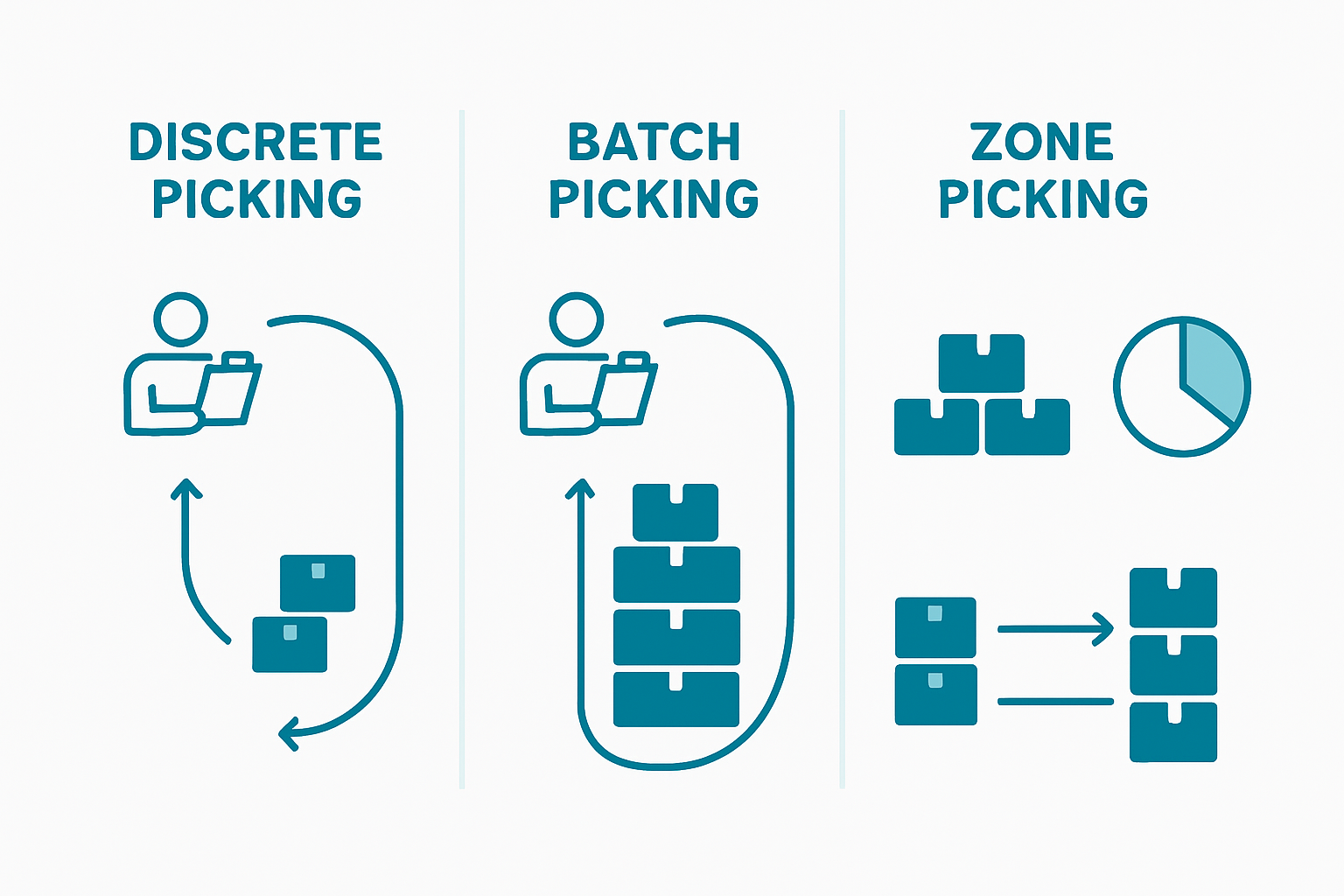
Comparative studies of picking, storage, and routing policies reveal significant variations in order picker travel and operational efficiency, making it essential to carefully evaluate your specific warehouse requirements. Consider the most common picking strategies such as discrete picking (processing one order at a time), batch picking (gathering items for multiple orders simultaneously), zone picking (dividing warehouse into specialized areas), and wave picking (processing orders in predetermined time windows).
Research comparing manual order picking methods demonstrates notable differences in efficiency and employee adaptation, with technologies like Pick-by-Light and Pick-by-Paper offering unique advantages. Discrete picking works best for low volume operations with complex items, while batch picking excels in high volume environments with similar product configurations. Zone picking proves ideal for large warehouses with extensive inventories, minimizing worker travel time.
Pro Tip: Perform a pilot test with your top two picking method candidates before full implementation. Track metrics like picking time, error rates, and worker fatigue to make a data driven decision that aligns with your specific operational needs.
Your picking method selection sets the foundation for warehouse productivity, so take time to analyze your unique workflow and choose strategically.
Step 3: Train Staff on Standardized Picking Procedures
Effective warehouse picking requires consistent and systematic training that transforms individual workers into a cohesive, high-performance team. Your goal is to develop a comprehensive training program that standardizes procedures, minimizes errors, and maximizes overall operational efficiency.
Begin by creating a detailed training manual that breaks down each picking method into clear, actionable steps. Document precise workflows for different scenarios, including how to handle exceptions, manage inventory discrepancies, and use warehouse technology. Your training should cover physical techniques like proper lifting mechanics, efficient movement patterns, and ergonomic best practices to prevent worker fatigue and potential injuries.
Implement a multi stage training approach that combines theoretical instruction with hands on practice. Start with classroom style learning where workers understand fundamental concepts, then transition to supervised practical training in the actual warehouse environment. Use visual aids, demonstration videos, and interactive workshops to reinforce learning. Consider pairing new employees with experienced workers for mentorship and real world skill transfer.
Pro Tip: Develop a performance tracking system that allows continuous skill assessment and provides constructive feedback. Regular skills refresher courses and periodic performance reviews will help maintain high standards and identify opportunities for individual worker improvement.
Consistent and thorough training transforms your picking staff from individual workers into a synchronized team capable of delivering exceptional warehouse performance.
Step 4: Implement Digital Tracking and Automation Tools
Transitioning to digital tracking and automation tools represents a critical leap in warehouse operational efficiency. Your objective is to integrate smart technologies that streamline inventory management, reduce human error, and accelerate order processing times.
Recent research on robotic mobile fulfillment systems highlights the potential of advanced combi-stations in transforming warehouse operations, demonstrating how strategic technological integration can dramatically improve productivity. Start by selecting warehouse management software that offers real time inventory tracking, automated order routing, and comprehensive performance analytics. Look for systems that integrate seamlessly with your existing infrastructure, providing scalable solutions that can adapt to your evolving business needs.
Advanced warehouse optimization procedures now utilize sophisticated clustering techniques and dynamic systems modeling to enhance storage and retrieval processes, enabling unprecedented levels of operational precision. Implement barcode scanning technologies, RFID tracking, and automated inventory management systems that provide instant visibility into stock levels, location tracking, and potential supply chain disruptions. Consider investing in mobile data collection devices that allow workers to update inventory in real time, reducing manual data entry and minimizing human error.
Pro Tip: Conduct a comprehensive cost benefit analysis before full implementation. Start with a pilot program in a specific warehouse section to test the technology and train staff, allowing for incremental adaptation and minimizing potential operational disruptions.
Successful digital tracking and automation implementation transforms your warehouse from a traditional inventory space into a smart, responsive operational hub that can quickly adapt to changing market demands.
Step 5: Verify Picking Accuracy and Resolve Discrepancies
Maintaining high picking accuracy is crucial for customer satisfaction and operational efficiency. Your goal is to develop a systematic approach to quality control that identifies and resolves inventory and order processing errors before they impact customer experience.
Research on logistics warehouse optimization reveals critical strategies for addressing sudden order changes and route blockages, highlighting the importance of proactive accuracy verification. Implement a comprehensive check system that involves multiple verification stages. Start with initial order picking checks where workers cross reference picked items against order specifications, then conduct a secondary verification process using barcode scanning or weight verification technologies. Create a standardized documentation process for any discrepancies, ensuring each deviation is tracked, analyzed, and addressed systematically.
Integrated allocation and routing policies have demonstrated significant improvements in picking efficiency and accuracy, suggesting the value of a holistic approach to error prevention. Develop a detailed error tracking system that categorizes discrepancies by type frequency and root cause. Use this data to implement targeted training programs, adjust warehouse layouts, or modify picking procedures. Consider establishing a dedicated quality control team responsible for investigating persistent accuracy issues and developing continuous improvement strategies.
Pro Tip: Create a feedback loop that rewards accuracy and provides constructive guidance for improvement. Implement a recognition program that celebrates workers with consistently high accuracy rates and offers supportive coaching for those needing additional skill development.
Accurate picking is not just about avoiding mistakes its about building a culture of precision that delivers exceptional operational performance and customer satisfaction.
Streamline Your Warehouse Picking to Boost Fulfillment Efficiency
Mastering warehouse picking methods is essential to minimize errors, reduce order processing times, and increase productivity. The challenges of selecting the right picking strategy, training staff effectively, and implementing digital tracking tools directly affect your ability to deliver exceptional service. Whether you struggle with inefficient layout assessments or want to leverage automation for real-time inventory visibility, the goals remain clear: faster, more accurate fulfillment that delights customers.
At or-ner.com, we understand these pain points and offer comprehensive logistics solutions designed to optimize every step of your warehouse operation. From scalable warehousing and precise inventory management to reliable courier services and cross-border fulfillment, our platform empowers ecommerce sellers and businesses to reduce complexity and increase speed without sacrificing accuracy. Experience how integrated real-time shipment tracking and smart automation can transform challenges into opportunities.

Take control of your warehouse picking process today with or-ner.com and unlock smarter workflow automation and dependable delivery services. Discover how our end-to-end logistics platform supports your growth by enhancing accuracy and operational efficiency. Visit our logistics and fulfillment solutions now and start optimizing your warehouse management for faster, error-free fulfillment.
Frequently Asked Questions
How can I assess my warehouse layout for efficient picking?
Begin by creating a detailed floor plan that outlines all storage areas and aisles. Walk through your warehouse to physically observe potential bottlenecks, ensuring efficient product placement based on movement frequency.
What picking method should I choose for my warehouse operations?
Select a picking method that aligns with your specific needs, such as discrete, batch, zone, or wave picking. Consider conducting a pilot test of your top two candidates to gather metrics on efficiency and worker fatigue within 30 days.
How do I train staff on standardized picking procedures?
Develop a comprehensive training manual that details each picking method with clear steps. Incorporate hands-on practice and pair new employees with experienced workers for effective learning.
What digital tools can enhance my warehouse picking process?
Implement warehouse management software with real-time inventory tracking and automated order routing. Start with a pilot program to evaluate technology efficacy and reduce manual errors in your fulfillment process.
How can I verify picking accuracy in my warehouse?
Establish a multi-stage verification system to check orders during and after picking. Use barcode scanning to double-check picked items against order specifications, aiming to reduce picking errors by 15% over 60 days.
What steps can I take to resolve discrepancies in order picking?
Create a detailed error tracking system to categorize discrepancies and identify their root causes. Use this data to adjust procedures or provide targeted training, fostering a culture of accuracy among your staff.