Managing inventory for home goods and apparel can feel like juggling a thousand moving parts, especially as SKUs multiply and customer expectations rise. In the competitive American ecommerce market, even small lapses in replenishment can lead to stockouts, excess costs, or frustrated shoppers. Understanding the difference between traditional and AI-driven replenishment methods empowers logistics managers to make smarter choices, helping them stay ahead in a fast-changing retail environment.
Table of Contents
- Defining Inventory Replenishment Methods
- Major Replenishment Strategies For Ecommerce
- How Demand Forecasting Shapes Stock Levels
- Role Of Automation And Tech Solutions
- Common Pitfalls And Cost Implications
- Comparing Alternatives In Inventory Management
Key Takeaways
| Point | Details |
|---|---|
| Embrace Modern Techniques | Transition from traditional methods to AI-driven replenishment strategies for better demand forecasting and inventory management. |
| Utilize Hybrid Approaches | Combine traditional inventory strategies with advanced technologies to enhance responsiveness and efficiency. |
| Focus on Data-Driven Decisions | Leverage machine learning algorithms and real-time data analytics for accurate demand forecasting and inventory optimization. |
| Avoid Common Pitfalls | Implement comprehensive systems to mitigate risks associated with inaccurate forecasting and manual errors in inventory management. |
Defining Inventory Replenishment Methods
Inventory replenishment represents a systematic approach for maintaining optimal stock levels across different product categories. At its core, this strategic process ensures businesses have the right amount of inventory at the right time, minimizing both stockouts and excess holding costs.
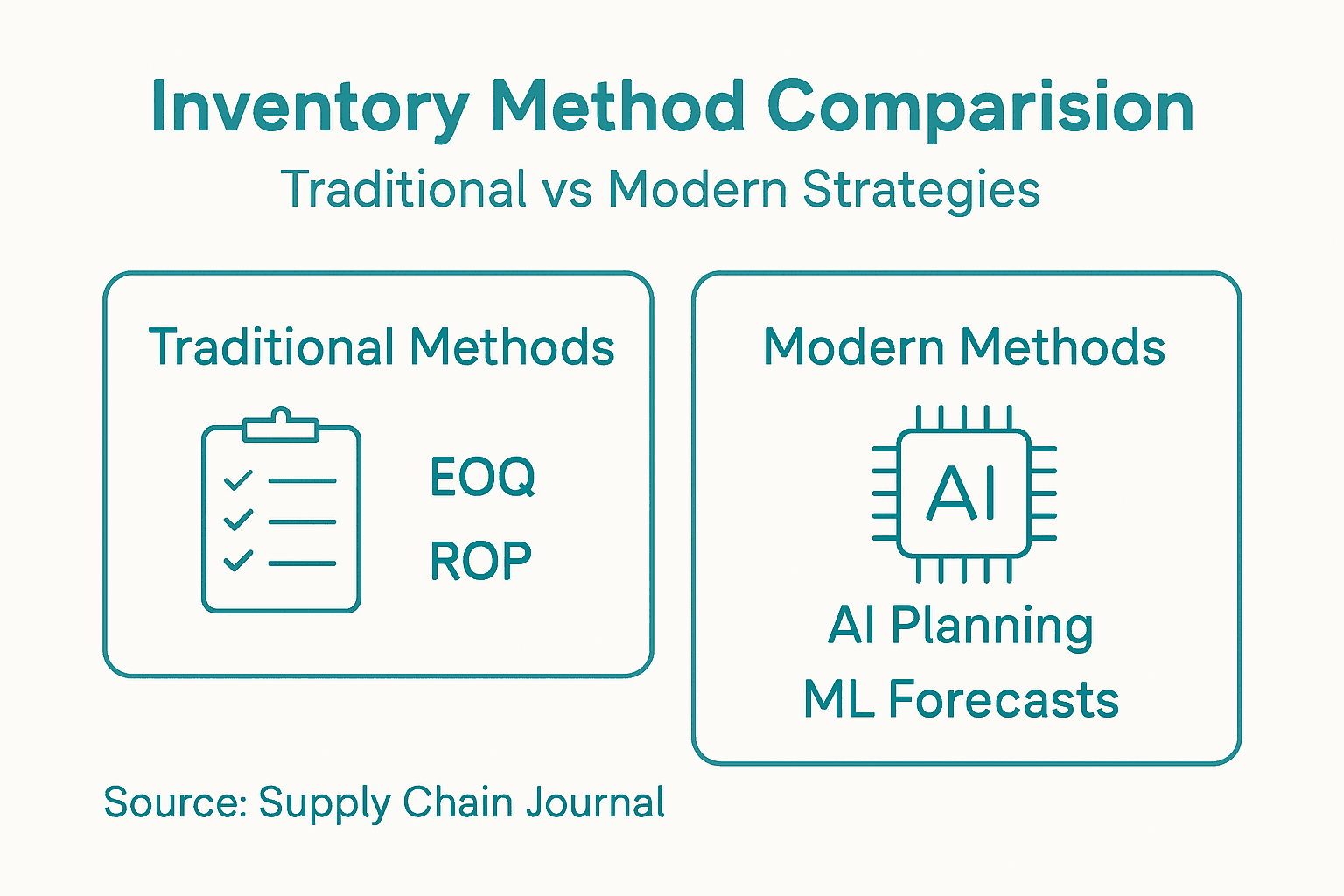
Traditional inventory replenishment methods typically rely on predetermined approaches like Economic Order Quantity (EOQ) and Reorder Point (ROP). These classic techniques involve establishing fixed inventory thresholds and trigger points for reordering. However, these methods increasingly show limitations in complex, multi-category retail environments with thousands of unique Stock Keeping Units (SKUs).
Modern inventory replenishment is rapidly evolving, driven by technological advancements. AI-driven autonomous inventory management now enables more dynamic, responsive approaches that continuously monitor and adjust procurement strategies. These advanced systems can:
- Autonomously track inventory levels in real-time
- Predict demand fluctuations with machine learning algorithms
- Adjust procurement quantities dynamically
- Reduce stockout risks
- Minimize unnecessary holding costs
Data-driven replenishment models represent the next frontier in supply chain optimization. Deep learning inventory strategies now directly determine replenishment quantities by analyzing complex input features, moving beyond traditional predict-then-optimize frameworks.
Pro tip: Implement a hybrid inventory replenishment approach that combines traditional mathematical models with advanced AI-driven insights to maximize supply chain efficiency.
Here’s how traditional and modern inventory replenishment methods compare:
| Criteria | Traditional Methods | Modern AI-Driven Methods |
|---|---|---|
| Flexibility | Relies on fixed rules | Adapts to changing demand |
| Scalability | Challenging for many SKUs | Handles large, complex portfolios |
| Risk of Stockouts | Higher risk | Lower risk with prediction |
| Cost Control | Basic optimization | Dynamic, data-driven cost savings |
| Example Techniques | EOQ, ROP | Machine learning, deep learning |
Major Replenishment Strategies for Ecommerce
Ecommerce inventory management demands sophisticated replenishment strategies that can quickly adapt to rapidly changing market conditions. Unlike traditional retail environments, online sellers must navigate complex demand patterns, seasonal fluctuations, and unpredictable consumer behaviors that require dynamic and responsive inventory approaches.
System dynamics modeling for inventory has emerged as a critical technique for developing adaptive replenishment strategies. These advanced approaches enable businesses to create flexible inventory policies that can automatically adjust to shifting market demands, product life cycles, and supply chain disruptions.
Key replenishment strategies for ecommerce businesses include:
- Continuous Replenishment: Automatically restocking inventory based on real-time sales data
- Periodic Replenishment: Restocking at fixed time intervals regardless of current inventory levels
- Demand-Driven Replenishment: Adjusting stock levels based on predictive analytics and machine learning forecasts
- Vendor-Managed Inventory (VMI): Allowing suppliers to monitor and restock inventory levels
Online linear programming approaches provide sophisticated algorithms for optimizing replenishment decisions under uncertain market conditions. These methods help ecommerce businesses develop more responsive and cost-efficient inventory management systems that can quickly adapt to fluctuating demand and supply chain challenges.
Modern replenishment strategies leverage advanced technologies like artificial intelligence and machine learning to create more intelligent, predictive inventory management systems. By integrating real-time data analytics, businesses can develop more precise and responsive approaches to maintaining optimal stock levels.
Pro tip: Implement a hybrid replenishment strategy that combines multiple approaches to create a more robust and flexible inventory management system.
How Demand Forecasting Shapes Stock Levels
Demand forecasting serves as the critical backbone of effective inventory management, transforming raw data into strategic insights that directly influence stock levels and purchasing decisions. By predicting future product requirements, businesses can optimize their inventory strategies to balance customer satisfaction with operational efficiency.

Demand estimation strategies play a pivotal role in understanding market dynamics and consumer behavior. These sophisticated analytical approaches help businesses anticipate purchasing patterns, seasonal variations, and potential market shifts that could impact inventory requirements.
Key components of effective demand forecasting include:
- Quantitative Methods: Using historical sales data and statistical models
- Qualitative Techniques: Incorporating market research and expert insights
- Machine Learning Algorithms: Leveraging predictive analytics for more accurate forecasts
- Trend Analysis: Identifying long-term market patterns and consumer preferences
Forecasting levels and methods demonstrate the complexity of demand planning across different organizational contexts. Strategic forecasting provides overarching market insights, tactical forecasting supports medium-term planning, and operational forecasting enables precise day-to-day inventory management.
Modern demand forecasting transcends traditional approaches by integrating advanced technologies like artificial intelligence and big data analytics. These innovative techniques enable businesses to create more nuanced, responsive, and accurate inventory prediction models that can quickly adapt to changing market conditions.
Pro tip: Develop a multi-layered forecasting approach that combines quantitative data analysis with qualitative market insights to create more robust inventory predictions.
Role of Automation and Tech Solutions
Technology has revolutionized inventory replenishment, transforming traditional manual processes into sophisticated, data-driven systems that optimize supply chain efficiency. By leveraging cutting-edge technological solutions, businesses can now manage inventory with unprecedented precision and responsiveness.
Autonomous AI inventory frameworks represent the next frontier of inventory management, enabling intelligent systems that can independently monitor stock levels, initiate purchases, and continuously learn from market dynamics. These advanced technologies replace time-consuming spreadsheet-based reordering with dynamic, adaptive approaches that significantly reduce operational inefficiencies.
Key technological solutions for inventory replenishment include:
- Artificial Intelligence (AI): Creating predictive models for demand forecasting
- Internet of Things (IoT): Enabling real-time inventory tracking
- Machine Learning Algorithms: Developing adaptive replenishment strategies
- Robotic Process Automation: Streamlining warehousing and inventory management
- Blockchain Technologies: Enhancing supply chain transparency and traceability
Modern inventory management systems integrate multiple technological tools to create comprehensive solutions. Tracking technologies like RFID and IoT dramatically improve inventory accuracy, reduce human error, and provide real-time data collection capabilities that support automated replenishment processes.
The convergence of advanced technologies is creating increasingly intelligent, responsive inventory management systems that can anticipate market changes, optimize stock levels, and dramatically improve overall supply chain performance.
Pro tip: Select technology solutions that can integrate seamlessly with your existing systems and provide scalable, adaptable inventory management capabilities.
The following table highlights major technological solutions and their impact on inventory management:
| Technology | Main Application | Business Impact |
|---|---|---|
| AI & ML | Forecast demand & automate decisions | Improved accuracy and efficiency |
| IoT | Real-time inventory tracking | Reduced human error, faster response |
| Blockchain | Supply chain transparency | Greater traceability, reduced fraud |
| Robotic Automation | Streamline warehouse tasks | Lower labor costs, increased speed |
Common Pitfalls and Cost Implications
Effective inventory replenishment requires navigating a complex landscape of potential challenges that can significantly impact operational costs and supply chain performance. Even minor missteps in inventory management can lead to substantial financial consequences, making strategic planning and proactive risk management critical.
Warehouse bin system challenges reveal the intricate nature of inventory management pitfalls. Organizations frequently encounter issues like demand variability, limited storage capacity, and operational disruptions that can quickly escalate into costly inefficiencies.
Common inventory replenishment pitfalls include:
- Inaccurate Demand Forecasting: Leads to overstocking or stockouts
- Poor Storage Space Management: Increases holding and opportunity costs
- Inadequate Inventory Tracking: Results in lost or misplaced inventory
- Inflexible Replenishment Strategies: Reduces responsiveness to market changes
- Manual Process Errors: Introduces human error and inefficiency
Internal warehouse replenishment problems highlight the complexity of maintaining optimal inventory levels. Critical challenges emerge from underestimating operational constraints, such as limited workforce availability and time-sensitive replenishment requirements.
The financial implications of these pitfalls can be substantial, potentially causing significant revenue loss, increased operational expenses, and diminished customer satisfaction. Businesses must develop sophisticated, adaptable strategies that anticipate and mitigate these common inventory management risks.
Pro tip: Implement a comprehensive inventory management system that combines advanced technology, regular audits, and flexible replenishment strategies to minimize costly operational inefficiencies.
Comparing Alternatives in Inventory Management
Inventory management strategies have evolved dramatically, moving beyond traditional approaches to sophisticated, data-driven systems that offer businesses unprecedented flexibility and precision. The landscape of inventory alternatives continues to expand, presenting organizations with multiple sophisticated approaches to optimize their supply chain operations.
Inventory management system evolution reveals a complex progression from manual tracking to advanced technological solutions. Modern businesses must carefully evaluate different methodologies to match their unique operational requirements, considering factors like scalability, technological integration, and industry-specific challenges.
Key inventory management alternatives include:
- Just-in-Time (JIT): Minimizes inventory holding costs
- Vendor-Managed Inventory (VMI): Transfers inventory management responsibility to suppliers
- Continuous Replenishment: Automatically restocks based on real-time consumption
- Economic Order Quantity (EOQ): Calculates optimal order quantities
- ABC Inventory Classification: Prioritizes inventory based on value and importance
Data-driven inventory optimization methods demonstrate the power of advanced analytical techniques in inventory management. Cutting-edge approaches like machine learning algorithms and deep reinforcement learning enable more precise demand forecasting and adaptive inventory strategies.
Successful inventory management requires a nuanced approach that combines technological capabilities with strategic thinking. Organizations must remain flexible, continuously evaluating and adapting their inventory methods to maintain competitive advantage in a rapidly changing business landscape.
Pro tip: Develop a hybrid inventory management approach that leverages multiple strategies, ensuring maximum flexibility and responsiveness to market dynamics.
Elevate Your Inventory Replenishment with Reliable Logistics Solutions
Struggling with maintaining optimal stock levels and avoiding costly stockouts or excess inventory? This article highlights the challenges of inventory replenishment including managing demand forecasting, adapting to market changes, and leveraging technology-driven strategies. At or-ner.com, we understand these pain points and offer a comprehensive platform designed to streamline your supply chain from warehousing to shipping.
Our end-to-end solutions combine reliable courier services, real-time tracking, and automation tools that empower ecommerce sellers to achieve flexible, data-driven inventory management. Whether you are a merchant or a global brand, our global network of warehouses and fulfillment centers supports fast, scalable replenishment strategies tailored for diverse product categories.
Take control of your inventory challenges today with reliable courier services that integrate seamlessly with your supply chain operations. Visit or-ner.com and discover how our platform can help you implement dynamic inventory replenishment methods backed by industry-leading logistics expertise. Act now to boost your supply chain efficiency and drive ecommerce growth with confidence.
Frequently Asked Questions
What are the primary methods of inventory replenishment?
The primary methods of inventory replenishment include Economic Order Quantity (EOQ), Reorder Point (ROP), continuous replenishment, periodic replenishment, demand-driven replenishment, and vendor-managed inventory (VMI).
How does demand forecasting influence inventory replenishment?
Demand forecasting is crucial as it predicts future product needs, allowing businesses to optimize inventory levels, reduce stockouts, and minimize excess holding costs by aligning stock with anticipated customer demand.
What role does technology play in modern inventory replenishment?
Technology enhances inventory replenishment by automating processes, providing real-time tracking, and employing AI and machine learning for predictive analytics, which improves decision-making and efficiency in the supply chain.
What are common pitfalls in inventory replenishment that businesses should avoid?
Common pitfalls include inaccurate demand forecasting, poor storage space management, inadequate inventory tracking, inflexible replenishment strategies, and errors from manual processes, all of which can lead to significant operational inefficiencies.