Over 43 percent of American ecommerce businesses report facing inventory errors that directly impact profits every year. Managing stock is more complicated than simply counting boxes or updating spreadsheets overnight. Effective inventory control can help prevent expensive mistakes, from unexpected stockouts to mounting excess. This guide breaks down practical, proven methods to help any American retailer transform how they track, organize, and verify inventory for smoother operations and stronger financial results.
Table of Contents
- Step 1: Assess Current Inventory And Set Up Tracking Systems
- Step 2: Establish Real-Time Stock Visibility And Reporting
- Step 3: Implement Automated Reordering And Alerts
- Step 4: Optimize Warehouse Layout And Picking Processes
- Step 5: Verify Inventory Records With Regular Audits
Quick Summary
| Key Insight | Explanation |
|---|---|
| 1. Assess Inventory Accurately | Conduct a thorough audit of existing stock using digital tools to prevent stockouts and overstocking issues. |
| 2. Implement Real-Time Tracking | Use automated systems for real-time inventory visibility, reducing errors and supporting effective decision-making across channels. |
| 3. Automate Reordering and Alerts | Set up automated reordering processes based on defined thresholds to avoid unexpected stockouts and streamline inventory management. |
| 4. Optimize Warehouse Layout | Design warehouse layouts for efficient picking processes, reducing fulfillment times and increasing overall productivity. |
| 5. Conduct Regular Inventory Audits | Schedule consistent audits leveraging technology to maintain accurate records and identify discrepancies quickly. |
Step 1: Assess Current Inventory and Set Up Tracking Systems
Effective inventory management begins with a comprehensive assessment of your existing stock and implementing robust tracking mechanisms. This critical first step helps ecommerce businesses prevent costly mistakes like stockouts or overstocking.
To start, conduct a thorough physical inventory audit that goes beyond simple counting. Use digital tools to create a centralized inventory management system that tracks product quantities, locations, sales velocities, and restocking needs. Modern inventory tracking requires more than manual spreadsheets. Consider implementing automated solutions that provide real time insights into stock levels, allowing you to make data driven decisions about purchasing and sales strategies.
Start by categorizing your current inventory into clear segments: best sellers, slow moving items, seasonal products, and potential clearance merchandise. This segmentation helps you understand which products require immediate attention and which might need strategic markdowns or promotional efforts. Digital tracking systems enable you to monitor product performance with precision, generating reports that highlight trends, predict future demand, and optimize your overall inventory strategy.
Pro Tip: Schedule quarterly comprehensive inventory reviews to catch discrepancies early and maintain accurate stock records before they become significant financial problems.
Step 2: Establish Real-Time Stock Visibility and Reporting
Real-time stock visibility is crucial for modern ecommerce businesses, enabling accurate inventory tracking and strategic decision-making. By implementing advanced reporting systems, you can transform how your organization manages and monitors product availability.

To achieve comprehensive stock visibility, invest in automated inventory management technologies that leverage barcode scanning and real-time data tracking. These systems provide instant updates on product quantities, locations, and movement across your entire supply chain. Integrate cloud-based platforms that synchronize inventory data across multiple sales channels, warehouses, and distribution centers. This approach ensures you have accurate, instantaneous insights into your stock levels, helping prevent overselling or unexpected stockouts.
Develop a robust reporting framework that goes beyond basic inventory counts. Create customized dashboards that display key performance indicators such as product turnover rates, seasonal demand fluctuations, and potential restocking timelines. Utilize advanced analytics to identify trends, predict future inventory needs, and optimize your purchasing strategies. By transforming raw data into actionable insights, you can make proactive decisions that improve operational efficiency and minimize financial risks.
Pro Tip: Configure automatic email or SMS alerts for low stock levels to enable immediate restocking actions before inventory reaches critical thresholds.
Here’s a quick comparison of automated inventory management technologies and manual approaches:
| Aspect | Automated Technologies | Manual Approaches |
|---|---|---|
| Data Accuracy | High, real-time updates | Prone to human errors |
| Labor Requirements | Minimal after setup | Labor-intensive |
| Stock Visibility | Instant multi-channel visibility | Delayed, single-location |
| Scalability | Easily adapts to growth | Difficult to scale |
| Reporting Capabilities | Advanced, with analytics | Basic, often limited |
| Risk of Stockouts | Low due to automatic alerts | Higher, may miss key signs |
Step 3: Implement Automated Reordering and Alerts
Automated reordering and alert systems are game changers for ecommerce inventory management, reducing manual intervention and ensuring your stock levels remain consistently optimal. By leveraging advanced technological solutions, you can create a proactive inventory management approach that minimizes human error and maximizes operational efficiency.
Computer vision and machine learning technologies are revolutionizing inventory management by enabling sophisticated automated reordering processes. Implement smart systems that analyze historical sales data, current stock levels, and seasonal trends to generate precise reorder recommendations. These intelligent platforms can automatically generate purchase orders when inventory reaches predefined minimum thresholds, ensuring you never experience unexpected stockouts. Configure your system to send detailed alerts that include recommended order quantities, supplier information, and estimated restocking timelines.
Design a comprehensive alert framework that goes beyond simple low stock notifications. Create multi-level notification systems that trigger alerts for different inventory scenarios such as impending stockouts, slow moving products, potential overstocking risks, and unusual demand fluctuations. Integrate these alerts across multiple communication channels including email, SMS, and mobile app notifications to ensure you receive critical inventory information regardless of your location or current activities.
Pro Tip: Set up tiered alert priorities to distinguish between urgent restocking needs and routine inventory management updates, preventing notification fatigue while maintaining critical awareness.
Step 4: Optimize Warehouse Layout and Picking Processes
Warehouse layout optimization is critical for maximizing operational efficiency and reducing order fulfillment times. By strategically designing your storage and picking processes, you can significantly improve overall warehouse productivity and reduce operational costs.
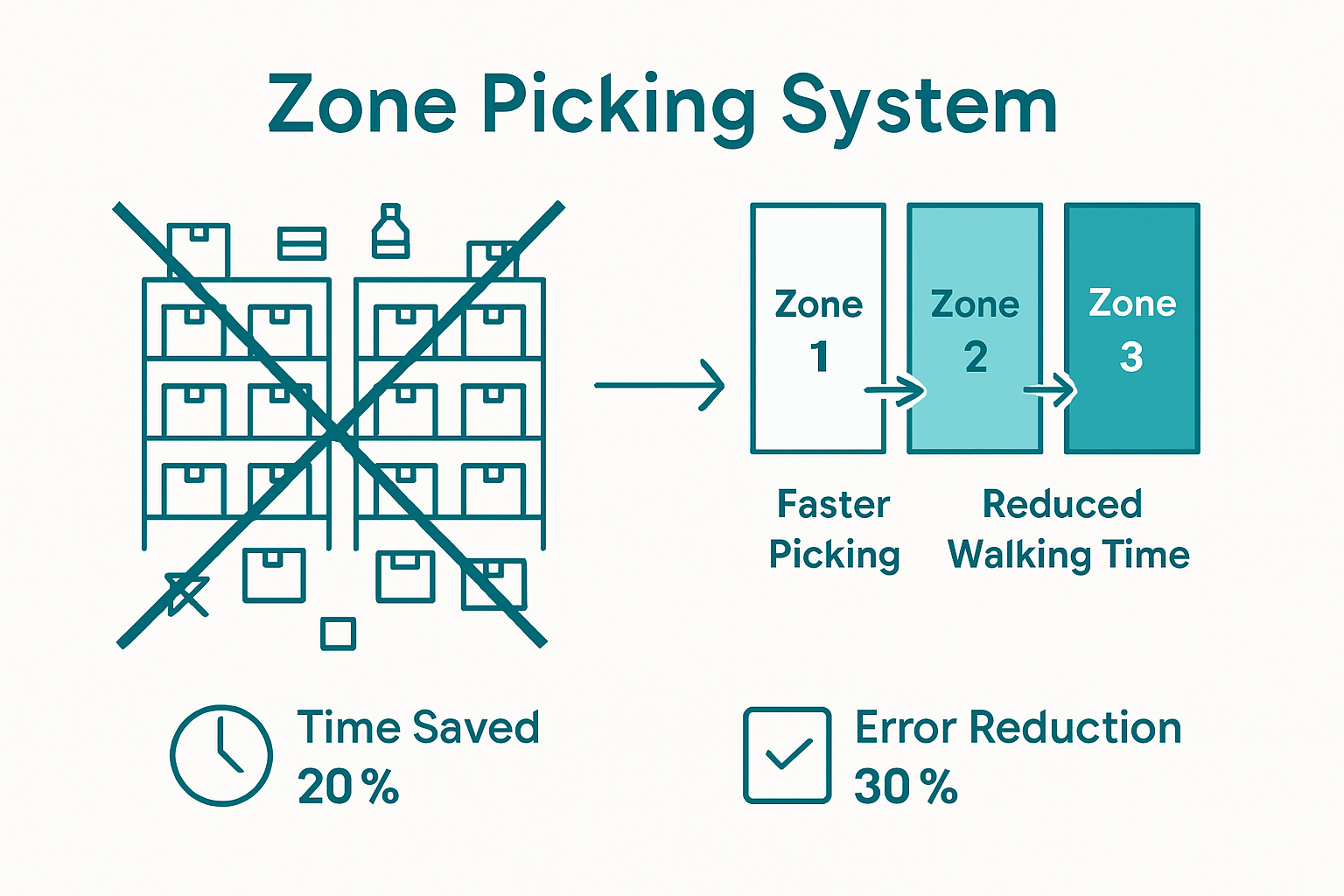
Advanced inventory management systems now integrate automated technologies to streamline warehouse operations, transforming traditional picking processes. Implement a zone picking strategy that segments your warehouse into logical sections based on product type, frequency of movement, and order volume. This approach minimizes worker travel time and reduces picking errors. Utilize data analytics to understand product movement patterns and design your layout to prioritize high velocity items in easily accessible locations. Consider implementing vertical storage solutions and modular shelving systems that maximize available space while creating clear pathways for efficient movement.
Leverage technology to enhance your picking processes through intelligent routing and real time tracking. Integrate barcode and big data analytics to create a smart warehouse environment that guides workers through the most efficient picking routes. Implement warehouse management software that provides real time inventory insights, generates optimal picking sequences, and tracks individual worker performance. Train your team to use these technological tools effectively, emphasizing speed, accuracy, and ergonomic movement to reduce physical strain and increase overall productivity.
Pro Tip: Conduct monthly layout audits to continuously refine your warehouse design, analyzing picking efficiency metrics and adapting your strategy based on evolving inventory and order patterns.
The table below summarizes key strategies to optimize warehouse layout for ecommerce operations:
| Strategy | Benefit | Example Application |
|---|---|---|
| Zone Picking | Reduces picker travel time | Grouping similar SKUs in zones |
| Vertical Storage | Maximizes space efficiency | Implementing mezzanine racks |
| Smart Routing | Increases picking speed | Route guidance in real-time |
| Analytics Use | Improves layout decisions | Reposition best sellers front |
| Modular Shelving | Enhances adaptability | Adjustable shelf heights |
Step 5: Verify Inventory Records with Regular Audits
Regular inventory audits are essential for maintaining accurate stock records, identifying discrepancies, and ensuring your ecommerce business operates with maximum financial precision. By implementing a systematic approach to inventory verification, you can prevent costly errors and maintain reliable operational data.
Computer vision and machine learning technologies are transforming inventory audit processes, offering unprecedented accuracy and efficiency. Develop a comprehensive audit strategy that combines physical inventory counts with advanced technological solutions. Use barcode scanning and digital tracking systems to cross reference your physical inventory with digital records, identifying any variances in real time. Schedule quarterly full inventory counts and monthly spot checks to maintain ongoing accuracy. Break down your audit process into manageable segments, focusing on high value or high volume product categories first.
Establish a consistent audit methodology that goes beyond simple counting. Create detailed documentation protocols that track every discrepancy, including potential reasons for stock variations such as damage, theft, or data entry errors. Implement automated inventory verification systems that generate immediate alerts for significant inventory discrepancies. Train your team to understand the importance of precise record keeping and provide them with the technological tools and training necessary to conduct thorough, accurate audits.
Pro Tip: Create a dedicated audit team or rotate audit responsibilities among team members to maintain objectivity and prevent potential inventory manipulation.
Streamline Your Ecommerce Inventory with Reliable Courier Services
Managing ecommerce inventory efficiently requires not only precise tracking but also dependable logistics to keep your supply chain running smoothly. The article highlights challenges such as maintaining real-time stock visibility, preventing stockouts through automated reordering, and optimizing warehouse operations—all critical to your ecommerce success. Addressing these pain points demands a partner that offers comprehensive solutions beyond just inventory management.
At or-ner.com, we understand that seamless inventory control goes hand in hand with fast and reliable shipping. Our platform provides reliable courier services complemented by real-time shipment tracking and global warehousing. Whether you need cross-border logistics, customs clearance, or scalable fulfillment support, we offer an end-to-end solution that empowers you to:
- Access instant inventory updates anywhere
- Automate order fulfillment and restocking
- Integrate effortlessly with leading ecommerce operators like Amazon
Take control of your ecommerce logistics today with our all-in-one platform. Discover how expert inventory management combined with dependable courier solutions can prevent costly errors and accelerate your business growth. Visit https://or-ner.com to start optimizing your operations now.
Frequently Asked Questions
How can I assess my current inventory effectively?
To assess your current inventory, conduct a physical audit and categorize your stock into segments like best sellers and slow-moving items. Use digital tools to create a centralized inventory management system to keep track of product quantities and sales velocities.
What types of tracking systems should I consider for real-time stock visibility?
Consider implementing automated inventory management technologies that use barcode scanning and real-time data tracking. This will provide instant updates and enable you to synchronize inventory data across multiple sales channels.
How can I automate reordering to prevent stockouts?
You can automate reordering by implementing systems that analyze sales data and current stock levels to generate purchase orders when items reach set minimum thresholds. Configure notifications to alert you of low stock levels so you can restock proactively.
What steps should I take to optimize my warehouse layout?
To optimize your warehouse layout, implement a zone picking strategy that groups items by type and ensures high-velocity products are easily accessible. Utilize data analytics to design your layout, prioritizing quick access to frequently sold items.
How often should I conduct inventory audits, and what methods work best?
Conduct inventory audits quarterly and perform monthly spot checks to maintain accuracy. Use a combination of physical counts and digital tracking to cross-reference your inventory, promptly identifying discrepancies while ensuring all data aligns.
What are the benefits of setting up a robust reporting framework for inventory management?
A robust reporting framework provides real-time insights into key performance indicators like sales velocity and seasonal demand. This allows you to make data-driven decisions, improving inventory efficiency and helping to reduce costs by approximately 20%.