
Tracking inventory sounds simple. Yet almost 43 percent of small businesses still don’t track their inventory at all. Surprising, right? Even more unexpected, the biggest gains in accuracy and efficiency come from fixing small gaps in your current process—not from rushing out to buy expensive new software. Start by taking a hard look at what you already do and you might find huge opportunities hiding in plain sight.
Table of Contents
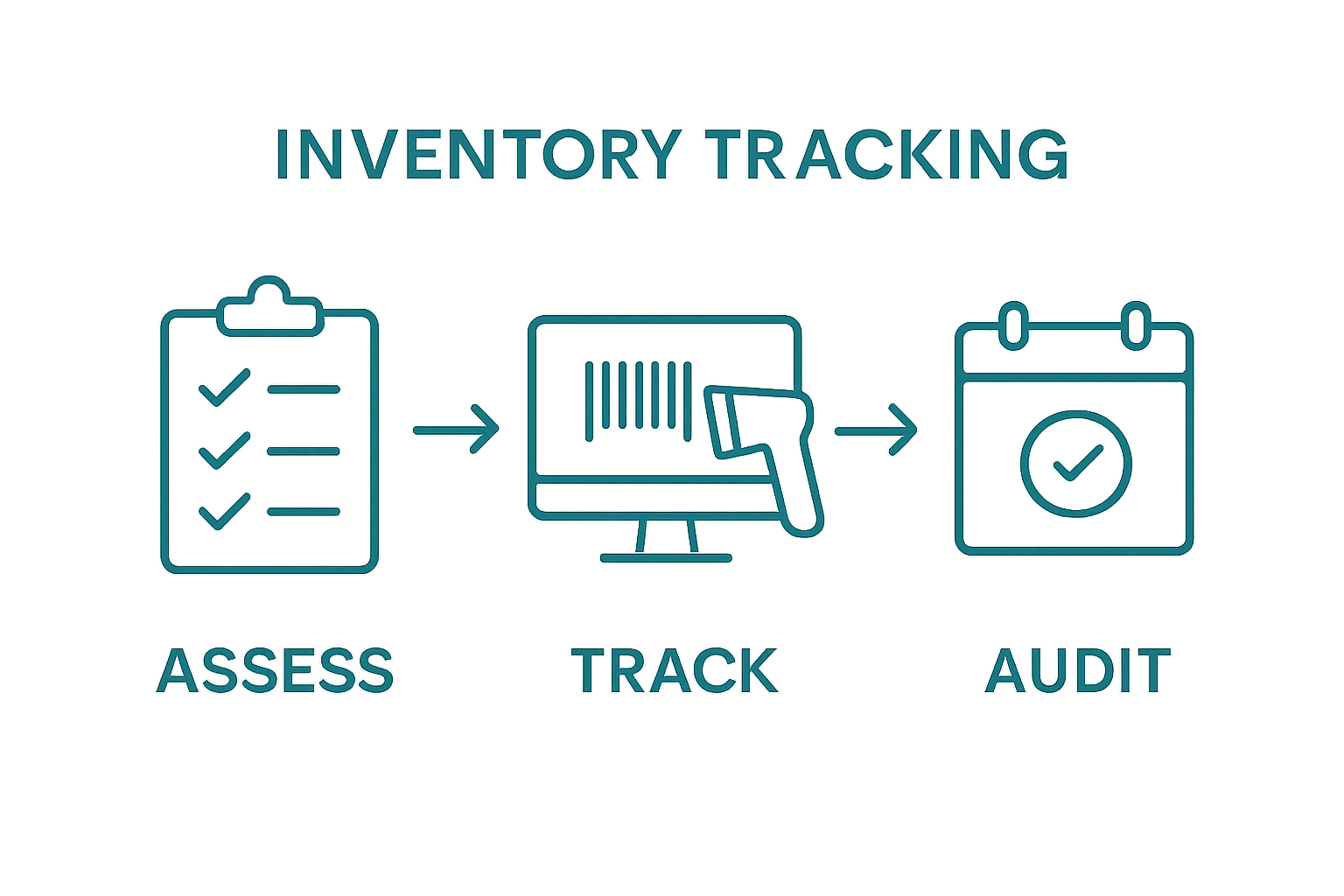
- Step 1: Assess Your Current Inventory Management System
- Step 2: Choose An Inventory Tracking Method
- Step 3: Set Up Inventory Tracking Software
- Step 4: Implement A Regular Inventory Audit Schedule
- Step 5: Analyze Inventory Data For Continuous Improvement
Quick Summary
| Key Point | Explanation |
|---|---|
| 1. Assess Your Current Inventory System | Review existing inventory methods to identify inefficiencies and gaps. This foundational step helps optimize future tracking strategies. |
| 2. Choose the Right Tracking Method | Select an inventory method that suits your operational needs. Options include manual tracking, barcode systems, RFID, or cloud-based solutions. |
| 3. Implement Inventory Tracking Software | Transition to digital solutions for real-time insights. Proper software setup reduces errors and enhances overall inventory management efficiency. |
| 4. Schedule Regular Inventory Audits | Establish a routine audit schedule to maintain accuracy. Regular checks help catch discrepancies early and ensure reliable records. |
| 5. Analyze Inventory Data for Improvements | Continuously assess inventory data to uncover trends and insights. This practice drives informed decision-making and operational refinement. |
Step 1: Assess Your Current Inventory Management System
Tracking inventory effectively starts with a comprehensive assessment of your existing management system. Understanding your current processes is critical before implementing any improvements. This foundational step helps you identify gaps, inefficiencies, and opportunities for optimization in your inventory tracking strategy.
Begin by conducting a thorough review of your current inventory tracking methods. Pull together all existing documentation, spreadsheets, software systems, and tracking records. Look closely at how you currently record inventory movements, track stock levels, and manage product information. Pay special attention to manual processes that consume significant time and resources. Many businesses discover they are using outdated methods that create unnecessary complexity and potential errors.
Your assessment should examine several key areas of inventory management. Evaluate the accuracy of your current stock records by comparing physical inventory counts with recorded quantities. Check how frequently discrepancies occur and what might be causing them. Review your current tracking tools – whether they are basic spreadsheets, legacy software systems, or more modern inventory management platforms. Learn more about optimizing your supply chain operations to understand how technology can streamline your processes.
Critical elements to analyze during this assessment include:
- Inventory accuracy rates
- Time spent on manual tracking
- Frequency of stockouts or overstock situations
- Current technology and software capabilities
- Manual data entry processes
As you review your system, document every step of your current inventory tracking workflow. Note where bottlenecks occur, where human error is most likely, and which processes feel unnecessarily complicated. The goal is not just to identify problems but to understand the root causes behind inefficient inventory management.
Successful assessment means creating a clear, honest picture of your current inventory tracking capabilities. By the end of this step, you should have a comprehensive report highlighting your system’s strengths and weaknesses, providing a solid foundation for implementing more effective inventory tracking strategies.
Step 2: Choose an Inventory Tracking Method
Selecting the right inventory tracking method is a critical decision that will significantly impact your business efficiency and accuracy. After assessing your current system, you are now ready to explore tracking methods that align with your specific operational needs and goals. The method you choose will become the backbone of your inventory management strategy.
Traditionally, businesses have used several core tracking methods, each with unique advantages. Manual tracking using spreadsheets remains popular among small businesses due to low initial costs. However, this approach becomes increasingly complex and error-prone as your inventory grows. Barcode scanning systems offer a more sophisticated approach, allowing real-time tracking and reducing human error. These systems use unique codes attached to products, which can be quickly scanned to update inventory levels instantly. Explore our guide on just-in-time inventory strategies to understand how modern tracking methods can optimize your stock management.
Radio Frequency Identification (RFID) represents a more advanced tracking technology. Unlike barcodes, RFID tags can be read without direct line of sight, enabling faster and more comprehensive inventory checks. This method works exceptionally well for businesses with large warehouses or complex inventory systems. For businesses seeking comprehensive tracking, cloud-based inventory management software provides the most robust solution. These platforms integrate multiple tracking methods, offering real-time updates, predictive analytics, and seamless integration with other business systems.
Key considerations when choosing your tracking method include:
- Inventory volume and complexity
- Budget for technology investment
- Required tracking speed and accuracy
- Integration with existing business systems
- Future scalability needs
When evaluating tracking methods, consider your business’s specific characteristics. A small online retailer might find spreadsheet or basic barcode systems sufficient, while a large manufacturing operation would benefit from RFID or comprehensive cloud-based solutions. The goal is not just tracking inventory but creating a system that provides actionable insights, reduces waste, and supports strategic decision-making.
Successful method selection means choosing a tracking approach that not only meets your current needs but can grow and adapt with your business.
The table below compares common inventory tracking methods, highlighting their advantages, challenges, and best-use scenarios to help you select the approach that aligns with your business needs.
| Method | Advantages | Challenges | Best For |
|---|---|---|---|
| Manual (Spreadsheets) | Low initial cost, easy to set up | Error-prone, time-consuming, not scalable | Small businesses, low inventory volume |
| Barcode System | Real-time tracking, reduces human error | Requires equipment, moderate setup effort | Retailers, growing businesses |
| RFID | No line-of-sight needed, fast inventory checks | Higher initial investment, technical know-how | Large warehouses, complex inventories |
| Cloud-Based Software | Real-time data, analytics, scalable | Subscription cost, requires data migration | Businesses seeking integration & growth |
| By the end of this step, you should have a clear, confident decision about the inventory tracking method that will drive your operational efficiency forward. |
Step 3: Set Up Inventory Tracking Software
Transitioning from manual tracking methods to digital inventory management software represents a pivotal moment in your inventory optimization journey. Setting up the right software can transform how you understand and control your stock levels, providing real-time insights and dramatically reducing human error. Your previous assessment and method selection now guide you toward implementing a robust tracking solution.
Begin by thoroughly evaluating software options that align with your business size, complexity, and specific industry requirements. Cloud-based solutions offer flexibility and scalability, allowing you to adapt as your business grows. Look for software that provides intuitive interfaces, comprehensive reporting features, and seamless integration with your existing systems. Learn more about warehouse management strategies to understand how technology can streamline your operations.
The implementation process requires careful planning and systematic data migration. Start by cleaning your existing inventory data, removing obsolete entries and ensuring accuracy before transferring information into the new system. Most modern inventory tracking software offers import tools that can convert spreadsheets or legacy database formats directly. Pay special attention to critical data points like product codes, current stock levels, pricing, and historical transaction records. Accuracy during this transfer is paramount to maintaining reliable inventory records.
Key implementation steps include:
- Completing a comprehensive data audit
- Selecting software with appropriate features
- Configuring system settings to match your workflow
- Training staff on new software interfaces
- Establishing data backup and recovery protocols
Implementation is not a one-time event but an ongoing process of refinement. Schedule regular system reviews to ensure the software continues meeting your evolving business needs. Many businesses benefit from a phased rollout, introducing the new system gradually across different departments or product lines. This approach minimizes disruption and allows your team to adapt incrementally.
Successful software setup means creating a dynamic, responsive inventory tracking system that provides actionable insights. By the end of this step, you should have a fully configured software solution that offers real-time visibility into your inventory, supports data-driven decision-making, and positions your business for more efficient stock management.
Step 4: Implement a Regular Inventory Audit Schedule
Establishing a consistent inventory audit schedule is crucial for maintaining accuracy and preventing potential losses in your inventory management system. Regular audits serve as your business’s financial health checkup, providing a systematic approach to verifying your recorded inventory against physical stock. The goal is to create a proactive process that catches discrepancies before they become significant problems.
Determining the right audit frequency depends on your business type, inventory volume, and industry characteristics. Businesses with high-value or rapidly changing inventory might require monthly audits, while others could manage with quarterly or annual comprehensive checks. Explore our supply chain management tips to understand how strategic auditing can optimize your operations. Consider implementing a cyclic audit approach where different product categories or warehouse sections are checked on rotating schedules, reducing the burden of complete inventory counts while maintaining consistent oversight.
Your audit process should be structured and methodical. Start by creating a detailed audit checklist that covers essential verification points. This includes comparing physical stock quantities with digital records, checking product conditions, identifying slow-moving or obsolete items, and documenting any discrepancies. Invest time in training your team on proper audit procedures, ensuring everyone understands the importance of accuracy and follows a standardized approach. Consistency is key in maintaining reliable inventory records.
Critical components of an effective audit schedule include:
- Establishing clear audit frequency based on business needs
- Creating comprehensive verification checklists
- Designating responsible team members
- Documenting and analyzing audit findings
- Implementing corrective actions for identified discrepancies
Technology can significantly streamline your audit process. Modern inventory management software often includes built-in audit tools that can generate reports, track historical discrepancies, and provide real-time insights. Leverage these features to make your audits more efficient and data-driven. Some businesses benefit from surprise spot checks in addition to scheduled audits, which can help detect potential theft or systematic errors that might go unnoticed during planned reviews.
Successful audit implementation means creating a reliable, repeatable process that provides transparent visibility into your inventory’s true status. By the end of this step, you should have a well-defined audit schedule that fits your business model, with clear procedures for conducting thorough and accurate inventory checks.
Step 5: Analyze Inventory Data for Continuous Improvement
Data analysis transforms raw inventory information into strategic insights that can revolutionize your business operations. Continuous improvement is not just a goal but a systematic approach to refining your inventory management processes. By carefully examining the data collected through your tracking systems, you can uncover patterns, predict challenges, and make informed decisions that optimize your stock levels and operational efficiency.
Begin by establishing key performance indicators (KPIs) that matter most to your business. These might include inventory turnover rate, carrying costs, stockout frequency, and product shelf life. Explore our comprehensive guide on key supply chain metrics to understand which indicators provide the most meaningful insights. Modern inventory management software typically offers robust reporting tools that can generate detailed analytics, helping you move beyond simple number-crunching to strategic interpretation.
Dive deep into your inventory data by looking beyond surface-level metrics. Analyze seasonal trends, product performance variations, and correlations between different inventory categories. Identify slow-moving items that tie up capital and understand which products consistently drive your business performance. Pay special attention to the hidden stories within your data – unexpected patterns can reveal opportunities for streamlining operations, negotiating better supplier terms, or adjusting your product mix.
Key areas to focus on during your data analysis include:
- Inventory turnover rates across different product categories
- Seasonal demand fluctuations
- Carrying costs and potential cost-reduction strategies
- Supplier performance and reliability
- Product profitability and lifecycle management
Regular data reviews should become a standard part of your inventory management routine.
This table summarizes key focus areas for inventory data analysis, showing what to measure and the primary insights gained to guide continuous improvement in your inventory management.
| Focus Area | What to Measure | Key Insights |
|---|---|---|
| Inventory Turnover | Rate of product movement | Identify overstocked or slow-moving items |
| Seasonal Demand Fluctuations | Stock level variations by season | Plan for peak periods, manage cash flow |
| Carrying Costs | Storage and capital expenses | Target cost-reduction strategies |
| Supplier Performance | Delivery times, reliability | Inform supplier negotiations and choices |
| Product Lifecycle | Sales over time, shelf life | Optimize product mix, phase out obsolete items |
| Schedule monthly or quarterly deep-dive analysis sessions where you critically examine your inventory performance. During these reviews, compare your current data against historical trends and industry benchmarks. Look for opportunities to reduce waste, optimize stock levels, and improve overall operational efficiency. Remember that data analysis is an iterative process – each review should generate actionable insights that inform your next steps. |
Successful data analysis means transforming raw numbers into a strategic roadmap for inventory optimization. By the end of this step, you should have a clear understanding of your inventory’s performance, potential improvement areas, and a systematic approach to continuous refinement of your inventory tracking strategy.
Unlock Reliable Inventory Solutions Tailored to Your Growth
Struggling with errors, manual processes, or a lack of real-time visibility in your inventory tracking? As this article outlined, many businesses face wasted time, costly stock discrepancies, and missed sales due to inefficient inventory systems. You want actionable insights and effortless automation. With so many moving parts in your supply chain, finding technology that keeps up can be overwhelming.

Take control and see the difference that end-to-end logistics backed by data and expert support can make. Explore how our reliable courier services bring faster delivery and real-time shipment tracking right into your inventory management workflow. From flexible warehousing and seamless fulfillment to actionable analytics, or-ner.com helps you eliminate errors, boost efficiency, and scale with confidence. Optimize your operations today and stay ahead of the competition. Ready to upgrade your inventory tracking? Get started now and see measurable results for your business.
Frequently Asked Questions
How can I assess my current inventory management system?
To assess your current inventory management system, conduct a comprehensive review of your existing tracking methods. Evaluate documentation, spreadsheets, software systems, and tracking records to identify gaps, inefficiencies, and opportunities for optimization in your inventory tracking strategy.
What are the different inventory tracking methods available?
The main inventory tracking methods include manual tracking with spreadsheets, barcode scanning systems, Radio Frequency Identification (RFID), and cloud-based inventory management software. Each method varies in complexity and effectiveness, so choose one that aligns with your business’s size and operational needs.
What should I consider when setting up inventory tracking software?
When setting up inventory tracking software, consider its compatibility with your existing systems, reporting features, user interface, and scalability for future growth. Ensure that you thoroughly clean and audit your existing data before migrating it to the new software to maintain accuracy.
How often should I conduct inventory audits?
The frequency of inventory audits depends on your business type and inventory volume. Businesses with high-value or rapidly changing inventory may require monthly audits, while others might conduct quarterly or annual checks. It’s effective to implement a cyclic audit approach to maintain consistent oversight without overwhelming your team.