For most bulky, non-urgent shipments, ocean freight wins on cost. Air freight makes sense when speed matters more than price, and courier or express service works fine for oversized parcels that still fall within a carrier’s size limits. Before requesting quotes, measure and weigh the item precisely, write an itemized description with commodity details, and get pricing from a freight forwarder or a freight booking tool so you’re comparing real numbers, not guesses.
TL;DR:
- Shipping large, bulky items via ocean freight is generally the most cost-effective option for non-urgent cargo, especially when consolidating multiple shipments.
- Carriers bill based on the higher of actual or dimensional weight, with cubic volume, girth, and weight measurements crucial for accurate quotes and to avoid unexpected surcharges.
- Proper packaging with pallets or crates, precise measurements, and detailed documentation help prevent delays, customs holds, and damage claims during international shipping.
- Choosing the right shipping mode depends on value, urgency, and size; courier services suit door-to-door oversize parcels, while air freight is for high-value or urgent shipments.
- Working with a licensed freight forwarder and obtaining a detailed, line-item quote reduces errors, manages customs compliance, and cuts unexpected costs.
Table of Contents
- What Counts as Large, Heavy, or Oversized When Shipping Internationally?
- Which Shipping Method Fits Your Large Item?
- How Do Carriers Calculate Shipping Costs for Large Items?
- What Are Typical Weight and Size Limits for International Shipping?
- Do You Need Pallets, Crates, or Custom Packaging?
- What Documents Do You Need to Ship Large Items Internationally?
- How Do You Choose a Reliable Freight Forwarder?
- How Can You Reduce Costs When Shipping Large Items Overseas?
- Where Shippers Lose Money on Large-Item Freight
- Let Or-ner Handle the Freight Booking and Paperwork for You
- Where to Verify Documentation and Licensing Rules
- Sources
- FAQ
What Counts as Large, Heavy, or Oversized When Shipping Internationally?
Carriers treat these three terms differently, and mixing them up leads to bad quotes. “Large” refers to physical dimensions, “heavy” refers to actual weight, and “oversized” means the item exceeds a specific carrier’s standard handling limits, triggering surcharges or special equipment regardless of weight.
Before requesting a quote, you need four numbers: length, width, height, and actual weight. From those, calculate girth (2 x width plus 2 x height, used mainly for courier limits) and cubic volume in cubic meters or cubic feet.
- Actual weight: what the item weighs on a scale, no packaging tricks
- Dimensional weight (DIM): length × width × height divided by a carrier-specific divisor, used to price bulky-but-light items
- Girth: the distance around the two smaller sides, a common courier cutoff metric
- Cubic volume: length × width × height, the basis for most ocean and air freight pricing
Carriers bill whichever number is higher, actual or dimensional weight. A large, lightweight item like a lampshade or foam display often costs more to ship than its scale weight suggests.
Which Shipping Method Fits Your Large Item?
Match the item to the mode based on size, value, and how fast it needs to arrive. Four main options exist, and each solves a different problem.
- Postal service: works best for lower-value, oddly sized packages. National postal services often let shipments clear with duties collected on delivery instead of requiring a formal customs entry, which speeds up low-value shipments considerably.
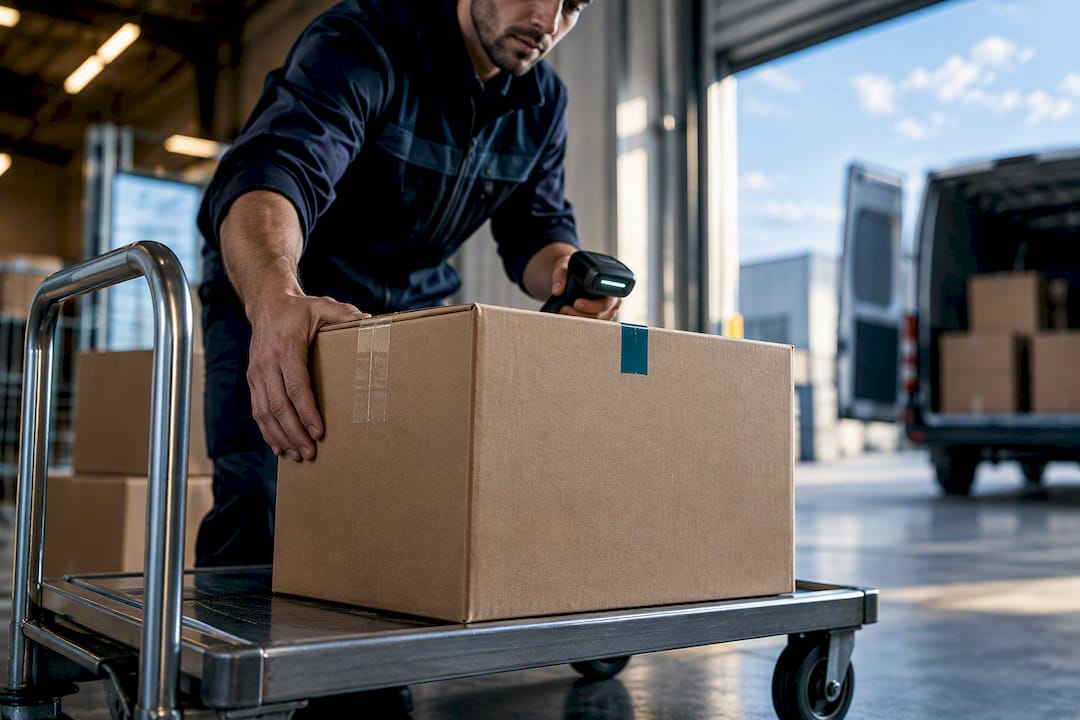
- Courier/express: the right call for door-to-door convenience on time-sensitive oversized items, as long as the piece stays under the carrier’s weight and girth caps.
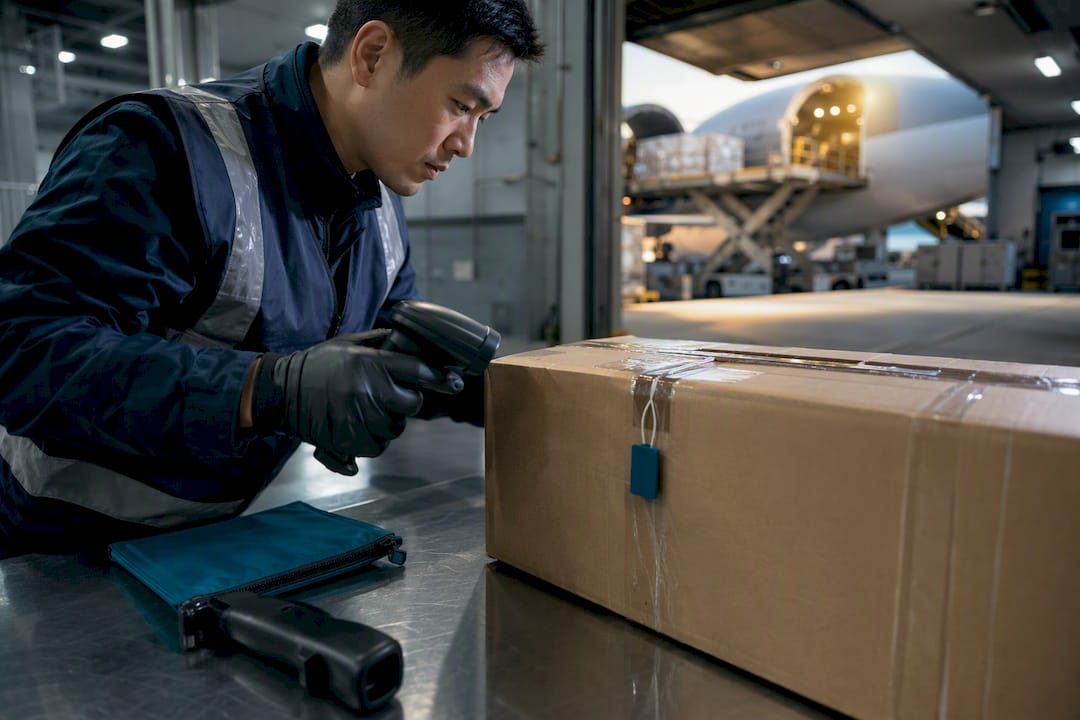
- Air freight: suited to urgent or higher-value freight that exceeds courier limits. Expect pricing based on volumetric weight, so a bulky-but-light crate can cost more than its actual weight implies.
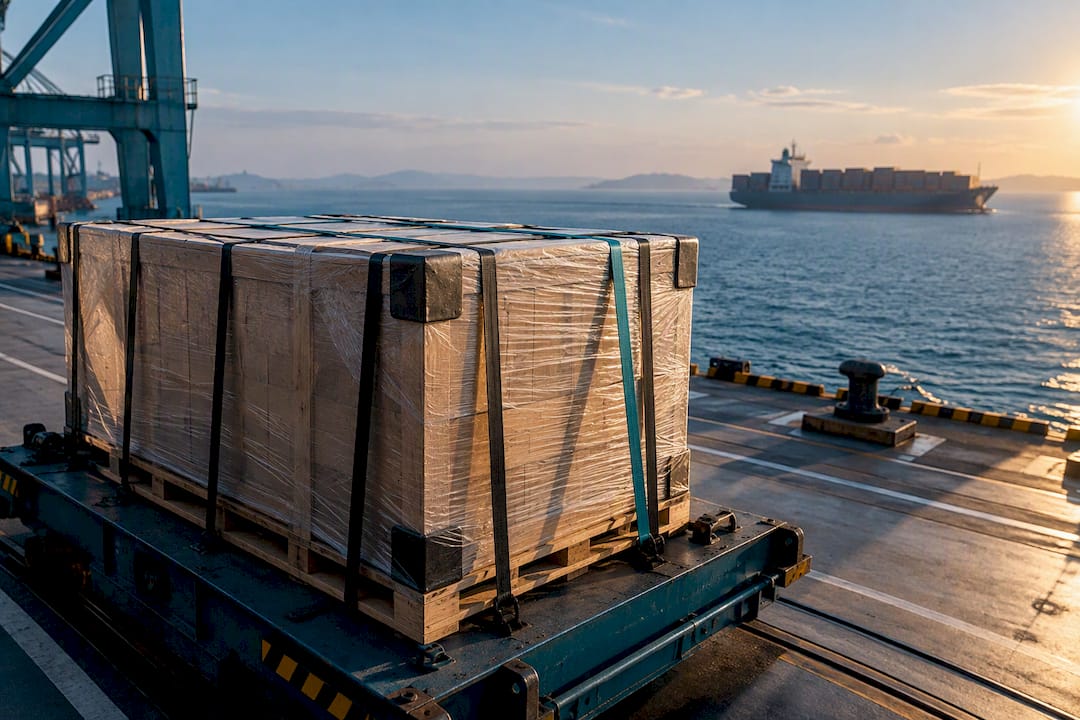
- Ocean freight (LCL or FCL): the most economical route for bulky, non-urgent cargo. Less-than-container-load (LCL) consolidates your shipment with others heading to the same port, while full-container-load (FCL) gives you an entire container. LCL costs less upfront but adds time for consolidation and deconsolidation.
Multimodal routing, ocean to inland truck, or air to last-mile courier, often changes the total cost more than the main leg does. If your destination lacks a direct port or airport connection, inland transport fees can shift the calculation entirely. Comparing freight modes side by side before booking saves you from picking the wrong one.
How Do Carriers Calculate Shipping Costs for Large Items?
Price comes from a stack of variables, not one number. The base rate reflects dimensional or actual weight (whichever is higher), the transport mode, and the distance. From there, add fuel surcharges, terminal handling fees, and, for ocean freight, the difference between booking LCL versus a full container.
- Dimensional vs. actual weight, whichever produces the higher billable figure
- Mode and distance (ocean, air, or ground) plus fuel and terminal surcharges
- FCL vs. LCL allocation and any inland pickup or delivery legs
- Duties, taxes, and customs clearance fees
- Cargo insurance and handling or longshore costs at port
Some quotes list every line item; others bundle everything into one all-in price. Ask which model you’re getting; a suspiciously low all-in quote sometimes hides handling or storage fees added after arrival.
Documentation problems are one of the most common causes of shipment holds. Vague commodity descriptions, missing invoices, or mismatched packing lists routinely trigger inspections that a complete file would have avoided, according to CBP’s own guidance on cargo descriptions.
What Are Typical Weight and Size Limits for International Shipping?
Limits vary by carrier and mode, but a few patterns hold across the industry. Courier networks generally cap single packages around 150 pounds and enforce girth-plus-length combinations well below what a standard ocean container allows. Standard 20-foot and 40-foot containers handle most palletized freight, but anything exceeding container door dimensions needs flat-rack or open-top equipment.
- Measure length, width, and height at the item’s widest points, including any protruding parts.
- Weigh the item on a certified scale, then calculate DIM weight using your carrier’s specific divisor.
- Compute girth for courier quotes: add twice the width to twice the height.
- Flag irregular shapes (machinery, furniture with protrusions, musical instruments) early. These often require crating or specialized handling equipment rather than standard palletizing.
Do You Need Pallets, Crates, or Custom Packaging?
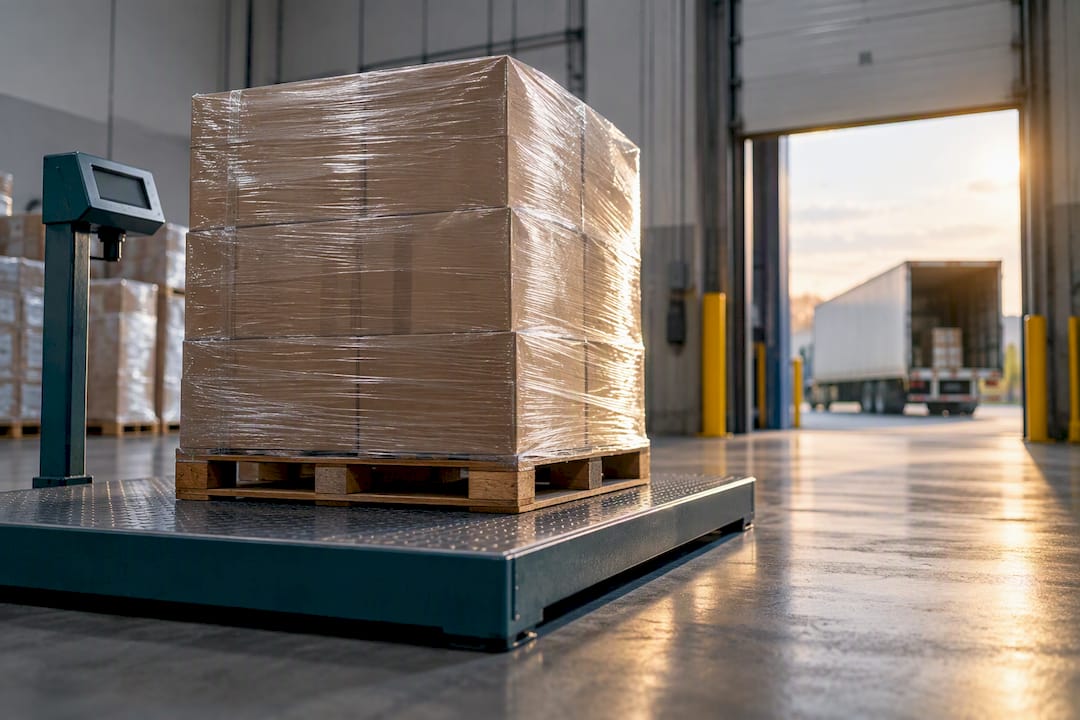
The right packaging depends on fragility and shape, not just size. Standard pallets with shrink wrap work for uniform, sturdy boxes. Crating makes sense for irregular, fragile, or high-value items, furniture, equipment, artwork, where internal bracing prevents shifting during transit. Custom crating adds cost but often pays for itself in avoided damage claims.
- Use pallets for stackable, uniform cartons; crates for fragile or irregular items
- Add internal bracing (foam, dividers, corner protectors) so contents can’t shift
- Label every side with handling marks, weight, and a reference number that matches your invoice and packing list
- Keep pallet loads within the container or truck’s height and avoid overhang, which slows loading and inspection
Marking each package with the same reference numbers used on your commercial invoice speeds up inspections considerably, since packing lists that show clear marks and quantities let customs officers match cargo to paperwork fast.
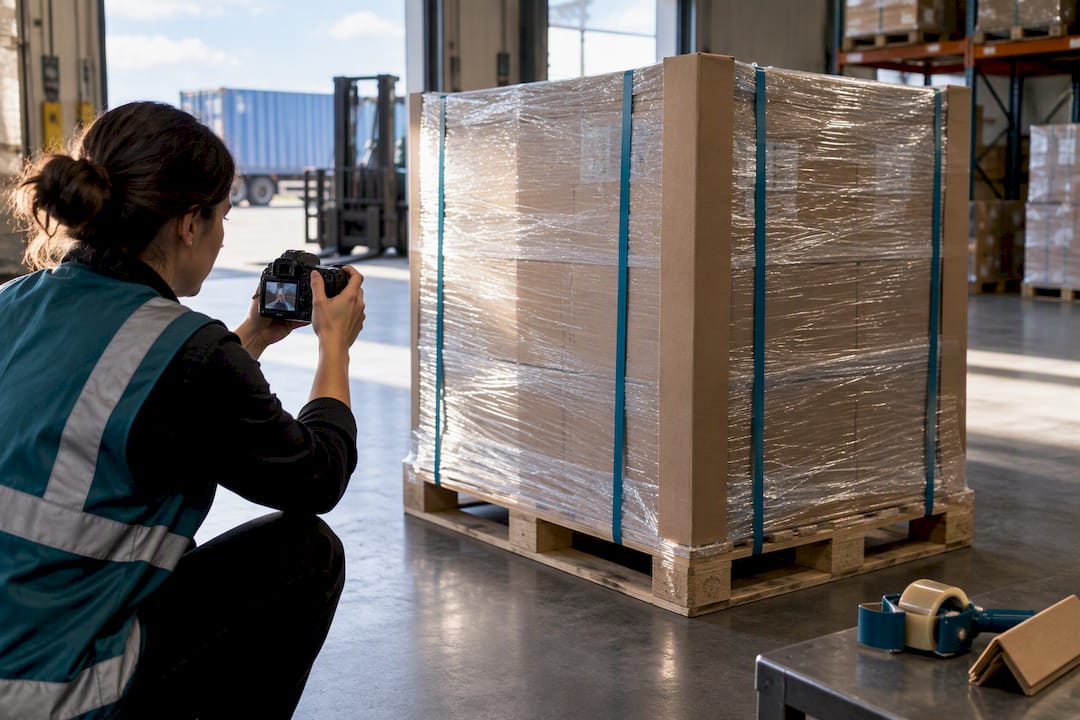
Pro Tip: Photograph every pallet from all four sides before it leaves your facility. If a claim comes up later, that timestamped record is often the difference between a paid claim and a denied one.
For packing guidance specific to delicate goods, see how to protect fragile items during shipping.
What Documents Do You Need to Ship Large Items Internationally?
Every international shipment needs a core paperwork set, and skipping or rushing any piece is where most delays start. The essentials: a commercial invoice, a packing list, a bill of lading (ocean) or air waybill (air), and, depending on the destination, a certificate of origin or specific import licenses.
- Commercial invoice: itemized value, quantity, and precise commodity description for each item
- Packing list: matches marks and quantities to what’s actually inside each package
- Bill of lading or air waybill: the contract of carriage and proof of shipment
- Certificate of origin or licenses: required for certain goods or destination countries
CBP requires commercial invoices to state precise commodity descriptions. Writing “miscellaneous goods” instead of “oak dining table, unassembled, 4 pieces” is a common trigger for holds or even seizure. For U.S. exports above certain value thresholds, you’ll also need to file Electronic Export Information through AES, so confirm that requirement before your cargo reaches the port. Exporters remain responsible for accuracy even when a forwarder prepares the paperwork on their behalf, which is exactly why many shippers hire a licensed customs broker or let their forwarder file on their behalf rather than handling it in house.
How Do You Choose a Reliable Freight Forwarder?
A forwarder acts as a licensed agent handling dock-to-door logistics: negotiating rates, consolidating cargo, managing warehousing, and preparing export documentation on your behalf. Not every forwarder operates the same way, so vetting matters before you commit a shipment.
- Confirm licensing and financial responsibility. In the U.S., Ocean Transportation Intermediaries must carry proof of financial responsibility through a surety bond registered with the Federal Maritime Commission.
- Ask about consolidation options and typical transit times for your specific trade lane, not generic averages.
- Clarify who handles inland pickup and final delivery, and get the claims process in writing before you need it.
A forwarder earns its fee fastest on your first shipment to a new country, where unfamiliar import rules are the easiest place to make an expensive mistake. Read more on how forwarders structure their process before signing anything.
Pro Tip: Ask a prospective forwarder for their FMC number and verify it directly on the FMC’s public registry, not just on the forwarder’s own website.
How Can You Reduce Costs When Shipping Large Items Overseas?
A handful of habits consistently cut shipping costs without cutting corners on safety.
- Consolidate partial loads (LCL) instead of booking a full container you don’t need
- Optimize pallet dimensions to minimize dimensional weight charges, since a few extra inches on any side can bump you into a higher pricing tier
- Confirm Incoterms and who covers inland handling before booking, so nobody discovers a surprise fee at delivery
- Request full, line-item quotes and confirm in writing who’s responsible for duties and clearance
- Photograph the item’s condition at pickup and buy cargo insurance proportional to its declared value
Small businesses shipping bulky products regularly can also benefit from strategies built specifically for heavy ecommerce boxes.
Where Shippers Lose Money on Large-Item Freight
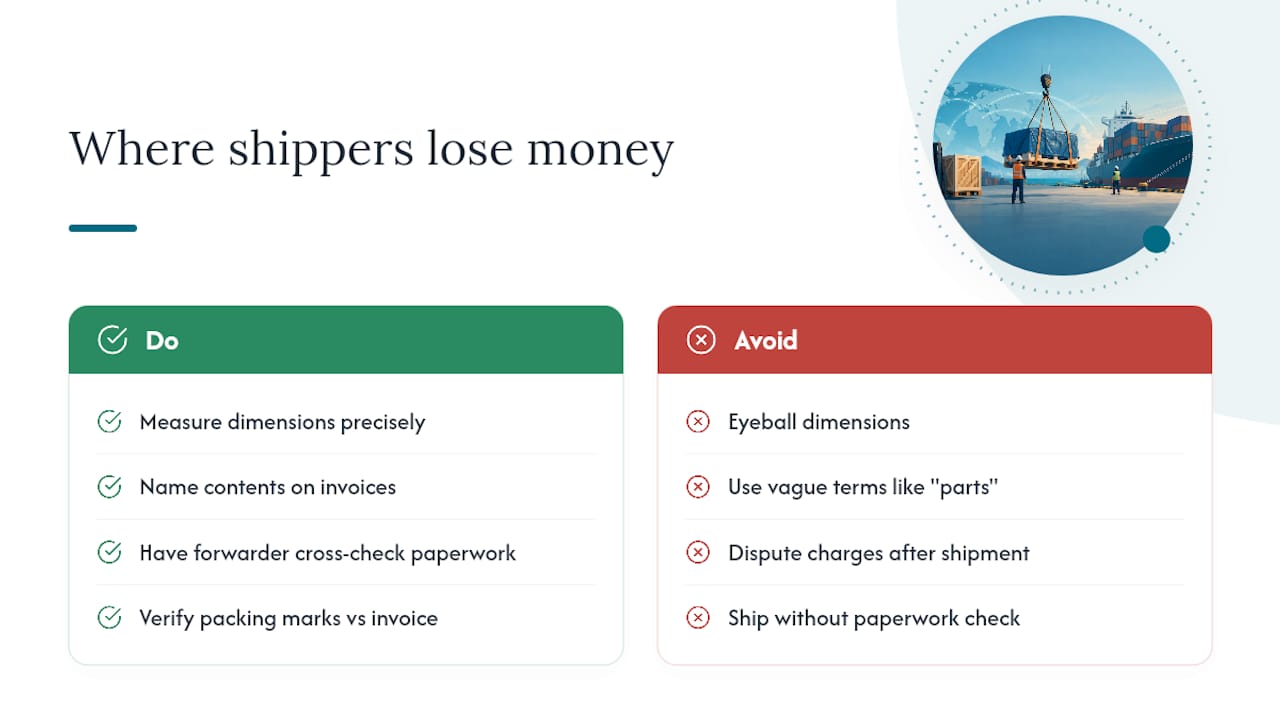
Most costly mistakes trace back to two things: rushed measurements and vague paperwork. A shipper who eyeballs dimensions instead of measuring precisely ends up disputing dimensional weight charges after the fact, when it’s too late to negotiate. The same goes for invoices that list “parts” or “equipment” instead of naming what’s actually in the box.
Working with an experienced forwarder catches most of these errors before a shipment ever leaves the warehouse, because someone is cross-checking the invoice against the packing marks line by line. That’s the gap managed logistics closes: not magic, just fewer unforced errors on paperwork that customs officers read literally.
— Maayan
Let Or-ner Handle the Freight Booking and Paperwork for You
You can simplify large shipment logistics by using a platform that coordinates freight booking, customs clearance, palletization, and shipment tracking through a single interface, rather than contacting separate forwarders, brokers, and warehouses.
If you’re ready to move a bulky or oversized shipment overseas, request a freight shipping estimate and you’ll get pricing based on your actual dimensions and destination, not a generic estimate. For sellers who also need storage or fulfillment on the receiving end, Or-ner’s customs clearance and warehousing services cover that leg too. Start with the estimate page, share your item’s measurements and weight, and get a quote back before you commit to a mode or carrier.
Where to Verify Documentation and Licensing Rules
For compliance checks beyond this guide, go straight to the primary sources. CBP’s import guidance covers mail entry thresholds and documentation expectations. The Federal Maritime Commission lists licensed forwarders and NVOCCs, and the International Trade Administration publishes current export documentation requirements.
Sources
- Freight Forwarder: What is a freight forwarder? | International Trade Administration
- Bond program information for OTIs | Federal Maritime Commission
- Internet Purchases | U.S. Customs and Border Protection
FAQ
What Is the Cheapest Way to Ship Large Items Overseas?
Ocean freight, particularly LCL consolidation, is generally the cheapest option for bulky, non-urgent shipments. Postal service can beat it on cost for smaller, low-value packages that qualify for simplified customs entry.
How Long Does It Take to Ship Large Items Overseas?
Ocean freight typically takes several weeks port to port, plus inland transit on both ends, while air freight moves in days but costs significantly more. Actual timelines depend heavily on your specific trade lane, consolidation schedule, and customs processing at the destination.
Do I Need a Customs Broker to Ship Large Items Internationally?
Not always, but a broker or forwarder is worth hiring for complex, high-value, or first-time shipments to a new country. Forwarders can prepare export documentation on your behalf, though you remain legally responsible for its accuracy.
How Much Does Freight Booking Cost Through Or-ner?
Pricing depends on your shipment’s weight, dimensions, mode, and destination, so Or-ner doesn’t publish flat rates. Request a freight shipping estimate directly for pricing based on your actual cargo details.
What’s the Difference Between LCL and FCL Ocean Shipping?
LCL (less-than-container-load) consolidates your shipment with other cargo heading to the same port, which lowers cost but adds handling time. FCL (full-container-load) gives you a dedicated container, which costs more upfront but moves faster since there’s no consolidation step.