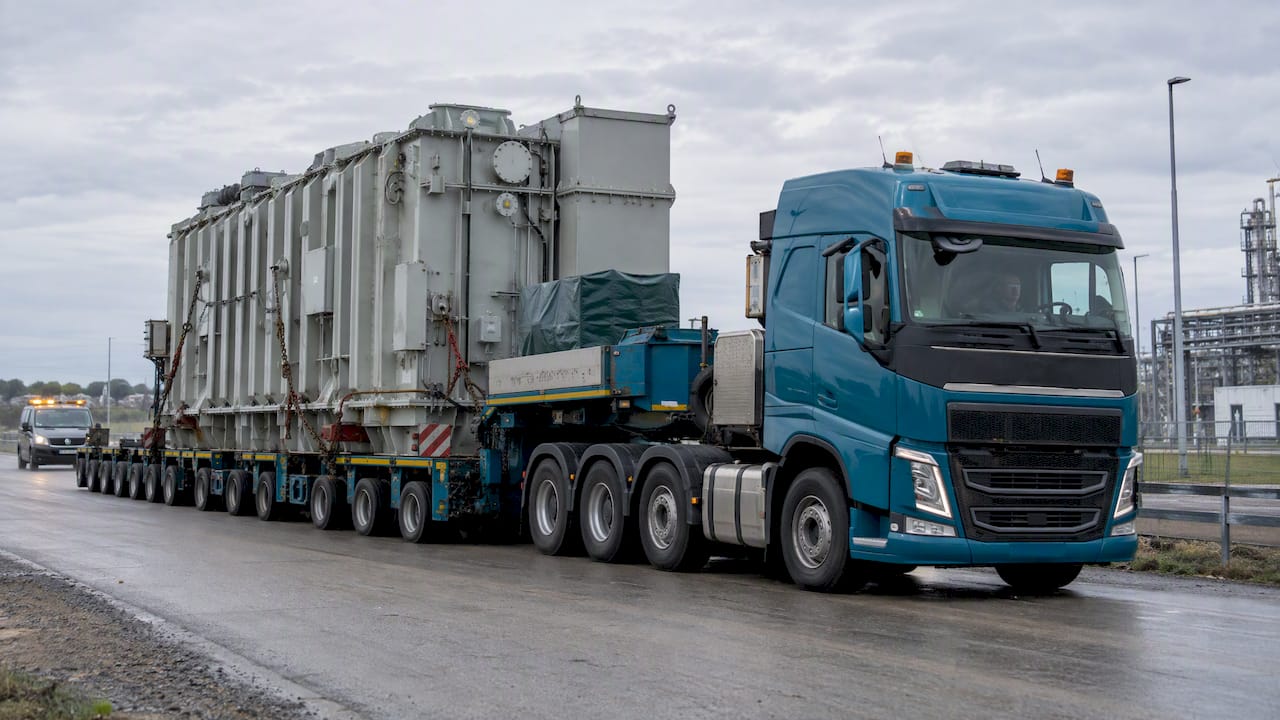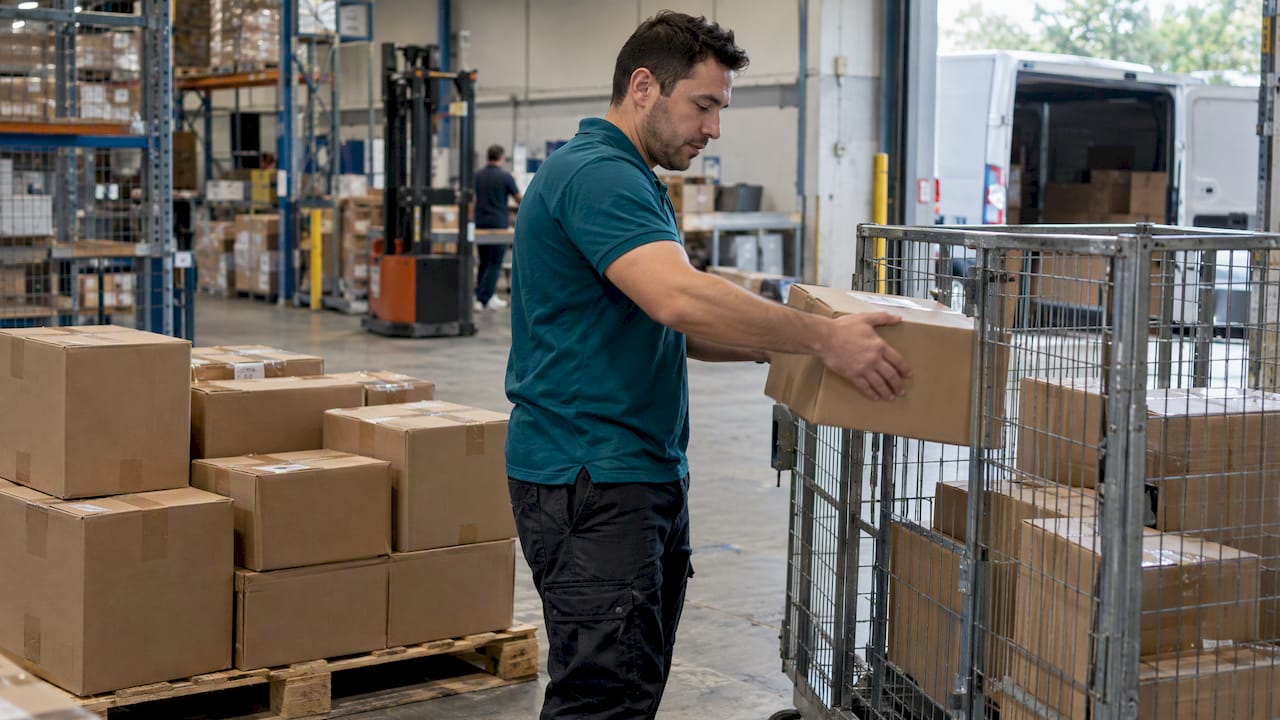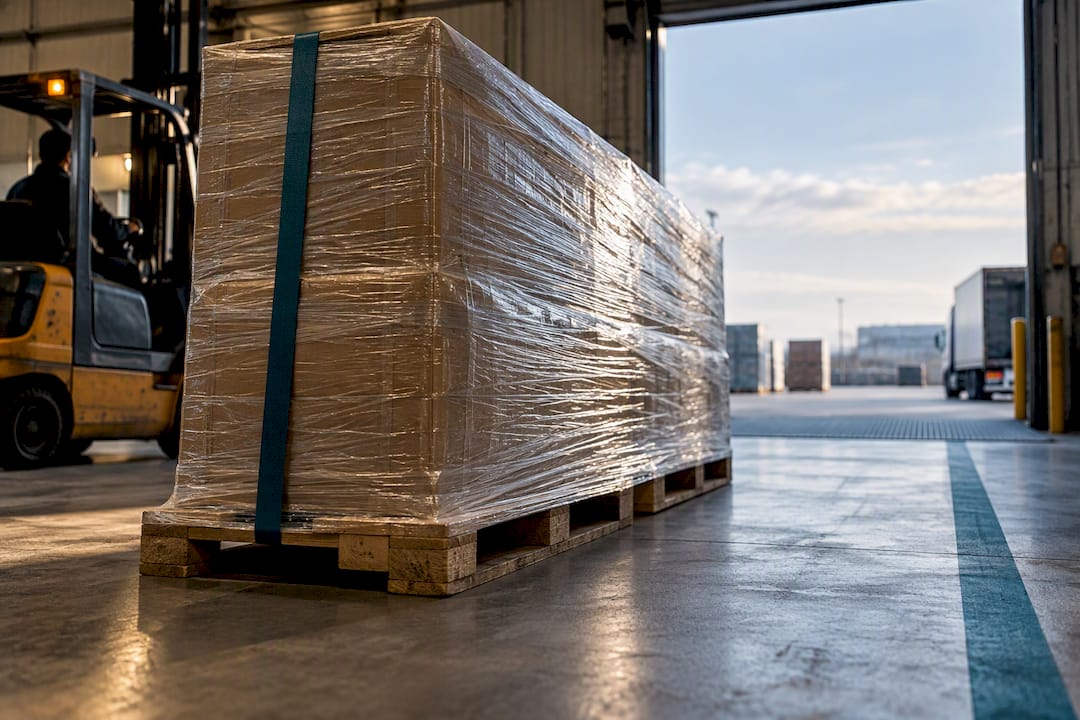
The best way to ship large items internationally is to run the shipment as a managed freight flow, not a single transaction. That means palletizing at the supplier, booking main carriage through a freight forwarder, clearing customs with a licensed broker, and landing inventory at a destination warehouse ready for fulfillment. Handled as one coordinated chain, this approach cuts the delays and compliance surprises that sink oversized shipments.
TL;DR:
- Managing the entire freight flow as a coordinated chain reduces delays, customs issues, and surprises for large international shipments.
- Ocean freight is suitable for bulk, low-value items, while air cargo is ideal for high-value or time-sensitive goods, with multimodal options covering seasonal demand spikes.
- Accurate documentation, palletization with compliant wood packaging, and clear communication between supplier, forwarder, and customs broker are essential to avoid customs holds and damage disputes.
- Shipping costs vary widely based on mode, volume, and service level, so request detailed line-item quotes for better comparison and planning.
- Reliable international freight shipping relies on a single managed platform handling booking, customs, and warehousing instead of coordinating multiple separate vendors.
Table of Contents
- How to Ship Large Items Internationally by Choosing the Right Mode
- What Are the Steps to Ship a Large Shipment Internationally?
- What Documents Do You Need to Ship Internationally?
- Packaging and Palletization Rules You Cannot Skip
- How Much Does It Cost to Ship Large Items Internationally?
- What Ecommerce Sellers Get Wrong About Shipping Large Freight
- Get a Line-Item Freight Quote From Or-ner
- Sources
- FAQ
How to Ship Large Items Internationally by Choosing the Right Mode
Picking a transport mode for large or heavy inventory comes down to four variables: volume, unit value, how fast the goods need to turn over, and how much delay you can absorb. Get this decision wrong and you either overpay for speed you didn’t need or blow a seasonal sales window waiting on a slow boat.
Ocean freight remains the default for bulky, lower-value goods. A full container load (FCL) is generally recommended when filling enough of a 20 or 40-foot box to justify it; less than that, less-than-container-load (LCL) service lets you share space and pay by volume. Air cargo costs several times more per kilogram but makes sense for high-value electronics, time-sensitive replenishment, or a launch date you can’t miss. Road and rail fill the middle ground for regional moves, especially across land borders like North America or intra-Europe lanes.
- Ocean FCL: best for large volume, lower unit value, flexible timelines
- Ocean LCL: best for mid-size shipments that don’t fill a container
- Air cargo: best for urgent restocks, high-value goods, or tight launch windows
- Road/rail: best for regional or cross-border land routes
- Multimodal/door-to-door: best when a single forwarder needs to hand off between legs without you managing each transition
Seasonal demand spikes are where multimodal service earns its keep. A seller who mixes ocean for bulk inventory with a smaller air shipment to cover a gap avoids stockouts without paying air rates on the whole order.
What Are the Steps to Ship a Large Shipment Internationally?
Every large international shipment moves through the same sequence of stages, whether it’s furniture, machinery, or pallets of appliances. Treat it as a checklist you hand to your supplier, forwarder, and broker so nobody assumes someone else owns a task.
- Supplier palletization. The supplier builds stable, forklift-accessible pallets and provides packing details (weights, dimensions, package count) for the export packing list.
- Packing list reconciliation. The seller or forwarder checks that the packing list matches the commercial invoice line for line. Mismatches here are one of the most common causes of a customs hold, since export packing lists must reconcile SKU-level descriptions, quantities, weights, and marks with the invoice.
- Booking and appointment scheduling. The forwarder books space on the vessel, aircraft, or truck and schedules the pickup appointment at origin.
- Export clearance. The forwarder or customs broker files export documentation, including an Electronic Export Information (EEI) filing through the Automated Export System (AES) when the shipment value or commodity requires it.
- Main carriage handoff. Cargo moves under the bill of lading (ocean) or air waybill (air), with the forwarder tracking the handoff between carriers if multimodal.
- Destination drayage and appointment. A local trucker moves the container or pallets from the port or airport to the customs broker’s bonded facility or directly to the warehouse.
- Import clearance. The customs broker files entry documents on behalf of the importer of record, who remains liable for duties and compliance regardless of who files.
- Warehouse receipt and inspection. The destination warehouse checks pallet count, condition, and packing list accuracy before signing off.
- Onward fulfillment. Inventory gets put away, cataloged, and made available for pick, pack, and ship to end customers.
The seller typically owns supplier communication and documentation accuracy. The forwarder owns booking, routing, and carrier coordination. The customs broker and importer of record own compliance and duty payment. Nothing should release from the port or warehouse until the packing list, invoice, and physical pallet count all agree.
Pro Tip: Ask your supplier to photograph each pallet before it leaves the factory floor, with the packing list visible in frame. It takes two minutes and settles most disputes over damage or shortage before they become a claim.
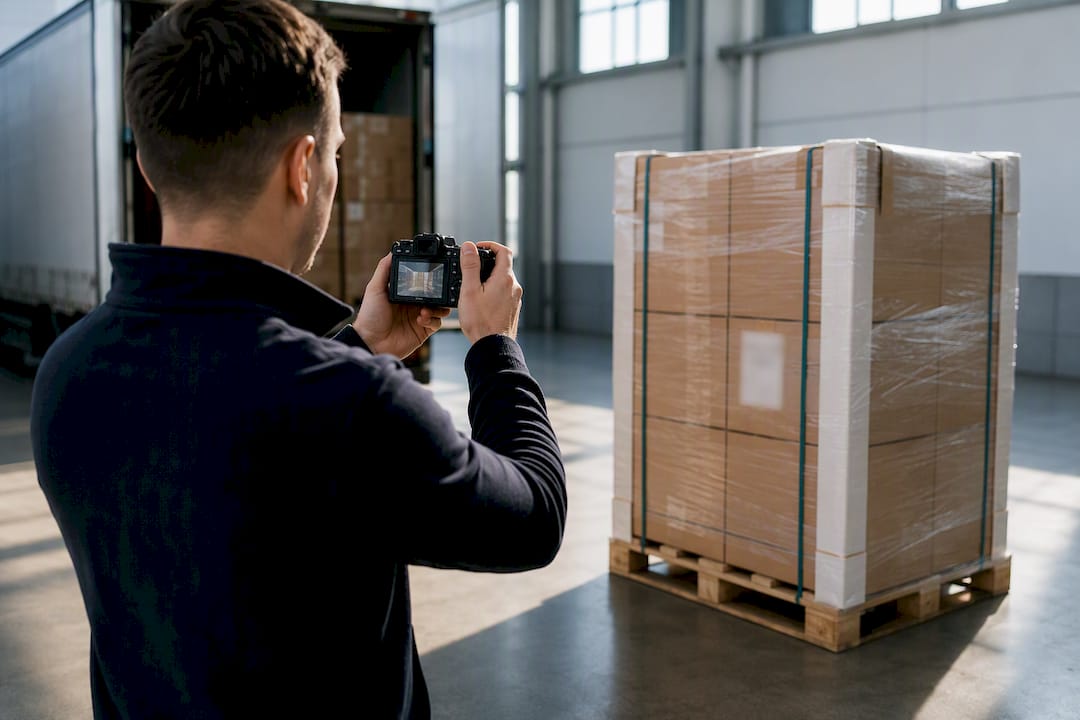
Palletized freight with clear forklift access and visible marks moves through inspection far faster than loose cartons, since customs officers can pull a pallet aside and inspect it without unpacking the entire load. Leave an aisle or accessible face on every pallet specifically for that purpose.
What Documents Do You Need to Ship Internationally?
Three documents form the backbone of every international shipment, and customs authorities cross-check them against each other. Get any one wrong and the shipment sits.
- Commercial invoice: states the transaction value, buyer and seller details, and terms of sale; customs uses this to assess duties.
- Packing list: itemizes exactly what’s in each package, including weights, dimensions, and marks, so Customs and Border Protection knows what to compare against the invoice.
- Bill of lading (ocean) or air waybill (air): the contract of carriage and, for an original ocean bill of lading, sometimes the document of title needed to release cargo at destination.
- Electronic Export Information (EEI) via AES: required for most shipments valued over $2,500 per Schedule B classification, or when an export license applies.
For controlled commodities, add certificates of origin or product-specific licenses before booking, since some destination countries reject shipments missing the right paperwork on arrival, not after.
The importer of record carries the compliance burden even when a licensed broker files the entry. In the United States, CBP requires cargo-release documentation within set windows after arrival, and the importer remains liable for duties and accuracy of the filing even though the broker does the paperwork. Filing deadlines and required forms vary by destination country, so confirm local timing before your first shipment rather than assuming U.S. rules apply everywhere. Our guide to the customs clearance process walks through broker authorizations and IOR setup in more detail.
Packaging and Palletization Rules You Cannot Skip
Wood packaging material is the single most common reason a compliant shipment gets stopped at the border, and it’s entirely preventable. Regulated wood pallets, crates, and dunnage must be heat-treated or fumigated and stamped under ISPM 15, the international phytosanitary standard most countries enforce. Noncompliant material can be refused entry, re-exported at your cost, or destroyed on-site.
Check every pallet for the ISPM 15 mark before it loads: the IPPC logo, a two-letter country code, a unique facility registration number, and the treatment code (HT for heat treatment, MB for methyl bromide). Put this requirement directly in your supplier purchase order, not as a verbal reminder, and have your warehouse inspect pallets on arrival rather than trusting the supplier’s word.
- Require ISPM 15-marked WPM or certified plastic/metal pallet alternatives in every PO
- Reject or quarantine mixed loads with unmarked pallets before they leave the origin dock
- Build unit loads for stability, not just cube efficiency, with dunnage to prevent shifting
- Mark each pallet clearly with weight, count, and handling instructions
Pro Tip: Some destination countries publish their own ISPM 15 enforcement lists separate from general international guidance. If you’re shipping somewhere new, verify the destination’s specific requirement before your supplier builds a single pallet.
How Much Does It Cost to Ship Large Items Internationally?
A comparable quote starts with insisting on line items, not a single bundled number. Ask every forwarder for the same breakdown: ocean or air freight charges, port or terminal handling, documentation fees, cargo insurance, customs broker fees, and potential storage, detention, or demurrage charges if cargo sits past the free period. Request a routing plan alongside the quote that spells out who handles each leg and the cut-off times for booking.
- Pallet count and stackability
- Gross weight and dimensional weight
- Commodity type and HS classification
- Origin and destination ports or facilities
- Service level (standard, expedited, door-to-door)
Ocean shipments typically run several weeks port to port, plus days on either end for drayage and clearance; air cargo moves in days but at a steep premium. Build in contingency time for peak season congestion or customs holds. You can request a freight estimate directly to compare real numbers against your current setup.
What Ecommerce Sellers Get Wrong About Shipping Large Freight
The same three mistakes show up over and over: invoice and packing list numbers that don’t match, wood packing material nobody checked before it left the factory, and vague instructions to the importer of record about who approves what. Each one is preventable with a checklist, not a bigger budget. What actually shortens exceptions is having warehouse receipts, tracking, and customs status visible in one place instead of scattered across emails with three different vendors. That visibility is the real gap between sellers who scale freight smoothly and those who fight fires every quarter.
— Maayan
Get a Line-Item Freight Quote From Or-ner
A comprehensive logistics solution includes freight booking across ocean, air, and land, palletization and customs clearance, and destination warehousing that flows straight into fulfillment in an omnichannel retail setup. Instead of coordinating a supplier, a forwarder, a broker, and a warehouse separately, you get one platform tracking the shipment from pickup to the customer’s door.
If you’re planning your next large or heavy shipment, request a freight estimate with your pallet count, commodity, and destination details, and get a line-item quote back instead of a guess. For sellers who also need customs clearance and warehousing on the receiving end, the global ecommerce fulfillment page covers what that setup includes.
Sources
- Common export documents | U.S. International Trade Administration
- Import ISPM 15-compliant wood packaging material into the U.S. | APHIS
FAQ
What Is the Best Way to Ship Large Items Internationally?
The most reliable approach pairs palletized shipment with a freight forwarder who books the main carriage, a customs broker who handles clearance, and a destination warehouse for fulfillment. Treating these as one managed flow, rather than separate vendors, is what reduces delays and documentation errors.
How Long Does International Freight Shipping Take?
Ocean freight typically takes several weeks port to port, plus added days for drayage, customs clearance, and warehouse receipt on each end. Air cargo moves in a matter of days but costs significantly more per kilogram, so the right choice depends on how urgent the restock is.
Who Is Responsible for Customs Duties on an International Shipment?
The importer of record carries responsibility for duties and compliance even when a licensed customs broker files the entry paperwork. CBP holds the importer liable for accuracy regardless of who submits the filing, and similar principles apply in most other countries.
Do All Wood Pallets Need ISPM 15 Certification?
Regulated wood packaging material, including pallets, crates, and dunnage, generally needs ISPM 15 treatment and marking for international shipment. Certified plastic or metal pallets fall outside this requirement and are a common alternative when suppliers can’t guarantee compliant wood packaging.
Does Or-ner Handle Both Freight Booking and Customs Clearance?
A comprehensive logistics platform can offer freight booking across ocean, air, and land alongside customs clearance and destination warehousing, so sellers do not need to coordinate separate vendors for each stage. Current service details and quote requests are available on the Or-ner site.