
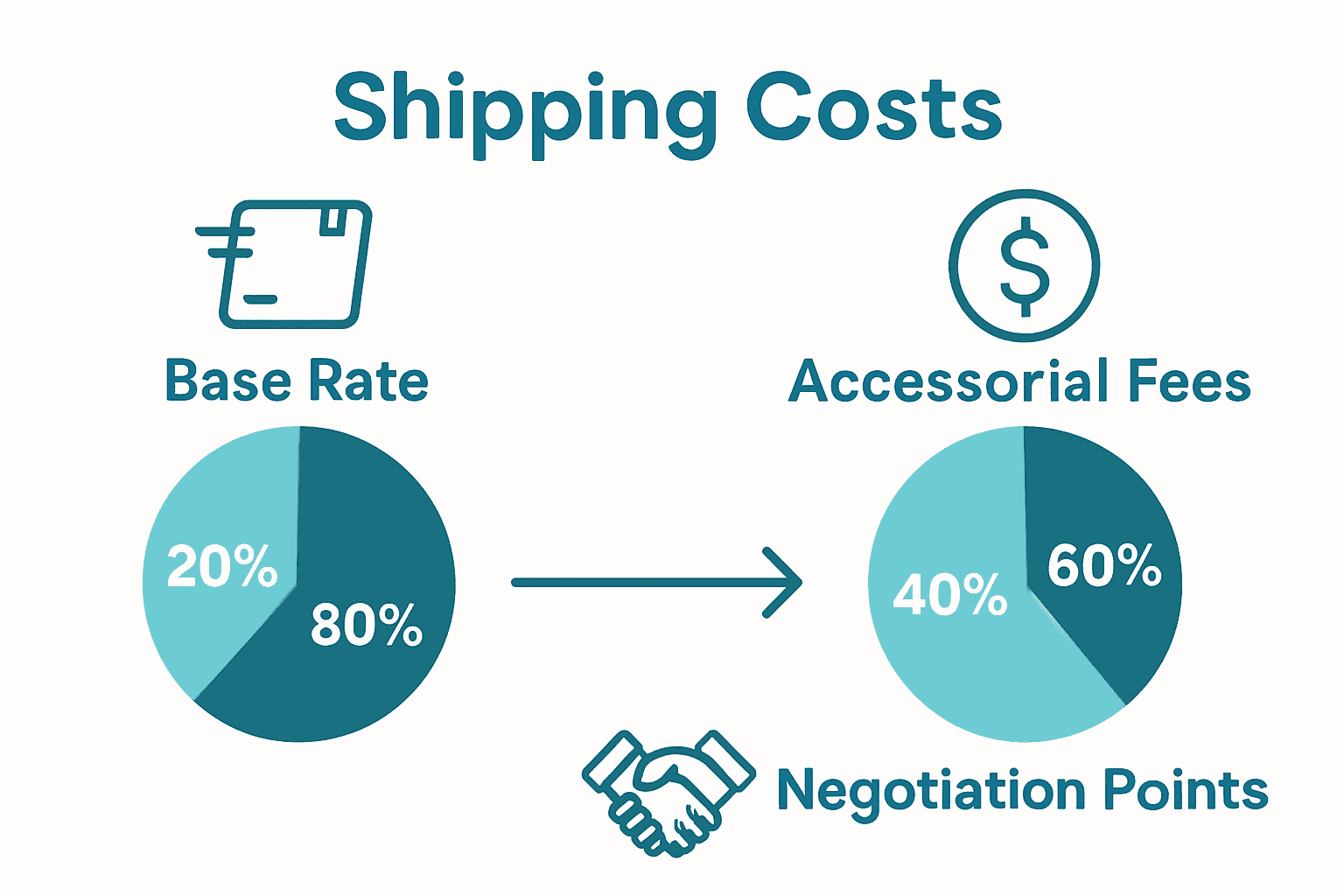
Did you know that accessorial and surcharge fees can make up as much as 30 percent of your total shipping costs? For businesses that rely on regular freight shipments, every hidden charge and missed negotiation opportunity can eat away at your bottom line. Gaining a deep understanding of your shipping habits and researching carrier options puts you in control when talking rates, helping you secure agreements that truly fit your needs and budget.
Quick Summary
| Key Point | Explanation |
|---|---|
| 1. Understand Your Shipping Profile | Gather detailed shipment data to clarify your shipping needs and build negotiation leverage points. |
| 2. Research and Benchmark Carrier Rates | Compare quotes and gather market data to identify competitive pricing options for your shipping profile. |
| 3. Target Hidden Fees in Negotiations | Focus on minimizing accessorial charges that often account for a significant portion of total shipping costs. |
| 4. Engage Carriers with a Value Proposition | Highlight your shipping volume and efficiency to convey your potential as a valuable partner to carriers. |
| 5. Review Agreements for Hidden Terms | Scrutinize contracts for hidden fees and clauses to ensure the best terms and protect your shipping needs. |
Table of Contents
- Step 1: Assess Your Shipping Needs And Volumes
- Step 2: Research Carrier Options And Benchmark Rates
- Step 3: Prepare Negotiation Goals And Key Data
- Step 4: Initiate Negotiations With Shipping Partners
- Step 5: Review And Finalize Shipping Agreements
Step 1: Assess Your Shipping Needs and Volumes
Before diving into shipping rate negotiations, you need a crystal clear picture of your current shipping landscape. This step helps you understand your exact shipping requirements and build a strategic negotiation foundation.
Start by gathering comprehensive historical shipment data from your records. According to research from freight industry experts, analyzing patterns like frequent shipping routes, cargo quantities, and seasonal fluctuations can reveal critical negotiation leverage points. Pull reports showing your total annual shipping volume, average package weights, most common destinations, and shipping frequency.
Break down your shipping profile with precision. Shipping research indicates that understanding specific details like package dimensions, freight classifications, and any special handling requirements gives you stronger bargaining power. Create a detailed spreadsheet documenting:
- Total annual shipping volume
- Average package weight and dimensions
- Predominant shipping routes
- Seasonal shipping variations
- Special cargo requirements
Here’s a comparison of critical negotiation data points every shipper should document:
| Data Point | Why It Matters | How to Use in Negotiations |
|---|---|---|
| Annual Shipping Volume | Demonstrates buying power | Supports requests for volume discounts |
| Average Package Size | Impacts rate calculations | Clarifies cost structure with carriers |
| Main Shipping Routes | Reveals route efficiencies | Enables targeted route-based negotiations |
| Seasonal Variations | Identifies peak/off-peak periods | Leverages timing for optimal rates |
| Special Handling Needs | Flags higher service requirements | Justifies negotiation for surcharges |
Pro Tip: Consolidate shipments whenever possible. Larger, combined loads often qualify for better rate negotiations.
By meticulously documenting these details, you transform raw shipping data into a strategic negotiation toolkit. You will be prepared to demonstrate your shipping value to potential carriers and secure more competitive rates.
In the next step, you will use this comprehensive shipping profile to research and identify potential shipping partners who align with your specific needs.
Step 2: Research Carrier Options and Benchmark Rates
With your shipping profile ready, it is time to explore carrier options and establish competitive pricing benchmarks. This crucial step helps you understand the market landscape and position yourself for successful rate negotiations.
Freight industry research emphasizes the importance of comparing rates across different carriers including national providers, regional specialists, and niche logistics companies. Start by requesting comprehensive rate quotes that match your specific shipping profile. Do not just look at headline rates. Dig into detailed pricing structures that account for your unique shipping characteristics.
Use online freight rate comparison platforms and industry databases to gather benchmark data. Market analysis suggests that actionable benchmarking information provides critical transparency in negotiations. Create a comparative spreadsheet that tracks:
- Base shipping rates
- Fuel surcharges
- Additional handling fees
- Volume discounts
- Regional pricing variations
Pro Tip: Request quotes during different seasons to understand how pricing fluctuates and identify potential negotiation windows.
Pay special attention to carriers that demonstrate flexibility and alignment with your specific shipping needs.
 Some providers might offer more competitive rates for your particular routes or cargo types.
In the next step, you will prepare a strategic negotiation approach using the benchmark data and carrier insights you have gathered.
Step 3: Prepare Negotiation Goals and Key Data
Now that you have your shipping profile and carrier benchmarks, it is time to craft a strategic negotiation approach. This step transforms your research into a powerful toolkit for securing better shipping rates.
Shipping logistics experts recommend leveraging historical shipping volume and cost data as your primary negotiation weapon. Gather comprehensive information from your transportation management system (TMS) to create a robust request for proposal (RFP) that precisely communicates your shipping needs.
Industry research highlights a critical insight many businesses overlook: accessorial and surcharge fees can represent 25 to 30% of total shipping costs. Your negotiation strategy should specifically target these often hidden expenses. Focus on:
- Residential delivery surcharges
- Remote area delivery fees
- Peak season additional charges
- Fuel adjustment costs
- Handling and special service fees
Pro Tip: Quantify your potential volume commitment. Carriers are more likely to offer competitive rates when they see consistent business potential.
Prepare a detailed document that showcases your shipping efficiency, volume consistency, and potential for a long term partnership.
Include precise metrics that demonstrate your value as a shipper.
In the next step, you will craft a compelling negotiation script using the comprehensive data you have assembled.
Step 4: Initiate Negotiations with Shipping Partners
With your comprehensive data and strategic goals prepared, you are ready to engage carriers in meaningful rate negotiations. This step transforms your research into actionable conversations that can significantly reduce your shipping expenses.
Shipping logistics research suggests two primary approaches to initiating negotiations: direct face-to-face meetings or issuing a comprehensive request for proposal (RFP). Prioritize building a strong relationship with your potential carrier’s account manager. They are your primary gateway to securing favorable rates.
When presenting your case, industry experts recommend focusing on your value proposition. Highlight your unique strengths as a shipping partner by showcasing:
- Consistent shipping volume
- Projected year-on-year growth
- Efficiency in cargo preparation
- Potential for long term partnership
- Predictable shipping patterns
Pro Tip: Always demonstrate multiple carrier options. This signals you are seriously comparing market rates and are willing to shift providers for better terms.
Learn to leverage multi-carrier comparison strategies that allow you to present best-way shipping alternatives. This approach shows carriers you are sophisticated and well-informed about market pricing.
In the next step, you will refine your negotiation strategy based on carrier responses and prepare to lock in the most competitive shipping rates possible.
Step 5: Review and Finalize Shipping Agreements
With negotiation discussions complete, you are at the critical stage of reviewing and finalizing your shipping agreements. This step requires meticulous attention to detail to ensure you secure the most advantageous terms for your business.
Shipping logistics research warns about potential hidden contract requirements that can significantly impact your shipping expenses. Be extraordinarily vigilant when reviewing agreements. Pay close attention to minimum volume clauses and ensure you retain essential protections like money-back guarantees for late or missed deliveries.
Industry experts recommend leveraging your annual volume forecasts strategically. Consider these key negotiation elements:
- Select appropriate shipping modes
- Evaluate full container load (FCL) versus less than container load (LCL) options
- Compare air versus sea freight costs
- Assess potential 3PL partnership opportunities
Pro Tip: Always negotiate flexibility into your agreements. Market conditions change rapidly and your contract should accommodate potential future shifts.
Carefully examine each contract clause. Look beyond headline rates and understand the total cost structure. Learn about alternative shipping strategies that might provide additional cost savings or operational efficiencies.
In the final step, you will implement your new shipping agreement and establish monitoring mechanisms to track performance and cost effectiveness.
Take Control of Your Shipping Rates with Smart, Reliable Solutions
Negotiating the best shipping rates can feel overwhelming, especially when juggling complex data, hidden surcharges, and the pressure to streamline your logistics process. If you are looking to eliminate confusion and secure more effective deals, you need tools and partners that deliver both transparency and flexibility. ORNER is designed to help ecommerce sellers, wholesalers, and brands transform negotiated shipping strategies into real cost savings and operational confidence.
Stop letting uncertainty drain your profits. Join ORNER’s reliable courier services and experience end-to-end logistics tailored for businesses that demand better shipping outcomes. Explore industry-specific insights and answers in our QA Archives, or get started with our all-in-one logistics platform to activate smarter freight booking, real-time tracking, and seamless cross-border fulfillment. Secure a competitive edge now and take your shipping operations to the next level.
Frequently Asked Questions
How can I assess my shipping needs effectively for rate negotiations?
To assess your shipping needs, gather historical shipment data including total annual shipping volume, average package weights, and common destinations. Create a detailed overview that highlights your shipping profile, allowing you to identify key areas that could enhance your bargaining power during negotiations.
What key data points should I include in my shipping profile?
In your shipping profile, include total annual shipping volume, average package size, predominant shipping routes, seasonal variations, and special cargo requirements. Documenting these metrics gives you a significant advantage by illustrating your shipping value to potential carriers.
How do I research carriers and benchmark shipping rates?
To research carriers, request detailed rate quotes from various providers, and utilize online comparative platforms to gather benchmark data. Create a comparative spreadsheet to track base rates, surcharges, and discounts, enabling you to make informed comparisons in your negotiations.
What should I focus on during rate negotiations with carriers?
During negotiations, emphasize your shipping volume, long-term partnership potential, and any unique shipping patterns. Clearly present your data on historical costs and volume commitments to justify requests for lower rates or flexible terms.
How can I finalize shipping agreements to ensure I get the best deal?
To finalize shipping agreements effectively, review contracts meticulously for hidden fees, minimum volume clauses, or inflexible terms. Ensure you negotiate for flexibility and include provisions that allow you to adapt to changing market conditions, aiming for agreements that can lead to cost savings of around 15%.
What are some common pitfalls to avoid during shipping rate negotiations?
Common pitfalls include overlooking accessorial fees that can add 25-30% to total costs or neglecting to compare multiple carrier options. Stay vigilant by evaluating all aspects of the contract and understanding the overall cost structure to avoid surprises down the line.