

Over 60 percent of online shoppers say that delivery reliability strongly influences their loyalty to a brand. In today’s crowded ecommerce market, even small delays or errors can lead to lost sales and negative reviews. Defining and tracking the right delivery performance metrics gives your business a clear edge by revealing where you stand and how to improve. This guide lays out practical steps for measuring, analyzing, and refining your shipping process so every package meets customer expectations.
Table of Contents
- Step 1: Define Delivery Performance Metrics And KPI Targets
- Step 2: Gather And Consolidate Delivery Performance Data
- Step 3: Analyze Delivery Accuracy, Speed, And Reliability
- Step 4: Identify Delivery Exceptions And Root Causes
- Step 5: Implement Improvements And Monitor Ongoing Results
Quick Summary
| Key Point | Explanation |
|---|---|
| 1. Define clear KPIs for delivery. | Establish specific metrics like on time delivery rate and customer satisfaction to track shipping performance effectively. |
| 2. Consolidate delivery performance data. | Integrate data from various sources into one dashboard to simplify measurements and identify trends. |
| 3. Analyze delivery dimensions thoroughly. | Evaluate accuracy, speed, and reliability to find weaknesses and enhance your shipping efficiency. |
| 4. Identify exceptions and root causes. | Track delivery issues systematically to discover underlying problems and prioritize solutions for improvement. |
| 5. Implement changes and monitor results. | Create a structured plan for improvements and review KPIs regularly to ensure effectiveness and adapt strategies as needed. |
Step 1: Define delivery performance metrics and KPI targets
Defining delivery performance metrics and key performance indicators (KPIs) will help you track and optimize your ecommerce shipping success. According to the U.S. Department of Commerce, these metrics are essential business reference points to assess whether your online goals are being met.
To effectively measure delivery performance, focus on these critical KPIs: on time delivery rate, order accuracy, shipping cost per order, and customer satisfaction score. The Logistics Operational Guide recommends using quantifiable measurements that are directly related to your objectives. A prime example is tracking the percentage of orders delivered in full, on time, and error free (DIFOT metric).
When setting KPI targets, start with realistic baseline measurements. Track your current performance across each metric, then establish incremental improvement goals. Aim for progressive enhancements that challenge your team without being unrealistic. For instance, if your current on time delivery rate is 85%, set an initial target of 90% within the next quarter. This approach allows continuous improvement while maintaining achievable milestones.
Pro Tip: Use Just in Time Delivery: Essential Guide for 2025 Success to understand how strategic delivery planning can help you meet these performance targets more effectively.
Step 2: Gather and consolidate delivery performance data
Gathering and consolidating delivery performance data is a critical step in understanding your ecommerce shipping effectiveness. Coursera emphasizes that accurately measuring business performance relies on precisely defining and collecting relevant data that aligns with your specific objectives.
To consolidate your delivery performance data, start by integrating information from multiple sources such as your order management system, shipping carrier reports, customer feedback platforms, and internal tracking databases. Organize these data points into a centralized dashboard or spreadsheet that allows for easy comparison and analysis. According to the Universal Business Council, tracking metrics that directly connect to revenue and long-term customer growth is essential. This means capturing not just shipping times and costs, but also customer satisfaction scores, return rates, and repeat purchase behaviors.
Implement a standardized data collection process that ensures consistency and accuracy. Set up automated reporting tools that can pull data in real time, reducing manual entry errors and providing up to date insights. Create a monthly review schedule where you compile and analyze these metrics, looking for trends, potential bottlenecks, and opportunities for improvement. By systematically gathering and consolidating your delivery performance data, you will build a robust foundation for making strategic shipping decisions.

Pro Tip: Consider using Same Day Delivery Guide for Online Retailers to understand how advanced delivery strategies can impact your data collection and performance metrics.
Step 3: Analyze delivery accuracy, speed, and reliability
Analyzing delivery accuracy, speed, and reliability is crucial for understanding your ecommerce shipping performance. Logistics News highlights the significance of measuring outbound logistics efficiency through key performance indicators that directly impact customer satisfaction.
To effectively analyze your delivery performance, focus on three critical dimensions. First, assess order accuracy by calculating the Order Accuracy Rate, which measures the percentage of orders shipped without errors. LiLA STUDIOS emphasizes the importance of monitoring metrics like fulfillment latency and on-time delivery rate. Break down your analysis into specific measurements such as perfect order rate, on-time delivery percentage, and average delivery time across different shipping zones.
Develop a comprehensive scoring system that weights these metrics to create a holistic view of your delivery performance. Look for patterns that reveal potential improvement areas, such as consistent delays in specific regions or recurring accuracy issues with particular product categories. Regular analysis will help you identify root causes of shipping inefficiencies and develop targeted strategies to enhance your overall delivery reliability.
Pro Tip: Use the Key Delivery Performance Metrics for Successful Logistics guide to dive deeper into understanding and interpreting your shipping performance data.
Step 4: Identify delivery exceptions and root causes
Identifying delivery exceptions and their root causes is a critical step in improving your ecommerce shipping performance. Logistics Operational Guide suggests that by setting predefined metrics, you can effectively define key areas of intervention and understand the underlying issues in your logistics operations.
Begin by creating a comprehensive exception tracking system that categorizes different types of delivery disruptions. These might include late deliveries, damaged packages, incorrect shipping addresses, or incomplete orders. Analyze each exception type systematically, looking for patterns across different shipping carriers, product lines, or geographical regions. DIVA Portal emphasizes the importance of time metrics, highlighting that your ability to respond quickly and efficiently to customer requests is crucial for maintaining satisfaction and retention.
Develop a root cause analysis process that goes beyond surface level symptoms. For each delivery exception, conduct a detailed investigation to understand the fundamental reasons behind the issue. This might involve interviewing shipping staff, reviewing carrier performance reports, examining warehouse processes, or analyzing customer feedback. Create a prioritized action plan that addresses the most significant and frequent root causes, implementing targeted improvements that can prevent similar exceptions in the future.
Pro Tip: Explore our How to Streamline Logistics for Reliable Courier Services guide to learn advanced strategies for minimizing delivery exceptions and improving overall shipping reliability.
Step 5: Implement improvements and monitor ongoing results
Implementing improvements and continuously monitoring your delivery performance is crucial for sustained ecommerce success. Coursera emphasizes the importance of regularly monitoring KPIs to assess progress and make timely adjustments to your business performance.
Start by prioritizing improvements based on the root cause analysis from your previous investigations. Create a structured implementation plan that breaks down each improvement into actionable steps with clear timelines and responsible team members. Assign specific metrics to track the effectiveness of each implemented change. Universal Business Council recommends focusing on actionable metrics that directly influence decision making, ensuring that your improvements are measurable and impactful.
Establish a consistent review process where you analyze performance data monthly or quarterly. Compare current metrics against your baseline and previous improvement periods to validate the effectiveness of your interventions. Be prepared to quickly iterate and adjust your strategies if the desired outcomes are not achieved. Create a feedback loop that involves your shipping team, customer service representatives, and logistics partners to gather insights and continuously refine your delivery performance.
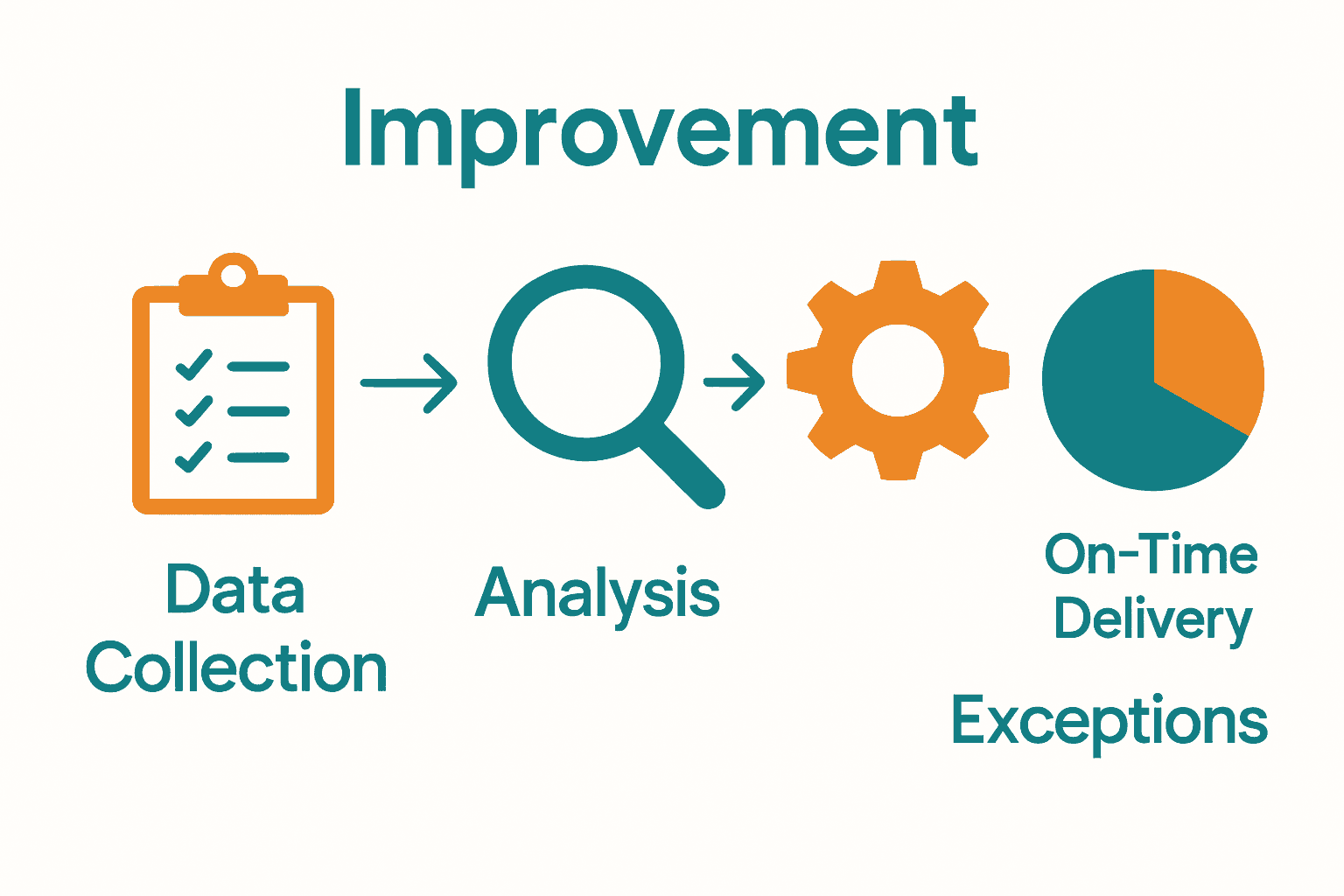
Pro Tip: Utilize the 7 Ways to Improve Customer Delivery Experience Effectively guide to ensure your improvements not only optimize internal processes but also enhance overall customer satisfaction.
Elevate Your Ecommerce Delivery Performance with Reliable Courier Services
Measuring delivery performance is essential for ecommerce success. The challenge lies in accurately tracking metrics like on time delivery rate, order accuracy, and customer satisfaction while swiftly addressing exceptions and root causes. You want to transform data into seamless, reliable shipping experiences that keep your customers coming back. That requires a logistics partner who offers end-to-end visibility and real-time control across your entire supply chain.
Discover solutions that help you:
- Streamline freight booking and shipping coordination
- Monitor deliveries with real-time tracking and exception management
- Optimize warehousing and inventory for faster fulfillment
- Integrate smoothly with your ecommerce platforms

Take control of your delivery performance today with Reliable Courier Services tailored specifically for ecommerce sellers. Visit or-ner.com now to explore tools designed to improve shipping accuracy, boost speed, and ensure your customers receive perfect orders. Do not wait to transform your logistics into a competitive advantage. Get started at or-ner.com and turn delivery insights into actionable results.
Frequently Asked Questions
How do I define delivery performance metrics for my ecommerce business?
To define delivery performance metrics, focus on key performance indicators (KPIs) like on-time delivery rate, order accuracy, shipping cost per order, and customer satisfaction score. Start by tracking your current performance for these metrics to establish realistic baseline measurements.
What are the best practices for gathering delivery performance data?
Gather delivery performance data by integrating information from various sources, such as your order management system and customer feedback platforms. Organize this data into a centralized dashboard or spreadsheet to facilitate easy comparison and analysis.
How can I effectively analyze delivery speed and accuracy?
You can analyze delivery speed and accuracy by assessing the Order Accuracy Rate and on-time delivery percentage across different shipping zones. Break down your findings further to see where improvements can be made, for instance, by identifying specific regions with consistent delays.
What steps should I take to identify delivery exceptions and their causes?
Identify delivery exceptions by creating a tracking system that categorizes disruptions, such as late deliveries or incorrect addresses. For each exception, conduct a root cause analysis to discover underlying issues and create a prioritized action plan to address these problems.
How do I implement improvements in my delivery performance?
Implement improvements by developing a structured plan that defines actionable steps with timelines and responsible team members. Regularly monitor the outcomes of these changes by comparing your new metrics against previous performance to ensure the effectiveness of your efforts.
What ongoing monitoring strategies can I use to sustain delivery performance improvements?
Establish a consistent review process to analyze performance data monthly or quarterly. This should involve comparing current metrics with your baseline to assess progress and iterating your strategies as necessary to maintain improvement momentum.