
Freight forwarding doesn’t have to be overwhelming. While coordinating international shipments involves multiple steps, understanding the freight forwarding process overview transforms complexity into manageable procedures. This guide walks you through every stage of the freight forwarding procedure, from initial cargo booking to final delivery, equipping you with the knowledge to streamline your global shipping operations and avoid costly mistakes.
Table of Contents
- Understanding The Freight Forwarding Procedure: An Overview
- Essential Documentation And Customs Procedures In Freight Forwarding
- Choosing The Right Freight Forwarding Service For Your Business Needs
- Tracking And Managing Your Freight Forwarding Shipments Effectively
- Enhance Your Freight Forwarding With Expert Solutions From Or-Ner
Key takeaways
| Point | Details |
|---|---|
| Multi-step coordination | Freight forwarding involves booking, transport, customs clearance, and delivery stages working in sequence. |
| Documentation is critical | Proper documentation and customs clearance are critical for smooth shipments and avoiding costly delays. |
| Partner selection matters | Choosing the right freight forwarder impacts cost and delivery time significantly through service quality and pricing. |
| Tracking enhances efficiency | Real-time shipment monitoring enables proactive problem-solving and improves supply chain performance. |
| Process knowledge prevents delays | Understanding each procedure step helps you anticipate requirements and avoid common shipping pitfalls. |
Understanding the freight forwarding procedure: an overview
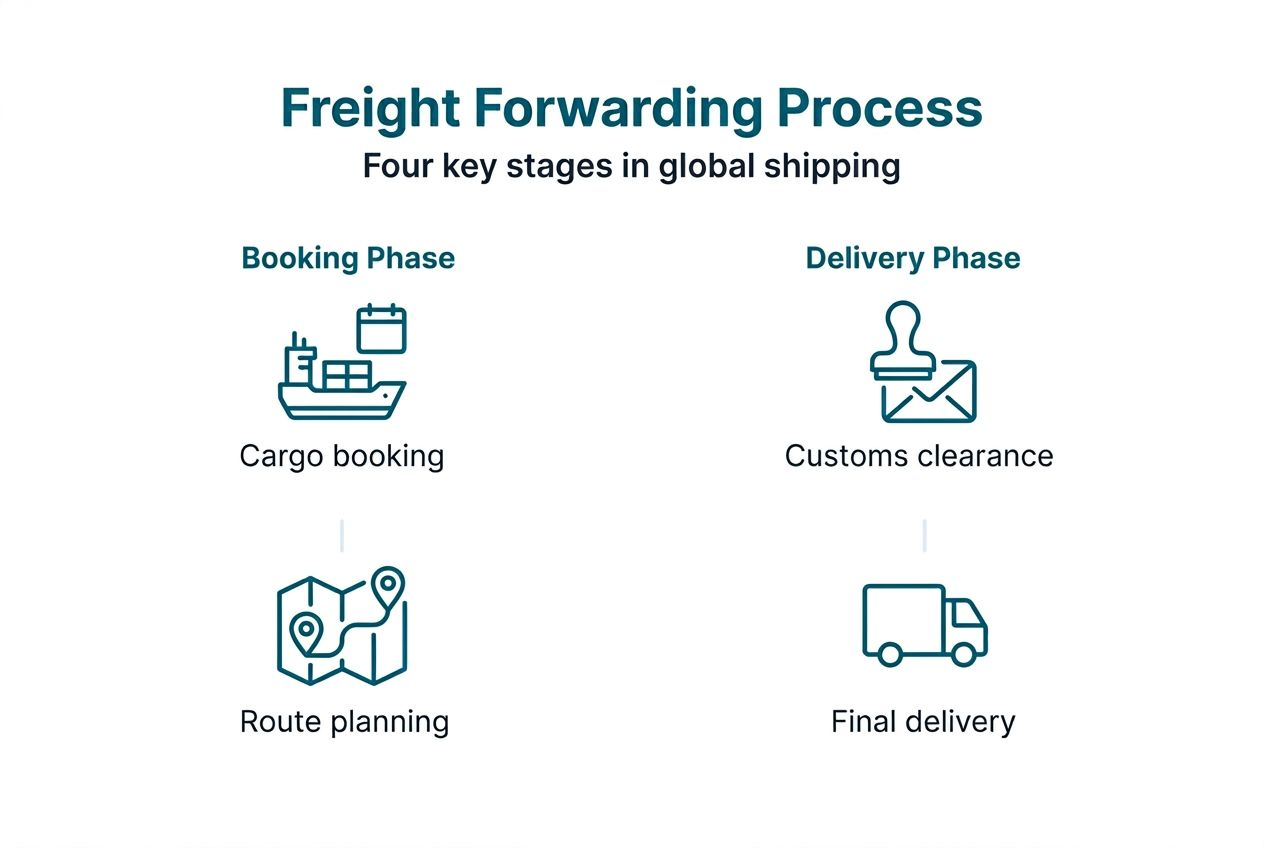
Freight forwarding encompasses booking cargo, arranging transport, handling customs, and delivery coordination. At its core, freight forwarding acts as the bridge between your business and global markets, managing the complex logistics of international shipment movement.
The procedure involves four major phases. First comes cargo booking, where you arrange space with carriers based on your shipment’s size, weight, and destination. Next, transport execution moves goods through ocean, air, or land routes depending on your timeline and budget. Third, customs clearance ensures your shipment complies with international trade regulations and passes through border controls. Finally, delivery coordination brings goods to their destination, often involving last-mile logistics partners.
Freight forwarders serve as your logistics quarterback throughout this process. They negotiate carrier rates, consolidate shipments for better pricing, manage documentation workflows, and troubleshoot delays. Their expertise navigates the maze of international shipping regulations, carrier requirements, and customs procedures that would overwhelm most businesses handling shipments independently.
An efficient freight forwarding procedure delivers measurable benefits:
- Reduced transit times through optimized routing and carrier selection
- Lower shipping costs via consolidated cargo and negotiated rates
- Fewer delays from proper documentation and customs preparation
- Better inventory planning through predictable delivery schedules
- Enhanced customer satisfaction from reliable international fulfillment
The complexity varies based on shipment characteristics. A small air freight package to Canada requires different procedures than a full container ship from Asia. Understanding these variations helps you select appropriate services and set realistic timelines for your specific shipping needs.
Essential documentation and customs procedures in freight forwarding
Documentation accuracy makes or breaks international shipments. Missing or incorrect paperwork causes shipments to sit in customs for days or weeks, generating storage fees and frustrated customers. Every international shipment requires specific documents that prove shipment legitimacy, declare contents accurately, and establish proper valuation for duty calculation.
The commercial invoice serves as your shipment’s foundation document. It details the buyer, seller, goods description, quantities, values, and terms of sale. Customs officials use this invoice to assess duties and verify shipment legitimacy. Your invoice must match packing contents exactly, use correct harmonized system codes for product classification, and state accurate commercial values.
The bill of lading functions as your shipment receipt and contract of carriage. Ocean freight uses a master bill of lading from the carrier plus house bills from freight forwarders. Air freight uses an air waybill. This document proves ownership, enables cargo tracking, and must be presented for cargo release at destination.
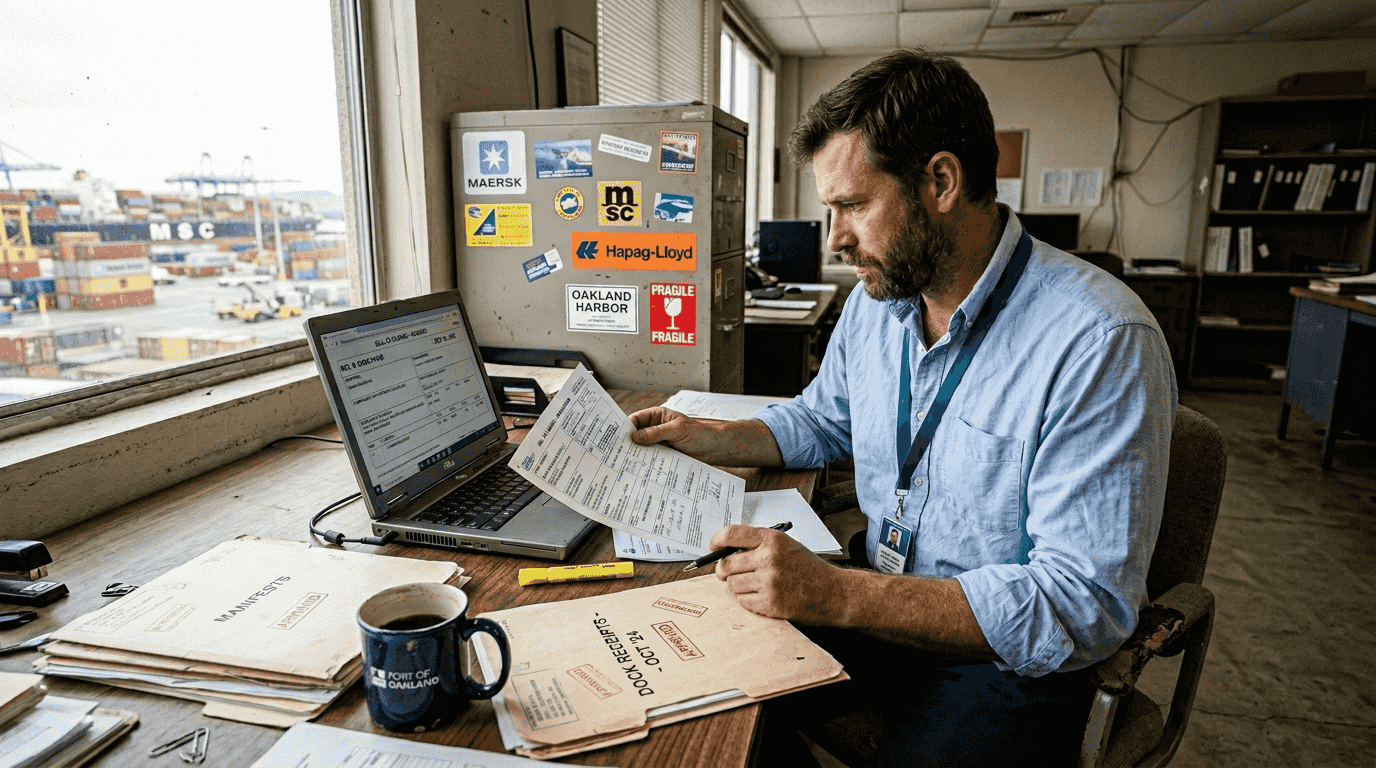
Your packing list itemizes every box, crate, or pallet in the shipment. It specifies dimensions, weights, and contents of each package, helping customs inspectors verify invoice accuracy without opening every container. Warehouse staff use packing lists to check received goods against shipped quantities.
The certificate of origin declares where goods were manufactured. Many trade agreements offer reduced duty rates for goods from specific countries, making this certificate financially valuable. Some destinations require chamber of commerce certification on these documents.
Proper documentation and customs clearance are critical for smooth shipments and avoiding unnecessary expenses. Customs clearance procedures typically follow this sequence:
- Document submission to customs authorities before or upon arrival
- Customs review of declarations, invoices, and supporting documents
- Duty and tax calculation based on shipment value and classification
- Physical inspection if shipment is flagged for examination
- Payment of assessed duties, taxes, and customs fees
- Release authorization allowing cargo to proceed to destination
Freight forwarding documentation plays a key role in preventing clearance delays. Common documentation errors include mismatched invoice and packing list quantities, incorrect product descriptions, undervalued goods declarations, and missing certificates of origin. Each mistake potentially triggers customs holds, penalty assessments, or shipment returns.
Pro Tip: Create a documentation checklist specific to each destination country and review all paperwork 48 hours before shipment departure. This buffer allows time to correct errors before goods leave your facility, preventing costly delays at customs.
Choosing the right freight forwarding service for your business needs
Your freight forwarder selection directly impacts shipping costs, delivery reliability, and operational headaches. The wrong partner leads to missed deadlines, unexpected fees, and customer complaints. The right partner becomes a strategic asset that enables market expansion and competitive advantage.
Evaluate potential freight forwarders across these critical dimensions. Service coverage determines which routes and destinations they handle effectively. A forwarder with strong Asia-Pacific networks may lack European connections. Verify they operate in your key markets with direct carrier relationships, not subcontracted services that add markup and reduce control.
Pricing structure varies dramatically between providers. Some charge flat rates per shipment, others use weight-based pricing with fuel surcharges and accessorial fees. Request detailed quotes that itemize every charge: freight rates, documentation fees, customs clearance, delivery charges, and any other assessments. Compare total landed costs, not just base freight rates.
Reputation and reliability separate excellent forwarders from mediocre ones. Check references from businesses with similar shipping volumes and destinations. Choosing the right freight forwarder impacts cost and delivery time through their operational competence and carrier relationships. Review online ratings, Better Business Bureau records, and industry certifications like IATA or FMC licensing.
Technology capabilities increasingly differentiate modern freight forwarders. Advanced platforms offer online booking, real-time tracking, automated documentation generation, and shipment analytics. Legacy forwarders relying on phone calls and email chains slow your operations and reduce visibility. Verify their systems integrate with your e-commerce platform or order management software.
| Feature | Basic Forwarders | Advanced Forwarders | Premium Forwarders |
|---|---|---|---|
| Service coverage | Limited routes | Regional networks | Global coverage |
| Technology | Phone and email | Basic online portal | Full API integration |
| Tracking | Manual updates | Automated notifications | Real-time visibility |
| Customs expertise | Standard clearance | Compliance consulting | Duty optimization |
| Pricing | Published rates | Negotiated contracts | Volume-based discounts |
Ask these questions before committing to a freight forwarding partnership:
- What is your average transit time for my key shipping lanes?
- How do you handle shipment delays or customs issues?
- What insurance coverage is included and what costs extra?
- Can I access shipment tracking 24/7 through your platform?
- What documentation support do you provide for complex shipments?
- How quickly do you respond to urgent shipping requests?
- What volume discounts are available as my business grows?
Negotiate rates based on projected shipping volumes, but avoid unrealistic commitments. Many forwarders offer tiered pricing that rewards growth without penalizing honest volume estimates. Discuss peak season surcharges upfront, especially if you ship heavily during holidays when carrier capacity tightens and rates spike.
Tracking and managing your freight forwarding shipments effectively
Shipment visibility transforms freight forwarding from a black box into a managed process. Without tracking, you rely on carrier estimates and hope goods arrive on time. With robust tracking systems, you monitor progress continuously, spot delays early, and communicate proactively with customers.
Modern tracking technologies capture shipment status at multiple checkpoints. GPS devices on containers provide real-time location data. RFID tags enable automated scanning at warehouses and transfer points. Electronic data interchange systems share status updates between carriers, forwarders, and customs authorities. Cloud-based platforms aggregate this data into unified dashboards accessible from any device.
Implementing effective shipment tracking starts with selecting appropriate software. Tracking and managing shipments enhances supply chain efficiency through automated monitoring and exception alerts. Your ideal system integrates with freight forwarder platforms, pulls carrier tracking data automatically, and pushes notifications when shipments deviate from expected timelines.
Set up tracking workflows that match your operational needs:
- Configure automated tracking updates at key milestones: booking confirmation, cargo pickup, port arrival, customs clearance, delivery dispatch
- Establish exception alerts for delays, customs holds, or routing changes
- Create customer notification templates that share tracking links and delivery estimates
- Build reporting dashboards that show on-time performance and identify problem lanes
Proactive shipment monitoring delivers multiple operational benefits. You identify bottlenecks in your shipping lanes, enabling you to shift volume to more reliable carriers. Early delay warnings let you adjust production schedules or inform customers before they complain. Performance data supports freight forwarder evaluations and contract negotiations.
Communication protocols enhance tracking value. When monitoring reveals a shipment delay, immediately contact your freight forwarder for explanation and resolution options. Assess whether expedited routing, alternative carriers, or partial shipments can mitigate customer impact. Document these incidents to identify recurring issues that require process improvements.
Pro Tip: Schedule a weekly shipment review meeting where your team analyzes tracking data, discusses problem shipments, and identifies process improvements. Regular reviews transform tracking from reactive troubleshooting into proactive supply chain optimization.
Enhance your freight forwarding with expert solutions from Or-ner
Navigating the freight forwarding procedure becomes significantly easier with the right tools and expert guidance. Or-ner provides comprehensive resources that simplify every stage of your international shipping operations.
Our top freight booking solutions comparison helps you evaluate and select booking platforms that streamline cargo reservations across multiple carriers. The top freight forwarding services comparison breaks down leading providers by coverage, pricing, and service quality, enabling informed partner selection. When documentation challenges arise, our detailed guide on the freight forwarding documentation process walks you through every required form and compliance step.
Or-ner’s platform integrates freight booking, real-time tracking, customs clearance support, and fulfillment coordination into one unified solution. Whether you’re shipping your first international order or scaling to thousands of monthly shipments, our tools and expertise help you optimize costs, reduce delays, and deliver exceptional customer experiences. Explore our resources today to transform your freight forwarding operations from complex burden into competitive advantage.
FAQ
What are the key steps in the freight forwarding procedure?
The core steps include cargo booking with carriers, arranging multi-modal transport, customs clearance at borders, and final delivery coordination. Each phase requires documentation preparation and communication between shippers, forwarders, carriers, and customs authorities. Successful execution depends on proper sequencing and timing across all stages.
How can I ensure my freight forwarding documents are correct?
Verify all required documents against destination country requirements early in the shipping process. Use standardized checklists and consult your freight forwarder’s documentation team for accuracy reviews. Incorrect paperwork triggers customs delays that generate storage fees and delivery postponements, making upfront verification essential for smooth clearance through the freight forwarding documentation process.
What should I look for when choosing a freight forwarder?
Prioritize service coverage in your key markets, transparent pricing structures, proven reputation with verified references, and modern tracking technology. Compare top freight forwarding services based on these criteria alongside their customs expertise and customer support responsiveness. Select a partner whose capabilities and pricing align with your shipping volume, destination mix, and growth plans.
How does shipment tracking improve freight forwarding efficiency?
Tracking provides continuous visibility into shipment location and status throughout the shipping journey. This enables proactive delay resolution, accurate customer delivery estimates, and data-driven carrier performance evaluation. Automated alerts notify you of exceptions requiring immediate attention, while historical tracking data identifies recurring bottlenecks that need process improvements through best shipment tracking software.