

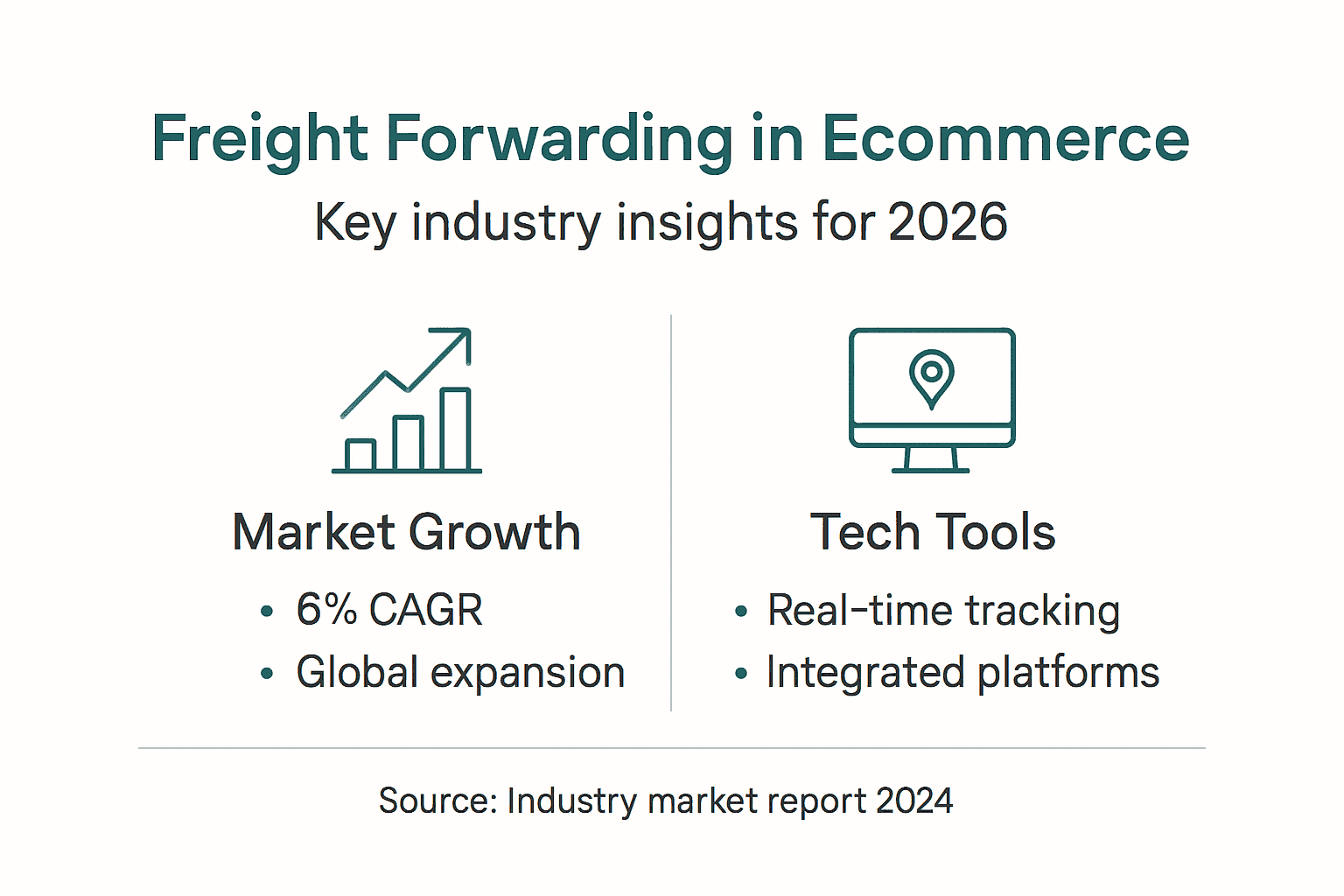
The global freight forwarding market is projected to grow from $325 billion in 2025 with a CAGR of 6% through 2034, reshaping ecommerce shipping. Yet many sellers mistakenly view freight forwarding as purely a cost minimization tool, overlooking critical advantages like real-time visibility and customs expertise. This guide clarifies how freight forwarding functions, delivers technology benefits, and helps you select partners that streamline cross-border operations and fuel ecommerce growth.
Table of Contents
- Understanding Global Freight Forwarding In Ecommerce
- Key Functions Of Freight Forwarders In Ecommerce Supply Chains
- Technology And Digital Tools Enhancing Freight Forwarding Visibility
- North American Market Landscape And Leading Freight Forwarders
- Common Misconceptions About Freight Forwarding In Ecommerce
- Comparative Analysis Of Major Freight Forwarders For Ecommerce Sellers
- Optimizing Freight Forwarding To Improve Fulfillment And Reduce Costs
- Emerging Trends And Challenges In Freight Forwarding For Ecommerce
- Summary And Actionable Recommendations For Ecommerce Sellers
- Explore ORNER’s Solutions For Seamless Global Logistics
Key Takeaways
| Point | Details |
|---|---|
| Market Growth | Freight forwarding market expands at 6% annually through 2034, driven by ecommerce demand. |
| Core Functions | Forwarders coordinate multimodal shipping, customs clearance, and real-time tracking for seamless deliveries. |
| Technology Edge | Digital platforms and APIs enhance visibility, automate exception handling, and integrate with ecommerce systems. |
| Selection Criteria | Evaluate forwarders on tech integration, customs support, pricing transparency, and service flexibility. |
| Common Myths | Success depends on visibility and compliance expertise, not just cost reduction. |
Understanding Global Freight Forwarding in Ecommerce
Freight forwarding connects ecommerce sellers with global markets by managing the complex logistics of moving goods across borders. Unlike simple courier services, freight forwarders manage customs clearance, documentation, and multimodal transport coordination ensuring timely and cost-effective deliveries in ecommerce. They orchestrate ocean, air, land, and rail shipments to create flexible routes that adapt to demand fluctuations and supply chain disruptions.
Core services include:
- Booking freight space with carriers across multiple transport modes
- Preparing and filing customs documentation for regulatory compliance
- Consolidating shipments to optimize container usage and reduce per-unit costs
- Providing real-time tracking and proactive communication throughout transit
- Managing warehousing and last-mile delivery coordination
This multimodal coordination matters because ecommerce sellers need predictable delivery windows to satisfy customer expectations. When you ship products internationally, your freight forwarder becomes the single point of contact managing carrier relationships, customs brokers, and local delivery partners. This integration prevents communication breakdowns and ensures exceptions get resolved quickly.
Understanding freight forwarding basics empowers you to leverage these services strategically. The industry growth projections reflect rising ecommerce volumes and complexity, making freight forwarding expertise essential for scaling cross-border operations efficiently.
Key Functions of Freight Forwarders in Ecommerce Supply Chains
Freight forwarders perform specialized operational roles that directly impact your delivery success and customer satisfaction. Freight forwarders coordinate carriers, handle customs brokerage, consolidate shipments, and provide real-time shipment visibility, critical for ecommerce logistics. Each function addresses specific pain points in international shipping.
Freight booking and carrier coordination involves negotiating rates, securing container space, and selecting optimal routes based on your timeline and budget. Forwarders leverage established carrier relationships to access capacity during peak seasons when individual sellers struggle to book shipments.
Customs brokerage and compliance handling eliminates the administrative burden of import regulations. Your forwarder prepares commercial invoices, certificates of origin, and duty calculations, then files these documents electronically with customs authorities. This customs clearance expertise prevents costly delays at borders.
Shipment consolidation combines multiple smaller orders into full container loads, reducing per-unit freight costs. Forwarders operate consolidation warehouses where your inventory waits briefly before merging with other shipments heading to the same destination region.
Real-time tracking provides visibility into shipment status from origin to final delivery. You receive automated alerts about departure, customs clearance, arrival, and delivery milestones, enabling proactive customer communication.
Key functions include:
- Exception management when delays or issues arise during transit
- Documentation verification before shipment departure
- Insurance coordination to protect high-value cargo
- Delivery scheduling aligned with warehouse receiving hours
Pro Tip: Request weekly performance reports from your forwarder showing on-time delivery rates, customs clearance speeds, and cost variances. This data helps you identify improvement opportunities and hold partners accountable.
Technology and Digital Tools Enhancing Freight Forwarding Visibility
Modern freight forwarding relies on digital platforms that transform opaque shipping processes into transparent, data-driven operations. Unified digital freight platforms and APIs integrated with ecommerce improve shipment visibility and enable proactive supply chain control. These technologies address the visibility gaps that historically plagued international shipping.

Unified freight platforms consolidate all shipment information into a single dashboard. Instead of emailing your forwarder for status updates, you log into a portal showing real-time locations, estimated arrival times, and customs status for every active shipment. This eliminates information silos and reduces response delays.
Real-time tracking systems use GPS data from vessels, aircraft, and trucks to pinpoint cargo locations. Advanced platforms combine this location data with historical performance analytics to generate predictive arrival windows that account for typical port congestion or customs processing times.
API integrations connect freight forwarding platforms directly with your ecommerce systems. When a customer places an order, your system automatically transmits shipping instructions to your forwarder, who books freight and returns tracking numbers without manual data entry. This automation reduces errors and speeds up fulfillment cycles.
Automated exception management uses machine learning to identify shipments at risk of delays. The system alerts you when a vessel deviates from its scheduled route or when customs documentation requires corrections, giving you time to notify customers and adjust inventory plans.
Digital tools provide:
- Shipment milestone alerts delivered via email or SMS
- Cost estimation calculators for comparing routing options
- Document management portals storing all shipping paperwork
- Analytics dashboards tracking carrier performance and freight spending
Pro Tip: Prioritize forwarders offering shipment tracking software with mobile apps. Field teams and warehouse managers need instant access to shipment status without returning to desktop computers.
North American Market Landscape and Leading Freight Forwarders
The North American freight forwarding market growth is strongly fueled by expanding ecommerce and requires specialized cross-border logistics solutions. Understanding major players helps you identify partners aligned with your business needs and growth trajectory.
Flexport leads in technology integration, offering a digital platform that provides full supply chain visibility from factory to customer. Their software integrates with major ecommerce platforms and provides predictive analytics for demand forecasting. Flexport targets mid-market and enterprise ecommerce sellers requiring sophisticated logistics management.
DHL Global Forwarding excels in global reach and regulatory compliance expertise. With operations in over 220 countries, DHL handles complex customs scenarios and provides dedicated support for regulated industries. Their extensive network suits sellers shipping diverse product categories across multiple international markets.
Ship4wd focuses on small and medium ecommerce businesses, offering flexible service tiers and transparent pricing. Their platform simplifies freight booking and provides educational resources to help newer sellers navigate international shipping complexities.
C.H. Robinson combines traditional freight brokerage with modern digital tools, serving sellers who value relationship-driven service alongside technology capabilities. Their North American trucking network complements ocean and air freight services for seamless door-to-door delivery.
Leading forwarders share:
- Ecommerce platform integrations for streamlined workflows
- Dedicated customer success teams familiar with online retail challenges
- Flexible service options scaling from small parcel to full container loads
- Customs expertise specific to ecommerce product categories
Compare leading freight forwarders comparison to evaluate which providers match your shipping volume, destination markets, and service requirements.
Common Misconceptions About Freight Forwarding in Ecommerce
Ecommerce sellers frequently misunderstand freight forwarding’s role, leading to poor partner selection and service dissatisfaction. Correcting these myths helps you set realistic expectations and choose forwarders strategically.
Myth one claims freight forwarding succeeds solely through cost minimization. Reality shows 73% of logistics failures result from poor visibility, debunking the myth that freight forwarding is solely about cost reduction. The cheapest forwarder often lacks technology for tracking shipments or expertise for navigating customs complications. You save money initially but lose more from delayed deliveries and customer refunds.
Myth two assumes any forwarder handles ecommerce shipping without specialized capabilities. Ecommerce demands differ significantly from traditional B2B freight. You need forwarders offering small shipment consolidation, returns management, and integration with online marketplaces. General freight forwarders accustomed to moving pallets between warehouses struggle with the speed and flexibility ecommerce requires.
Myth three treats transit times as fixed and predictable. International shipping involves variables beyond forwarder control, including weather, port congestion, customs inspections, and carrier equipment availability. Transit times represent estimates based on historical averages, not guarantees. Forwarders providing buffer time in delivery estimates demonstrate realistic planning.
Misconceptions include:
- Believing all forwarders offer identical services at different prices
- Expecting instant responses outside business hours without premium support
- Assuming forwarders control customs clearance timelines
- Thinking insurance is unnecessary for low-value goods
Understanding these realities helps you evaluate forwarder proposals objectively and establish partnerships based on capabilities rather than lowest quoted rates.
Comparative Analysis of Major Freight Forwarders for Ecommerce Sellers
Selecting the right freight forwarder requires comparing service features, technology capabilities, and ecommerce-specific strengths. Flexport leads in tech integration; DHL excels in global reach and compliance; Ship4wd targets SMB ecommerce with flexible platforms. This comparison helps you match forwarder capabilities with your operational priorities.
| Forwarder | Technology Platform | Pricing Model | Ecommerce Features | Best For |
|---|---|---|---|---|
| Flexport | Advanced dashboard with predictive analytics | Transparent per-shipment pricing | Amazon FBA integration, inventory financing | Mid-market to enterprise sellers |
| DHL Global Forwarding | Standard tracking with extensive customs support | Quote-based pricing | Regulatory compliance expertise, dangerous goods | International expansion, complex products |
| Ship4wd | User-friendly booking portal | Tiered service packages | Small shipment consolidation, educational resources | Small to medium online retailers |
| C.H. Robinson | Hybrid digital and relationship model | Negotiated pricing | North American trucking network | Sellers prioritizing personal service |
Flexport’s technology platform provides the most sophisticated visibility and analytics tools. Their software automatically calculates landed costs, tracks inventory across multiple locations, and integrates directly with Shopify and Amazon seller accounts. This integration suits sellers managing high SKU counts or operating across multiple sales channels.
DHL’s global network and customs expertise make them ideal for sellers entering new international markets or shipping regulated products. Their compliance teams navigate country-specific import requirements and provide documentation templates reducing customs delays.
Ship4wd offers accessible entry points for smaller ecommerce businesses. Their transparent pricing and educational approach help newer sellers understand freight forwarding without overwhelming technical complexity.
C.H. Robinson balances technology with dedicated account management. Sellers preferring phone conversations and relationship-driven service appreciate their hybrid model combining digital tools with personal support.
Review this freight forwarders comparison to evaluate additional providers and service details matching your specific shipping patterns and growth plans.
Optimizing Freight Forwarding to Improve Fulfillment and Reduce Costs
Strategic use of freight forwarding services delivers measurable improvements in delivery performance and shipping economics. Price locks for container allocation up to 45 days and strong customs support help reduce delays and manage costs effectively. Implementing these optimization strategies maximizes your freight forwarding investment.
-
Secure price lock agreements fixing freight rates for 30 to 45 days, protecting you from market volatility during peak shipping seasons. This predictability improves budget accuracy and prevents surprise cost increases.
-
Request guaranteed container allocations ensuring space availability when you need to ship. Forwarders commit specific container slots regardless of capacity constraints, eliminating booking uncertainties.
-
Implement real-time tracking across all shipments, using alerts to identify delays early. When you spot potential issues three days before arrival instead of three hours, you have time to adjust warehouse schedules and customer communications.
-
Choose forwarders with robust customs brokerage capabilities and pre-clearance programs. Advanced customs filing reduces border processing time from days to hours, accelerating inventory availability.
-
Explore eco-friendly routing options balancing transit time with carbon footprint. Some forwarders offer slower ocean routes at reduced rates with lower emissions, appealing to sustainability-conscious customers.
-
Develop contingency plans with your forwarder for common disruptions. Pre-negotiate alternative routing options, backup carrier relationships, and expedited service triggers you can activate when urgent situations arise.
-
Review performance metrics quarterly, analyzing on-time delivery rates, cost per shipment, and customs clearance speeds. Use this data to renegotiate terms or switch providers when performance degrades.
Pro Tip: Bundle shipments destined for the same region into weekly or biweekly consolidations. This reduces freight costs by 15 to 30% compared to shipping individual orders as they arrive. Check reduce international shipping costs for additional savings strategies and customs clearance tips for accelerating border processing.
Emerging Trends and Challenges in Freight Forwarding for Ecommerce
The freight forwarding landscape evolves rapidly as regulatory pressures, technology advances, and geopolitical shifts reshape international logistics. Evolving challenges including tariffs, port congestion, and customs complexities require proactive freight forwarding strategies to avoid delays. Understanding these trends helps you adapt strategies and maintain competitive delivery performance.
Environmental regulations increasingly impact freight forwarding through carbon pricing mechanisms and emissions reporting requirements. The International Maritime Organization’s 2026 carbon intensity regulations require vessels to meet stricter efficiency standards, potentially raising ocean freight costs. Forward-thinking forwarders help you calculate and offset shipping emissions, appealing to environmentally conscious customers.
AI-powered analytics transform freight forwarding from reactive to predictive operations. Machine learning algorithms analyze historical shipping data to forecast optimal departure windows, predict customs delays, and recommend routing alternatives. These tools improve delivery reliability and reduce expedited shipping needs.
Trade route shifts respond to geopolitical tensions and supply chain diversification strategies. Ecommerce sellers reduce China dependency by sourcing from Vietnam, India, and Mexico. Forwarders adapt by establishing new consolidation hubs and carrier partnerships in emerging manufacturing regions.
Integrated end-to-end supply chain solutions grow in demand as sellers seek single partners managing everything from factory pickup to customer doorstep delivery. This consolidation simplifies vendor management but requires careful vetting to ensure providers excel across all service components.
Ongoing challenges include:
- Tariff uncertainties affecting landed cost calculations and pricing strategies
- Port congestion creating unpredictable delays despite improved tracking
- Customs regulation changes requiring frequent documentation updates
- Capacity constraints during peak seasons limiting shipping options
- Cybersecurity risks as digital platforms store sensitive business data
Stay informed about green logistics strategies and packaging trends 2025 to align your freight forwarding approach with sustainability expectations and operational innovations.
Summary and Actionable Recommendations for Ecommerce Sellers
Freight forwarding integrates multimodal shipping, customs expertise, and digital visibility to enable successful ecommerce cross-border operations. Your forwarder selection directly impacts delivery performance, customer satisfaction, and shipping costs. Strategic partnerships unlock growth opportunities while poor choices create operational bottlenecks.
Prioritize these selection criteria when evaluating freight forwarders:
- Digital platform capabilities providing real-time tracking and ecommerce system integration
- Customs brokerage expertise specific to your product categories and destination markets
- Service flexibility scaling from small shipments to full container loads as you grow
- Transparent pricing models enabling accurate cost forecasting and budget management
- Responsive customer support available during your business hours
Leverage technology to transform freight forwarding from a transactional service into a strategic advantage. Implement tracking systems giving your team and customers shipment visibility. Use performance analytics to identify improvement opportunities and hold forwarders accountable for service commitments.
Maintain proactive communication with your forwarder, sharing demand forecasts and growth plans. This partnership approach helps forwarders anticipate your capacity needs and suggest optimization opportunities you might overlook.
Develop contingency plans addressing common disruptions like port strikes, weather delays, and customs complications. Pre-negotiated alternatives activate quickly when urgent situations demand immediate solutions.
Align your freight forwarding strategy with business growth goals. As you expand into new markets or product lines, reassess whether your current forwarder provides the specialized capabilities these changes require. Review these freight forwarding services and shipment tracking software resources to support ongoing optimization.
Explore ORNER’s Solutions for Seamless Global Logistics
Navigating freight forwarding complexity requires partners combining technology innovation with logistics expertise. ORNER’s global logistics platform delivers integrated solutions for ecommerce sellers seeking reliable cross-border shipping and fulfillment services.
Our platform provides real-time shipment tracking, automated customs documentation, and direct integration with major ecommerce systems. You gain complete supply chain visibility from factory to customer while controlling costs through transparent pricing and optimization tools. ORNER manages ocean, air, and land transport coordination, eliminating the complexity of juggling multiple logistics providers. Our customs experts handle regulatory compliance across diverse product categories and international markets. Whether you ship occasional containers or manage daily fulfillment operations, ORNER scales with your business growth. Explore our freight forwarding services comparison to evaluate how our capabilities match your operational needs. Discover strategies to reduce international shipping costs while maintaining delivery performance and customer satisfaction.
Frequently Asked Questions
What is global freight forwarding and why is it important for ecommerce?
Freight forwarding coordinates multimodal shipping across ocean, air, and land transport while managing customs clearance and documentation. This integration ensures timely, cost-effective deliveries essential for customer satisfaction and ecommerce competitiveness. Forwarders leverage carrier relationships and expertise to navigate international logistics complexities individual sellers cannot manage efficiently.
How do freight forwarders help ecommerce sellers with customs clearance?
Forwarders prepare commercial invoices, certificates of origin, and duty calculations required for customs entry. They file documentation electronically and coordinate with customs brokers to expedite clearance, preventing border delays. This customs clearance explained expertise reduces administrative burden and ensures regulatory compliance across diverse international markets.
What technology features improve freight forwarding for online sellers?
Digital platforms provide real-time shipment tracking, automated alerts, and predictive analytics for proactive management. API integrations connect freight systems directly with ecommerce platforms, eliminating manual data entry. These shipment tracking software capabilities enhance visibility, reduce errors, and enable faster customer communication throughout the shipping process.
How can I select the best freight forwarder for my ecommerce business?
Evaluate forwarders based on technology platform sophistication, customs brokerage expertise, pricing transparency, and customer support responsiveness. Match their capabilities to your specific needs considering shipping volumes, destination markets, and product categories. Review this freight forwarder selection guide to compare providers and identify partners aligned with your growth trajectory and operational requirements.
Recommended
- 7 Key Freight Forwarder Benefits for Ecommerce Success – ORNER
- Top Benefits of Freight Forwarding for Growing Businesses 2025 – ORNER
- What Is Freight Forwarding? Guide for Modern Supply Chains 2025 – ORNER
- Top Freight Forwarding Services – Expert Comparison 2025 – ORNER
- Specialty Food Co Packers: Boosting Retail Growth – Spaceman