More than 80 percent of American shoppers now expect brands to reveal how their products are made and sourced. For ecommerce logistics managers, meeting these high standards calls for more than timely deliveries. Ethical sourcing transforms supply chains into platforms for trust, social impact, and long-term value. This guide uncovers the principles and practical actions that help American businesses build transparent, responsible networks that resonate with today’s sustainability-focused consumers.
Table of Contents
- Defining Ethical Sourcing and Supply Chains
- Core Types and Principles of Ethical Sourcing
- Legal Standards and Supply Chain Compliance
- Implementing Supplier Codes and Auditing
- Risks, Costs, and Reputation Management
Key Takeaways
| Point | Details |
|---|---|
| Ethical Sourcing Principles | Businesses must prioritize fair labor conditions, safe environments, and transparent supplier monitoring to ensure responsible procurement. |
| Legal Compliance Necessity | Organizations need to navigate complex regulations mandating due diligence in supply chains to mitigate legal risks. |
| Importance of Supplier Codes | Implementing comprehensive supplier codes and regular audits fosters accountability and helps improve ethical standards. |
| Reputation Management | Proactively managing ethical risks enhances brand reputation and can positively influence consumer purchasing decisions. |
Defining Ethical Sourcing and Supply Chains
Ethical sourcing represents a comprehensive approach to procurement that goes far beyond traditional purchasing strategies. At its core, ethical sourcing involves managing supply chain processes through a lens of social responsibility and human rights. This sophisticated framework requires businesses to critically examine every stage of product acquisition, ensuring that materials and services are obtained through practices that respect worker dignity, environmental sustainability, and community welfare.
The fundamental principles of ethical sourcing encompass multiple critical dimensions. Companies must prioritize fair labor conditions, safe working environments, and equitable compensation throughout their supply networks. This means actively monitoring and verifying that suppliers adhere to rigorous standards that protect workers’ fundamental rights. Unlike traditional procurement models, ethical sourcing demands transparent documentation, regular audits, and a commitment to continuous improvement in labor practices.
Key characteristics of robust ethical sourcing strategies include comprehensive supplier assessments, ongoing monitoring, and proactive engagement with workers’ rights. Ecommerce logistics managers must develop sophisticated systems that track not just product quality, but the human and environmental conditions under which those products are produced. This approach requires advanced due diligence, including detailed supplier interviews, independent workplace inspections, and mechanisms for worker feedback and complaint resolution.
Pro tip: Implement a standardized supplier scorecard that evaluates ethical performance across multiple dimensions, including labor practices, environmental impact, and community engagement, to systematically improve your supply chain transparency and social responsibility.
Core Types and Principles of Ethical Sourcing
Ethical sourcing encompasses several nuanced approaches that address different dimensions of responsible procurement. The landscape of ethical sourcing includes multiple strategic types designed to promote social and environmental accountability. These approaches range from fair trade initiatives to sustainable procurement strategies, each targeting specific aspects of supply chain management while sharing a fundamental commitment to human rights and environmental preservation.
Fair Trade Sourcing represents one prominent model focused on equitable compensation and worker protection. Sustainable procurement strategies concentrate on reducing environmental harm and promoting economic opportunities for marginalized communities. Key principles underlying these approaches include transparent documentation, rigorous supplier assessments, and continuous improvement of working conditions. Ecommerce logistics managers must develop comprehensive frameworks that evaluate suppliers not just on product quality, but on their social and environmental performance.

The core principles of ethical sourcing demand a holistic approach that integrates multiple considerations. These include protecting worker rights, eliminating exploitative labor practices, minimizing environmental impact, and ensuring fair economic opportunities. Advanced ethical sourcing programs implement sophisticated monitoring systems, conduct regular supplier audits, and establish clear performance metrics that extend beyond traditional procurement measurements. By embracing these principles, organizations can transform their supply chains into mechanisms for positive social change.
Pro tip: Develop a comprehensive supplier evaluation matrix that scores potential partners across social responsibility, environmental sustainability, and labor practice dimensions to systematically improve your ethical sourcing strategy.
Here’s a summary comparing key types of ethical sourcing approaches and their core focus:
| Approach Type | Primary Focus | Key Impact on Supply Chain |
|---|---|---|
| Fair Trade Sourcing | Equitable compensation, worker rights | Strengthens labor protections |
| Sustainable Procurement | Environmental protection, resource use | Reduces ecological footprint |
| Local Community Sourcing | Socioeconomic benefits for locals | Boosts community welfare |
| Human Rights Due Diligence | Preventing labor exploitation | Ensures legal and ethical compliance |
Legal Standards and Supply Chain Compliance
Legal standards governing ethical sourcing have become increasingly complex, requiring businesses to navigate intricate regulatory frameworks that mandate comprehensive due diligence and transparency across global supply chains. These regulations extend far beyond traditional compliance mechanisms, compelling organizations to proactively monitor and report on social and environmental risks inherent in their procurement processes.
The United States has been at the forefront of establishing rigorous legal standards for supply chain ethics. Specific legislation like the California Transparency in Supply Chains Act creates mandatory requirements for companies to disclose their efforts in preventing forced labor and human trafficking. These legal frameworks demand that businesses implement robust verification systems, conduct supplier audits, and maintain detailed documentation of their supply chain practices. Ecommerce logistics managers must develop comprehensive compliance strategies that go beyond mere documentation, integrating genuine accountability and actionable monitoring protocols.
Companies navigating these complex legal landscapes must establish multifaceted compliance programs that address various critical dimensions. These include preventing child labor, ensuring workplace safety, protecting worker rights, and maintaining environmental standards. Advanced compliance strategies involve creating internal audit mechanisms, developing transparent reporting systems, and establishing clear consequences for suppliers who fail to meet established ethical standards. By proactively addressing these requirements, organizations can mitigate legal risks while demonstrating a genuine commitment to responsible business practices.
Pro tip: Create a standardized supplier compliance scorecard that tracks legal and ethical performance metrics, allowing for consistent evaluation and continuous improvement of your supply chain’s regulatory adherence.
Implementing Supplier Codes and Auditing
Supplier codes of conduct represent a critical foundation for ethical sourcing, establishing clear expectations and standards that guide procurement practices across global supply chains. These comprehensive documents articulate specific requirements for labor practices, environmental stewardship, and business ethics, serving as a contractual framework that transforms ethical principles into actionable guidelines for suppliers.
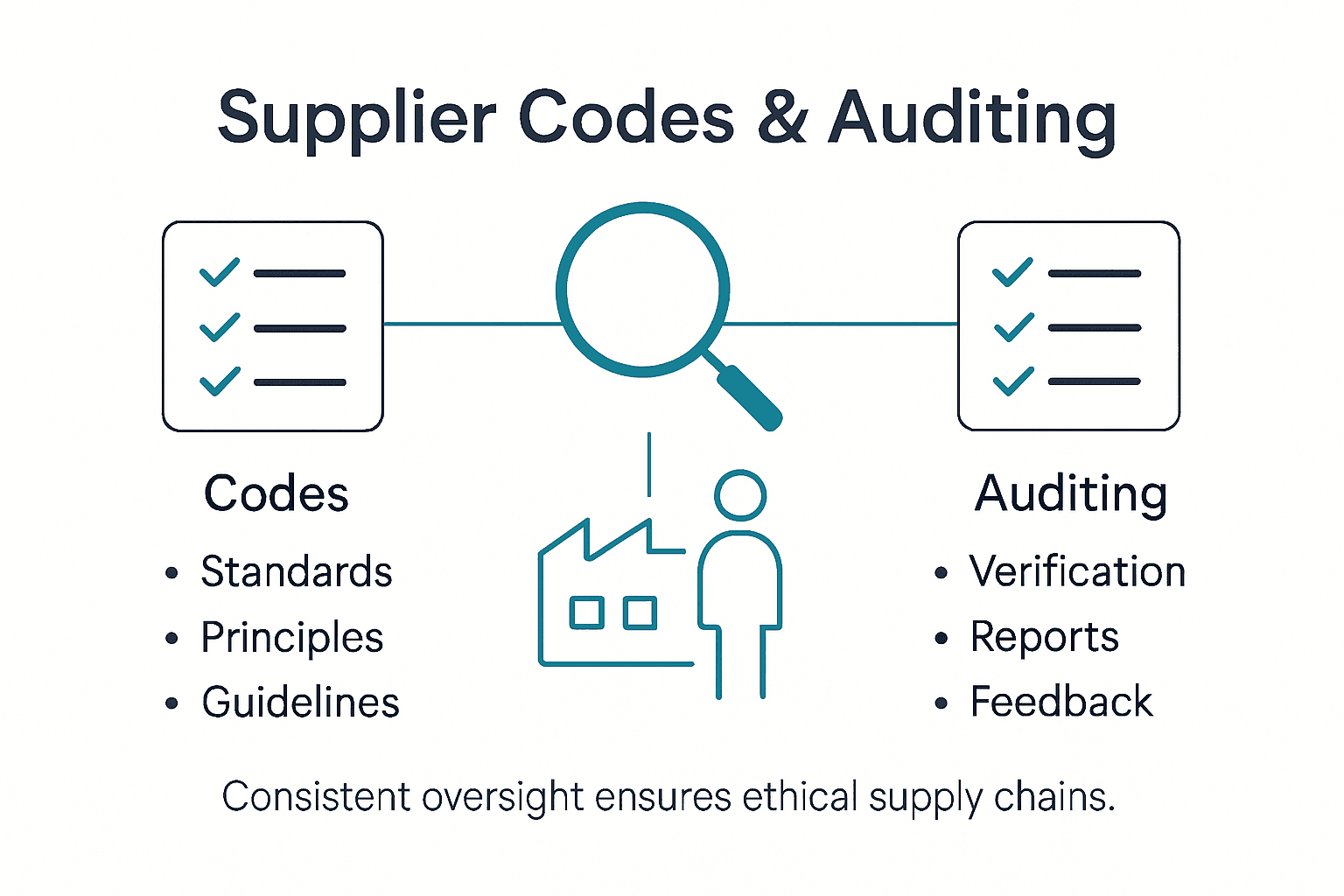
The implementation of rigorous auditing processes is essential for translating supplier codes into meaningful accountability. Advanced auditing strategies incorporate multiple verification mechanisms, including third-party assessments, document reviews, and comprehensive on-site inspections. These multifaceted approaches enable companies to develop a nuanced understanding of supplier practices, identifying potential ethical risks and creating opportunities for corrective interventions before they escalate into significant compliance challenges.
Successful supplier code implementation requires a dynamic and collaborative approach. Organizations must design codes that are both comprehensive and adaptable, recognizing the evolving nature of ethical standards across different industrial contexts. This involves developing clear performance metrics, establishing transparent communication channels, and creating structured feedback mechanisms that allow suppliers to understand and meet elevated ethical requirements. Effective programs integrate continuous learning, providing suppliers with resources, training, and supportive guidance to help them progressively improve their ethical standards.
Pro tip: Develop a tiered supplier scoring system that provides clear, quantifiable metrics for ethical performance, allowing for targeted improvement strategies and meaningful performance tracking.
The following table highlights the business value of supplier codes and robust auditing in ethical sourcing:
| Feature | Business Benefit | Example Improvement |
|---|---|---|
| Supplier Code of Conduct | Sets clear expectations | Fewer labor violations |
| Regular Auditing | Detects and resolves issues early | Faster correction of noncompliance |
| Transparent Communication | Builds supplier trust | Improved information sharing |
| Structured Feedback Mechanisms | Enables continuous improvement | Better supplier performance |
Risks, Costs, and Reputation Management
Ethical sourcing strategies involve complex risk management considerations that extend far beyond traditional procurement approaches. Companies must carefully balance the potential financial investments against long-term reputational benefits, recognizing that unethical supply chain practices can result in devastating public backlash and substantial financial penalties. The modern business landscape demands a proactive approach to identifying and mitigating potential ethical risks before they escalate into significant operational challenges.
Operational costs associated with ethical sourcing are increasingly viewed as strategic investments rather than mere expenses. While initial implementation may require substantial financial resources for auditing, supplier management, and compliance systems, these investments generate significant returns through enhanced brand reputation, increased customer loyalty, and reduced long-term legal and operational risks. Ecommerce logistics managers must develop nuanced financial models that account for both tangible and intangible benefits of comprehensive ethical sourcing strategies.
Reputation management has become a critical dimension of ethical sourcing, with consumers increasingly making purchasing decisions based on a company’s demonstrated commitment to social responsibility. Organizations must recognize that transparency is no longer optional but a fundamental expectation. This requires developing sophisticated communication strategies that authentically demonstrate ethical practices, provide clear documentation of supply chain improvements, and engage stakeholders in meaningful dialogues about ongoing sustainability efforts. By transforming potential risks into opportunities for positive brand storytelling, companies can convert ethical challenges into competitive advantages.
Pro tip: Create a comprehensive reputation risk dashboard that tracks ethical performance metrics, supplier compliance scores, and potential reputational vulnerabilities in real-time, enabling proactive management and strategic communication.
Strengthen Your Ethical Sourcing with Transparent Logistics Solutions
Balancing ethical sourcing requirements with supply chain transparency is a challenge many ecommerce businesses face today. Key concerns include ensuring fair labor practices, meeting legal compliance, and maintaining real-time visibility across complex global networks. When you manage shipments without clear oversight, risks like delayed auditing, undisclosed supplier issues, or inconsistency in documentation can undermine your commitment to responsible procurement.
Or-Ner.com understands these critical pain points. Our platform offers reliable courier services and end-to-end logistics tools designed to boost transparency and enable compliance across your entire supply chain. With features like real-time shipment tracking, customs clearance support, and integrated warehouse management, you can confidently verify supplier performance, reduce operational risks, and demonstrate ethical commitment to your customers.
Elevate your ethical sourcing practices today by partnering with Or-Ner.com, your trusted logistics ally. Explore how our comprehensive solutions help ecommerce sellers and brands implement supply chain transparency through reliable courier services, cross-border fulfillment, and data-driven analytics. Visit our homepage now to take the next step toward secure and responsible supply chain management.
Frequently Asked Questions
What is ethical sourcing?
Ethical sourcing is a procurement approach focused on acquiring materials and services through practices that uphold social responsibility, human rights, and environmental sustainability while ensuring fair labor conditions and equitable compensation.
What are the key principles of ethical sourcing?
The key principles include protecting worker rights, eliminating exploitative labor practices, minimizing environmental impact, and fostering fair economic opportunities. These principles demand a comprehensive approach to supplier assessment and ongoing monitoring.
How can companies ensure compliance with ethical sourcing standards?
Companies can ensure compliance by implementing robust verification systems, conducting regular supplier audits, and maintaining detailed documentation that covers legal and ethical performance metrics throughout their supply chains.
What are the benefits of implementing a supplier code of conduct?
A supplier code of conduct sets clear expectations for ethical practices, helps detect and resolve issues early through regular audits, builds supplier trust through transparent communication, and enables continuous improvement of supplier performance.
Recommended
- Top Benefits of Freight Forwarding for Growing Businesses 2025 – ORNER
- What Is Freight Forwarding? Guide for Modern Supply Chains 2025 – ORNER
- Understanding Supply Chain Transparency in E-commerce – ORNER
- Just in Time Delivery: Essential Guide for 2025 Success – ORNER
- The Essential Guide to Community-Based Moving Services