
Shipping insurance for ecommerce is no longer just an option for online retailers. Every year, around 5% of online shipments are damaged or lost, causing massive headaches and unexpected costs. Most people think standard carrier coverage is enough. In reality, the right insurance plan does more than just recover money—it can save your reputation and keep customers coming back for more.
Table of Contents
- What Is Ecommerce Shipping Insurance?
- Key Benefits For Online Retailers
- How To Choose The Best Insurance Plan
- Cost Factors And Claim Process Explained
Quick Summary
| Takeaway | Explanation |
|---|---|
| Ecommerce shipping insurance protects financial interests | It compensates for losses due to damage, theft, or loss during transit, ensuring businesses recover financial stability. |
| Choosing the right insurance plan is crucial | Assess specific business needs, product types, and risk profiles before selecting an insurance policy for comprehensive coverage. |
| Claims process requires thorough documentation | Promptly report incidents and provide detailed evidence to facilitate smooth claim submission and approval. |
| Shipping insurance enhances customer satisfaction | When customers know their purchases are insured, they are more likely to feel confident and loyal to the retailer. |
| Understand cost factors for effective budgeting | Insurance costs vary based on declared value, shipping distance, and product type, impacting overall shipping expenses. |
What Is Ecommerce Shipping Insurance?
Ecommerce shipping insurance represents a critical financial protection mechanism for online sellers and retailers managing product shipments across complex global logistics networks. This specialized insurance safeguards businesses against potential financial losses resulting from package damage, theft, loss, or unexpected transit incidents.
Understanding the Core Concept
At its fundamental level, ecommerce shipping insurance provides monetary compensation when shipped merchandise encounters problems during transportation. Explore our comprehensive logistics insights to understand how shipping protection fits into broader supply chain strategies.
According to Wikipedia, shipping insurance enables retailers to recover the monetary value of consignments that become compromised during transit. The coverage typically extends from the moment merchandise leaves the seller’s facility until it reaches its final destination, offering protection beyond standard carrier liability limits.
The scope of ecommerce shipping insurance can vary significantly. Some policies might cover full merchandise value, while others provide partial reimbursement based on specific terms and conditions. Businesses must carefully evaluate their unique shipping risks and select insurance options that align with their operational needs and financial constraints.
Strategic Importance for Online Retailers
For ecommerce businesses, shipping insurance transcends mere financial protection. It represents a strategic risk management tool that helps maintain customer trust and operational stability. When packages are lost or damaged, insurance ensures sellers can quickly resolve issues without bearing the entire financial burden.
ReadyCloud highlights that shipping insurance protects consignments from multiple potential risks including theft, mishandling, environmental damage, and transportation accidents. This comprehensive protection becomes increasingly critical as online retail continues expanding across complex international shipping routes.
Key considerations for ecommerce shipping insurance include:
- Financial Protection: Recover merchandise value in case of transit incidents
- Customer Satisfaction: Quickly resolve shipping problems without direct financial impact
- Risk Mitigation: Minimize unexpected economic losses from transportation challenges
Successful implementation requires understanding specific policy details, coverage limits, claim processes, and potential exclusions. Online retailers must approach shipping insurance as a nuanced risk management strategy tailored to their unique operational landscape.
By investing in robust shipping insurance, ecommerce businesses transform potential vulnerabilities into manageable, predictable aspects of their supply chain ecosystem. The right insurance approach provides peace of mind, financial security, and a foundation for sustainable growth in an increasingly complex global marketplace.
Key Benefits for Online Retailers
Ecommerce shipping insurance provides strategic advantages that extend far beyond simple financial protection. Online retailers can transform potential shipping risks into opportunities for enhanced business resilience and customer satisfaction through comprehensive insurance strategies.
Financial Risk Management
Financial protection stands as the primary benefit of shipping insurance for online retailers. Learn more about ecommerce logistics strategies to understand how insurance integrates with broader risk management approaches. According to Ship Science, approximately 5% of online shipments are damaged or lost annually, representing a substantial potential financial liability.
Shipping insurance mitigates these economic risks by providing monetary compensation for compromised merchandise. This protection ensures that businesses do not bear the full financial burden of transit-related incidents. For high-value or fragile items, insurance becomes even more critical, preventing unexpected revenue losses that could destabilize smaller online retailers.
Customer Trust and Satisfaction
Wix emphasizes that shipping insurance is particularly crucial for protecting high-value or delicate products. When customers know their purchases are insured, their confidence in the retailer increases significantly. This psychological reassurance can translate directly into improved customer loyalty and repeat business.
The ability to quickly resolve shipping issues without additional customer expense demonstrates professionalism and commitment to service quality. When packages are lost or damaged, insured retailers can swiftly process replacements or refunds, minimizing negative customer experiences and potential reputation damage.
Operational Resilience
InsureShield highlights that shipping insurance offers more than monetary compensation. It provides online retailers with a structured approach to managing unexpected logistics challenges. By transferring potential financial risks to insurance providers, businesses can focus on core operational activities without constant worry about transit-related uncertainties.
Key operational benefits include:
- Predictable Cost Management: Limit unexpected financial losses
- Simplified Claims Process: Streamline resolution of shipping incidents
- Comprehensive Protection: Cover multiple risk scenarios during transit
Successful implementation requires careful policy selection, understanding coverage limits, and developing efficient claims management protocols. Online retailers must view shipping insurance as a strategic investment in business stability rather than an optional expense.
By embracing comprehensive shipping insurance, online retailers create a robust safety net that protects financial interests, enhances customer relationships, and supports sustainable growth in an increasingly complex global marketplace. The right insurance approach transforms potential vulnerabilities into opportunities for demonstrating professional excellence and customer commitment.
How to Choose the Best Insurance Plan
Selecting the optimal ecommerce shipping insurance plan requires strategic analysis and careful consideration of multiple factors. Online retailers must approach this decision as a critical risk management process that directly impacts financial stability and operational resilience.
Assessing Your Specific Business Needs
Learn more about ecommerce logistics strategies to understand how insurance selection fits into broader risk management approaches. The selection process begins with a comprehensive evaluation of your unique shipping characteristics. Factors such as product types, shipping volumes, average package value, and typical shipping routes significantly influence insurance requirements.
According to the Insurance Information Institute, businesses should carefully analyze their specific risk profile. This involves examining historical shipping data, understanding potential loss scenarios, and calculating potential financial exposure. High-value or fragile products might require more comprehensive coverage compared to standard, durable merchandise.
Key considerations include:
- Product Characteristics: Fragility, value, and shipping sensitivity
- Shipping Frequency: Volume and distribution of shipments
- Geographic Coverage: International versus domestic shipping routes
- Risk Tolerance: Financial capacity to absorb potential losses
Below is a table summarizing the most important factors to review before choosing a shipping insurance plan. This makes it easier to compare and prioritize based on your specific business needs.
| Factor | Description | Impact on Insurance Needs |
|---|---|---|
| Product Characteristics | Fragile, valuable, or sensitive items | May require higher coverage |
| Shipping Frequency | Number of shipments and their distribution | Affects plan flexibility |
| Geographic Coverage | Domestic versus international destinations | May influence rates/coverage |
| Risk Tolerance | Your ability to absorb financial losses | Dictates extent of coverage |
| Historical Loss Data | Past incidents of loss/damage | Informs risk level |
Comparing Insurance Plan Features
Comparing insurance plans requires a detailed analysis beyond simple premium costs. Online retailers must evaluate multiple dimensions of potential coverage. Critical factors include claim processing speed, coverage limits, deductible structures, and specific exclusions that might impact potential reimbursements.
Look for insurance plans that offer:
- Comprehensive Coverage: Protection against multiple transit risks
- Flexible Claim Processes: Quick and straightforward compensation mechanisms
- Transparent Terms: Clear documentation of coverage limits and exclusions
- Competitive Pricing: Balanced cost relative to protection level
Understanding Policy Details
Successful insurance selection demands meticulous attention to policy nuances. Retailers must thoroughly review documentation to understand exact coverage parameters. Some policies might have specific restrictions on certain product categories, shipping methods, or geographical regions.
Key policy elements to scrutinize include:
- Coverage Limits: Maximum reimbursement amounts
- Deductible Structures: Out-of-pocket expenses before insurance activation
- Claim Documentation Requirements: Evidence needed for successful claims
- Exclusion Clauses: Specific scenarios not covered by the policy
Careful comparison of multiple insurance providers enables businesses to identify plans that offer the most comprehensive protection at reasonable costs. Consider requesting detailed quotes and consulting with insurance specialists who understand the unique challenges of ecommerce shipping.
Ultimately, the best shipping insurance plan balances comprehensive protection with financial feasibility. By approaching selection as a strategic decision, online retailers can create a robust risk management framework that supports sustainable business growth and customer satisfaction.
Cost Factors and Claim Process Explained
Understanding the financial implications and procedural nuances of ecommerce shipping insurance is crucial for online retailers seeking comprehensive protection. The complex landscape of insurance costs and claims requires strategic navigation to maximize value and minimize potential complications.
Determining Insurance Costs
Explore our comprehensive logistics strategies to understand how insurance costs integrate with broader shipping expenses. According to Practical Ecommerce, shipping insurance costs are influenced by multiple critical factors.
Typically, insurance pricing depends on several key variables:
- Declared Value: Higher package values result in increased premium rates
- Shipping Distance: Longer transit routes may increase risk assessment
- Product Type: Fragile or high-risk items attract higher insurance rates
- Carrier Selection: Different providers offer varying pricing structures
BigCommerce highlights that shipping insurance frequently costs approximately 1.5% of the total package value. This percentage can fluctuate based on specific risk assessments and carrier policies. Retailers should carefully evaluate whether the insurance cost justifies the potential financial protection.
To help clarify, the following table summarizes the main cost factors that determine ecommerce shipping insurance premiums.
| Cost Factor | Description | Typical Impact |
|---|---|---|
| Declared Value | The monetary value assigned to a package | Higher value = Higher cost |
| Shipping Distance | Length and complexity of the shipping route | Longer = Higher cost |
| Product Type | Fragility, risk, or category of item shipped | Riskier = Higher cost |
| Carrier Selection | Policy/pricing differences between insurance providers | Varies by provider |
Navigating the Claims Process
TransVirtual provides insights into the intricate claims process for shipping insurance. Successful claims require meticulous documentation and prompt action when shipping incidents occur.
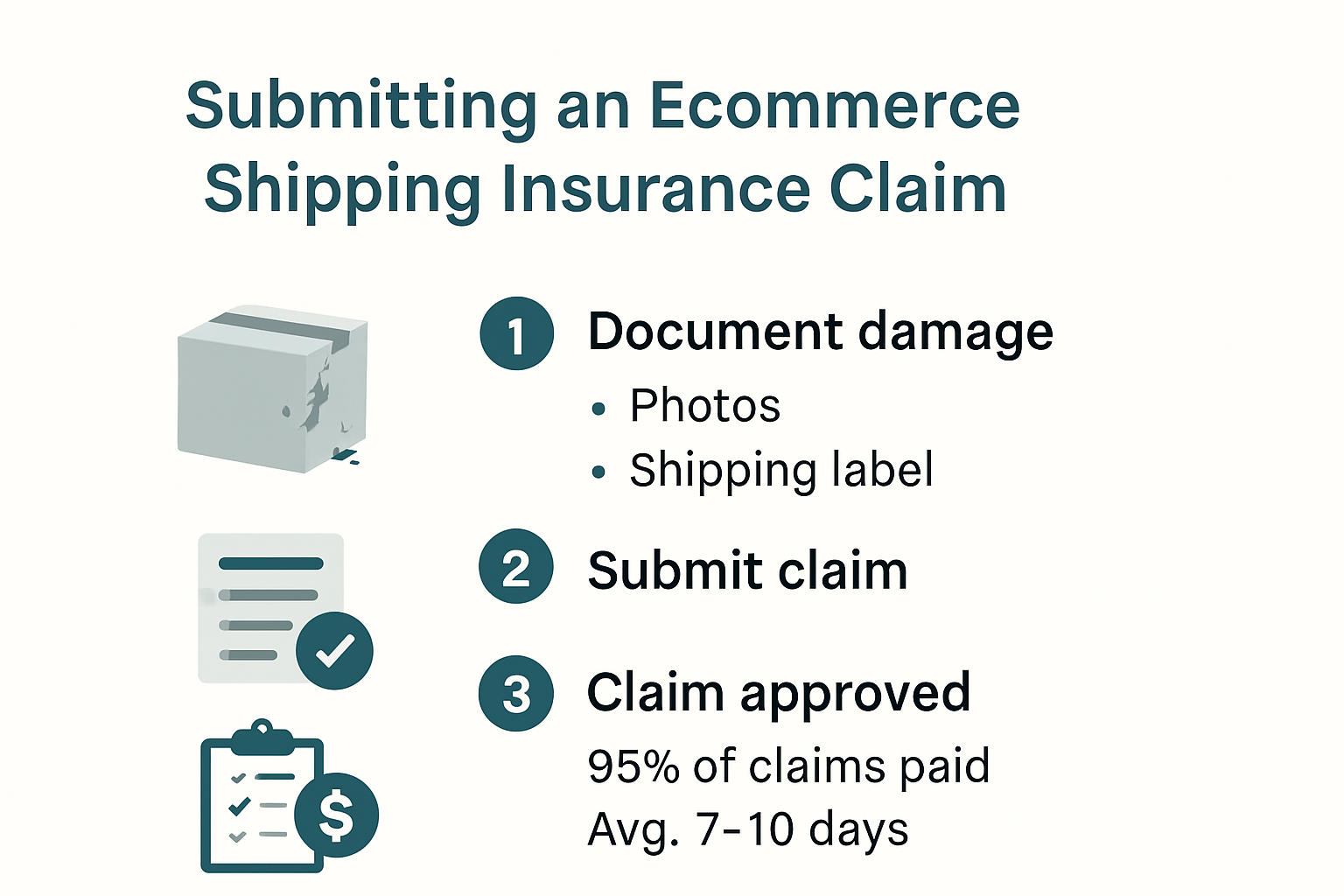
Essential steps in the claims process include:
- Immediate Reporting: Notify the carrier immediately upon discovering damage
- Comprehensive Documentation: Collect evidence including package condition, shipping labels, and item value
- Detailed Claim Submission: Complete all required forms accurately
- Follow-up Communication: Maintain active engagement during the investigation
For easy reference, here is a table outlining the key steps required when making a shipping insurance claim.
| Step | Action Description |
|---|---|
| Immediate Reporting | Notify the carrier as soon as damage/loss is discovered |
| Documentation Collection | Gather evidence: photos, shipping labels, proof of value |
| Claim Submission | Accurately complete and submit all claim forms |
| Follow-up Communication | Stay in contact for updates and resolution |
Strategic Claim Management

Effective claim management goes beyond simple documentation. Online retailers must develop a systematic approach to handle potential shipping incidents efficiently. This involves understanding policy limitations, maintaining accurate records, and creating streamlined internal processes for managing insurance claims.
Key strategic considerations include:
- Proactive Risk Assessment: Regularly review shipping practices
- Documentation Systems: Implement robust tracking and recording mechanisms
- Claims Training: Educate team members on proper claim submission procedures
- Continuous Policy Review: Periodically reassess insurance coverage
Successful ecommerce shipping insurance management requires a holistic approach. Retailers must balance cost considerations with comprehensive protection, understanding that the goal is not just financial reimbursement but maintaining operational continuity and customer satisfaction.
By developing a nuanced understanding of insurance costs and claims processes, online retailers can transform potential shipping challenges into manageable business operations. The right approach turns insurance from a potential expense into a strategic risk management tool that supports sustainable growth and customer trust.
Frequently Asked Questions
What is ecommerce shipping insurance?
Ecommerce shipping insurance is a financial protection mechanism for online retailers that compensates them for losses due to damage, theft, or loss during the shipping transit of products.
Why is shipping insurance important for online retailers?
Shipping insurance is essential because it mitigates financial risks associated with damaged or lost shipments, helps maintain customer trust, and ensures operational stability by providing a safety net against unexpected shipping incidents.
How do I choose the right shipping insurance plan for my business?
To choose the right shipping insurance plan, assess your specific business needs by considering factors such as product types, shipping volumes, geographical routes, and historical shipping data. Compare different insurance features, coverage limits, and ensure you understand the policy details before making a decision.
What factors influence the cost of ecommerce shipping insurance?
The cost of ecommerce shipping insurance is influenced by factors such as the declared value of the package, shipping distance, product type (fragility and risk), and the carrier selection, with insurance typically costing around 1.5% of the total package value.
Protect Every Shipment with Reliable Courier Services That Go Beyond Insurance
Lost or damaged shipments can threaten your customer trust and hurt your bottom line. As covered in the article, even standard insurance plans have limits, and tracking claims can drain your time and energy. What if you could prevent shipping pain before it starts? Experience the peace of mind that comes with a logistics platform designed to minimize risk while giving you total oversight from the moment you book freight to the final delivery, no matter how complex your needs.
Choose reliable courier services built for ecommerce success. Get end-to-end visibility, real-time tracking, and proactive exception management, so problems are solved before they reach your customers. Visit or-ner.com to see how our fulfillment and logistics tools work together to protect your business from loss, reduce claims, and help you deliver on your promises. Move fast—secure your shipping workflow and customer trust today.