TL;DR:
- Dropshipping logistics involves managing order fulfillment and delivery without inventory. Shipping delays and low margins threaten seller profitability and customer retention in 2025. Using tiered fulfillment, automation, and local returns can improve efficiency and reduce risks.
Dropshipping logistics is defined as the end-to-end process of managing supplier fulfillment, order routing, and delivery speed so that products reach customers without the seller holding inventory. In 2025, that definition carries real operational weight. 64% of dropshippers identify shipping delays as their single greatest challenge, and 52% report that low margins compounded by marketing and logistics costs threaten their profitability. The dropshipping supply chain has matured past simple arbitrage. Sellers who treat logistics as a core business function, not an afterthought, are the ones building durable operations in this market.
What are the key logistics challenges in dropshipping for 2025?
Shipping delays are the most damaging problem in dropshipping logistics today. 41% of consumers will not return to a store if delivery exceeds 7 business days. That is not a customer service problem. It is a revenue problem that compounds with every slow order.
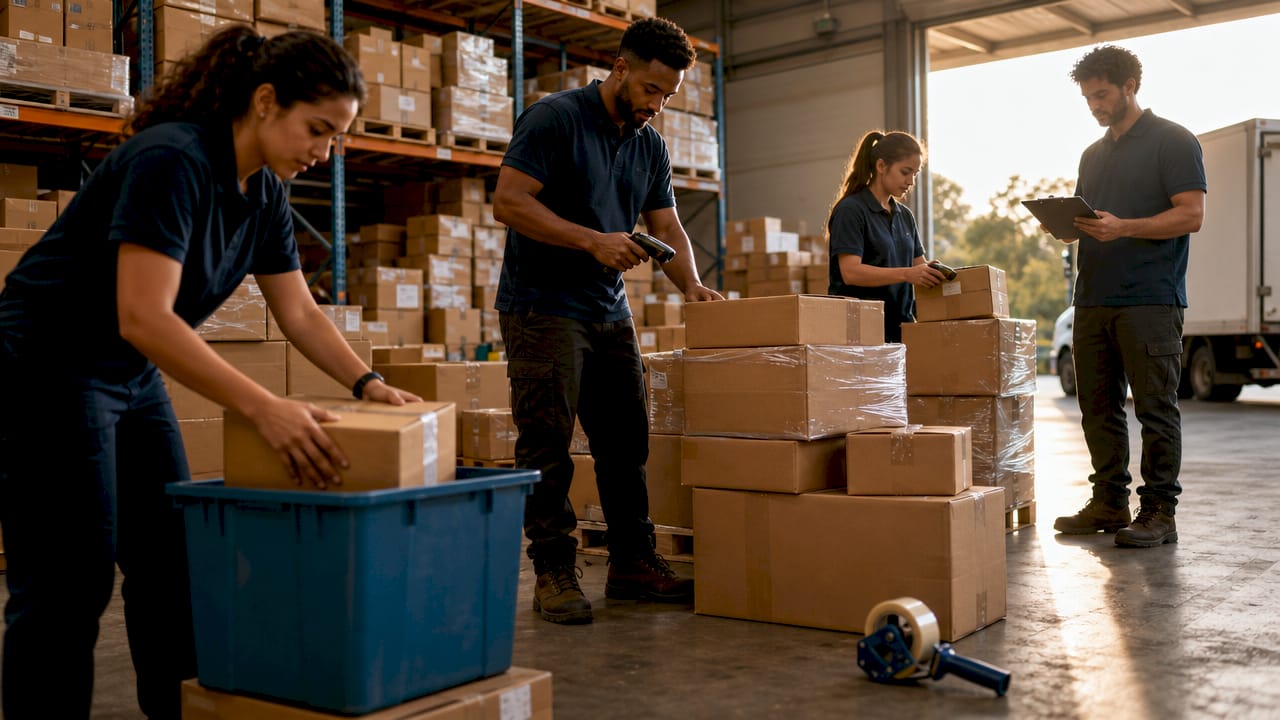
Cart abandonment follows the same pattern. 67% of shoppers abandon their carts when shipping timelines are unclear or too long. Sellers who display vague delivery windows lose sales before the checkout is even completed. Fixing the messaging is fast. Fixing the underlying logistics takes more work, but it pays off far more.
Margin compression is the second structural threat. The dropshipping market is forecast to exceed $543 billion in 2026, with 27% of ecommerce businesses using it as their primary fulfillment model. That growth brings competition, and competition drives up advertising costs. When marketing spend rises and logistics costs stay flat or increase due to tariff pressure, margins shrink from both ends.
Supplier dependency creates a third category of risk that sellers often underestimate. Stock discrepancies from poor inventory synchronization cause cancellations. A single supplier going out of stock, raising prices, or slowing fulfillment can collapse an entire product line. Sellers with no backup supplier or failover logic in their order routing have no protection when that happens.
Key challenges to address in 2025:
- Shipping speed: Delivery windows beyond 7 days drive permanent customer loss.
- Margin pressure: Rising ad costs and tariffs erode profitability on thin-margin products.
- Inventory accuracy: Suppliers without real-time sync cause overselling and cancellations.
- Supplier concentration: Single-supplier dependency creates fragile supply chains.
- Consumer expectations: Buyers now expect reliable delivery, not just low prices.
Pro Tip: Review your top logistics challenges before building any new fulfillment strategy. Knowing your specific weak points prevents you from investing in solutions that do not match your actual bottlenecks.
How are successful dropshippers optimizing logistics through tiered fulfillment?
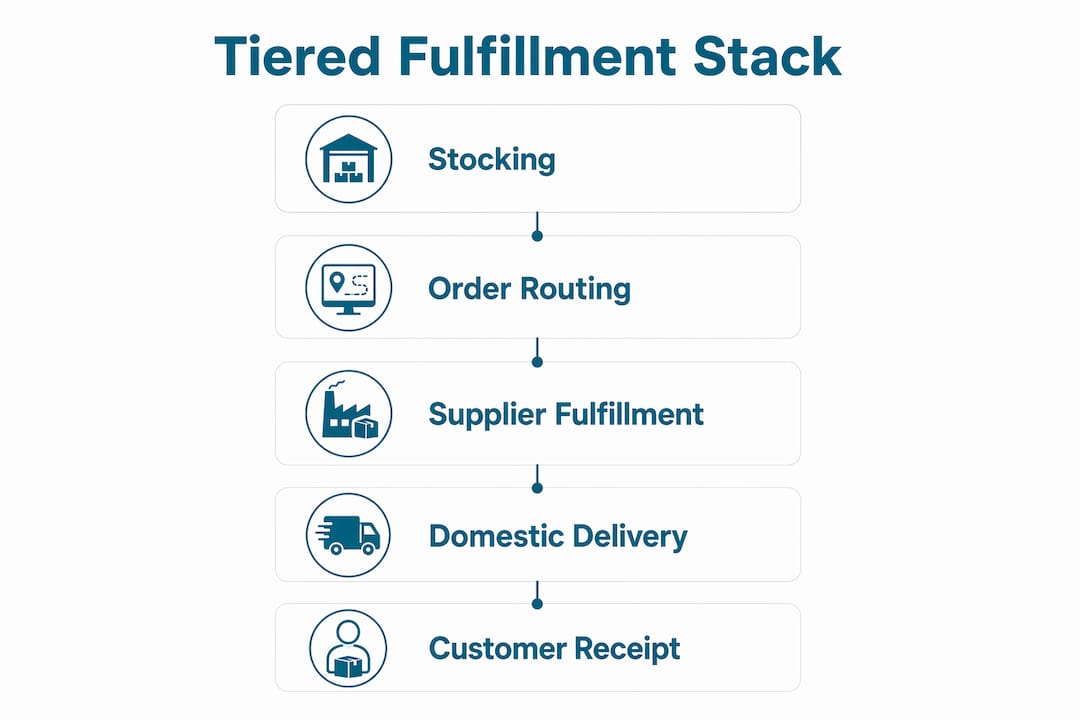
The most effective approach to dropshipping logistics in 2025 is the tiered fulfillment stack. High-performing dropshippers combine domestic warehouses for speed with regional international nodes for catalog depth and tariff management. This is not a luxury reserved for large operations. Even mid-size sellers can build a two-tier system with the right supplier relationships and a clear SKU strategy.
Here is how a tiered fulfillment stack works in practice:
- Identify your top-selling SKUs. Stock these domestically through a third-party warehouse or fulfillment center. Domestic inventory delivers in 2–5 days, which meets modern consumer expectations and reduces cart abandonment.
- Route the broader catalog through international or regional nodes. Products with lower velocity do not justify domestic storage costs. Regional nodes handle these orders while keeping per-unit costs manageable.
- Automate order routing by geography and inventory availability. When a domestic warehouse has stock, route there first. When it does not, fall back to the regional node automatically. Manual routing decisions slow everything down and introduce errors.
- Build supplier failover logic into your routing system. Supplier failover automation reduces unfulfilled orders and prevents customer dissatisfaction when a primary supplier goes out of stock.
- Review tier performance monthly. SKU velocity changes. A product that warranted domestic stock in January may not justify the cost by march. Adjust your tiers based on actual sales data, not assumptions.
The contrast between a tiered stack and a single-supplier model is significant. A single-supplier model is cheaper to set up and simpler to manage, but it offers no resilience. One disruption, whether a stockout, a shipping delay, or a tariff change, affects every order. A tiered stack costs more to build but distributes that risk across multiple nodes and suppliers.
Pro Tip: When evaluating fulfillment solutions for ecommerce, prioritize partners that support automated routing and real-time inventory visibility. A partner that requires manual order submission is a bottleneck by design.
What automation tools enhance dropshipping logistics efficiency in 2025?
Automation is the difference between a dropshipping operation that scales and one that breaks under volume. The two highest-impact automation areas are inventory synchronization and order processing speed.
Real-time inventory sync via webhooks is the standard that serious sellers require from their suppliers. Suppliers without webhook support should be deprioritized, because scheduled polling creates gaps where overselling happens. A webhook pushes a stock update the moment inventory changes. Scheduled polling checks every few hours. In a high-velocity catalog, a few hours is enough time to sell products that no longer exist.
Order processing speed matters more than most sellers realize. Manual order processing near supplier cutoff times adds up to 10 hours of latency to a fulfillment cycle. That is nearly a full business day lost before the supplier even picks the item. Automated, instant order forwarding without manual review queues eliminates this delay entirely.
Post-purchase communication is the third automation layer that directly affects customer retention. Platforms like AfterShip and Narvar reduce customer service tickets by 34% through branded tracking pages and AI-powered delay notifications. That reduction means fewer support staff hours, fewer chargebacks, and customers who feel informed rather than ignored.
Key automation priorities for 2025:
- Webhook-based inventory sync: Prevents overselling and cancellations in real time.
- Instant order forwarding: Eliminates processing latency caused by manual review queues.
- Branded tracking pages: Reduce “where is my order” tickets and build customer trust.
- AI delay notifications: Alert customers proactively before they contact support.
- Supplier failover routing: Automatically reassigns orders when a primary supplier cannot fulfill.
Pro Tip: Map your current order flow from checkout to supplier submission. If any step requires a human to click “send,” that step is a delay. Automate it.
How to build returns and communication policies that support scalable dropshipping
Returns are where dropshipping economics break down fastest. Sending a return to an overseas supplier typically costs more than the product is worth. Domestic returns hubs or reverse logistics partners are the more economical solution. They accept returns locally, assess condition, and either restock or dispose of items without the cost of international shipping.
A clear, upfront return policy reduces operational disruption before it starts. Customers who understand the return window and process before they buy are less likely to initiate chargebacks. Chargebacks cost more than refunds. They also damage your payment processor relationship over time. Writing a plain-language return policy and displaying it on product pages is one of the lowest-cost risk reduction steps available.
Proactive shipping communication reduces the volume of inbound support requests. Transparent tracking and proactive delay alerts lower chargebacks and support costs significantly. Customers who receive a delay notification before they notice the delay are far less likely to escalate. Customers who discover a delay on their own, with no communication from the seller, escalate immediately.
Integrating returns and communication into your fulfillment workflow, rather than treating them as separate customer service functions, creates a consistent post-purchase experience. That consistency is what drives repeat purchases. The supply chain practices that support repeat business are the ones that treat the post-purchase phase as part of fulfillment, not a separate department.
Key Takeaways
Dropshipping logistics in 2025 requires a tiered fulfillment stack, webhook-based inventory sync, and proactive customer communication to maintain margins and meet delivery expectations.
| Point | Details |
|---|---|
| Shipping speed drives retention | 41% of consumers never return after a delivery exceeding 7 business days. |
| Tiered fulfillment reduces risk | Domestic stock for top SKUs plus regional nodes for broader catalogs balances speed and cost. |
| Automation eliminates latency | Instant order forwarding removes up to 10 hours of manual processing delay per order. |
| Webhook sync prevents overselling | Real-time inventory updates stop cancellations that damage customer trust. |
| Domestic returns cut costs | Local returns hubs are more economical than shipping products back to overseas suppliers. |
The part of dropshipping logistics most sellers get wrong
I have watched a lot of ecommerce entrepreneurs treat shipping speed as a variable they will fix later, once the business grows. That logic is backward. Shipping speed is a product feature. It is part of what the customer is buying. If you sell a $30 item and it arrives in 14 days with no tracking updates, the customer does not feel like they got a deal. They feel like they got a bad experience.
The second mistake I see constantly is over-reliance on a single international supplier with no failover plan. Tight supplier relationships and capital-efficient models focused on fulfillment control have replaced zero-investment arbitrage as the standard for sustainable dropshipping. That shift happened because sellers who built single-supplier models kept getting burned. One tariff change, one stockout, one shipping disruption, and their entire catalog went dark.
The operational detail that surprises most sellers is how much damage manual order processing causes. The 10-hour latency figure from orders submitted near supplier cutoff times is not theoretical. It is a real delay that pushes delivery into the next business day or beyond. Automating that single step, instant order forwarding without a review queue, often has more impact on delivery time than switching suppliers entirely.
My honest recommendation: invest in automation and supplier relationships before you invest in marketing. A faster, more reliable fulfillment operation converts better and retains customers longer. More ad spend on a broken logistics stack just accelerates the churn.
— Maayan
Or-ner’s courier services for dropshipping sellers
Dropshipping sellers who have fixed their fulfillment strategy still need a carrier network that can execute it reliably. Or-ner provides reliable courier services built specifically for ecommerce operations, covering domestic delivery, cross-border shipments, real-time tracking, and returns management.
Or-ner’s platform connects sellers to a global network of fulfillment centers and courier routes, with visibility tools that support the kind of proactive communication that reduces chargebacks and support tickets. For sellers building a tiered fulfillment stack, Or-ner handles the carrier layer so you can focus on supplier relationships and catalog growth. Explore Or-ner’s ecommerce shipping solutions to see how the platform fits your current logistics setup.
FAQ
What is dropshipping logistics and why does it matter in 2025?
Dropshipping logistics is the process of managing order fulfillment, supplier coordination, and delivery execution without holding inventory. In 2025, it matters because 64% of dropshippers cite shipping delays as their top operational challenge, making logistics the primary driver of customer retention and profitability.
How do I reduce shipping delays in my dropshipping supply chain?
Stock your top-selling SKUs in a domestic warehouse for 2–5 day delivery, and automate order forwarding to eliminate manual processing delays that can add up to 10 hours of latency per order.
What is a tiered fulfillment stack?
A tiered fulfillment stack combines domestic warehousing for fast delivery on high-velocity products with regional or international nodes for broader catalog coverage and tariff management. It distributes fulfillment risk across multiple locations instead of relying on a single supplier.
How does real-time inventory sync prevent overselling?
Webhook-based inventory sync pushes stock updates instantly when a supplier’s inventory changes. Scheduled polling checks inventory on a delay, creating windows where sellers can accept orders for out-of-stock products, which leads to cancellations and lost customer trust.
What is the most cost-effective way to handle dropshipping returns?
Domestic returns hubs or reverse logistics partners are more economical than returning products to overseas suppliers, where shipping costs typically exceed the product’s value. A local hub accepts, assesses, and processes returns without international freight costs.