Did you know that over 75 percent of logistics leaders say demand forecasting is crucial for managing supply chains effectively? Accurately predicting product demand helps businesses avoid costly stockouts and prevent wasted inventory. With smart forecasting, companies can respond faster to changing trends and keep customers satisfied. Real-time insights from demand forecasting create smoother operations and pave the way for smarter, more agile supply chains.
Table of Contents
- Defining Demand Forecasting In Logistics
- Major Types And Forecasting Methods Explained
- How Demand Forecasting Powers Logistics Operations
- Benefits And Business Impact For Ecommerce
- Common Challenges And Avoidable Pitfalls
Key Takeaways
| Point | Details |
|---|---|
| Importance of Demand Forecasting | Demand forecasting is essential for predicting future product requirements, aiding inventory management, and preventing costly overstocking and understocking. |
| Diverse Methodologies | Successful forecasting involves a variety of techniques, both qualitative and quantitative, to match differing market conditions and improve accuracy. |
| Strategic Impact on Logistics | Effective demand forecasting enhances supply chain operations by optimizing inventory, minimizing costs, and responding promptly to market demands. |
| Challenges in Forecasting | Common pitfalls such as data inaccuracies and neglecting external factors can undermine forecasting efforts, necessitating an adaptive and iterative approach. |
Defining Demand Forecasting in Logistics
Demand forecasting is a critical strategic process in logistics that enables businesses to predict future product requirements with precision. According to log.logcluster.org, demand forecasting is “the process of predicting future demand as accurately as possible using available data, which is crucial for inventory planning and management in logistics”.
At its core, demand forecasting transforms historical data, market trends, and statistical models into actionable insights that help logistics professionals make informed decisions. By analyzing past sales patterns, seasonal variations, economic indicators, and consumer behavior, businesses can estimate how much inventory they’ll need in upcoming periods.
 This predictive approach prevents two significant operational risks: overstocking (which ties up capital and increases storage costs) and understocking (which can lead to lost sales and disappointed customers).
The demand forecasting process typically involves several sophisticated techniques and data sources. These might include quantitative methods like time series analysis, causal/regression models, and machine learning algorithms, as well as qualitative approaches such as market research, expert opinions, and sales team insights. Just in Time Delivery: Essential Guide for 2025 Success provides additional context about how precise demand prediction supports lean inventory management strategies.
Successful demand forecasting isn’t just about mathematical precision – it’s about understanding the complex ecosystem of supply and demand. Logistics professionals must consider multiple variables, including:
- Seasonal fluctuations in consumer purchasing behavior
- Economic trends and market dynamics
- Emerging consumer preferences
- Competitive landscape shifts
- Technological disruptions
By integrating these factors into a comprehensive predictive model, businesses can create more resilient and responsive supply chain strategies that minimize waste, optimize inventory, and ultimately enhance customer satisfaction.
Major Types and Forecasting Methods Explained
Demand forecasting encompasses a diverse range of methodologies that logistics professionals can leverage to predict future product requirements. According to scm.ncsu.edu, these methods broadly fall into two primary categories: qualitative techniques like expert opinions and market research, and quantitative techniques such as time series analysis and regression models.
According to drpress.org, logistics demand forecasting methods can be further categorized into four sophisticated approaches:
- Single Traditional Methods: Includes classic time series analysis techniques that examine historical data patterns
- Single Intelligent Methods: Leverages advanced technologies like neural networks and machine learning algorithms
- Combined Methods: Integrates multiple forecasting approaches to enhance predictive accuracy
- Hybrid Methods: Blends qualitative and quantitative techniques to create more comprehensive forecasting models
Each forecasting method offers unique strengths and is suited to different business contexts. Traditional time series analysis works exceptionally well for stable markets with predictable patterns, while intelligent methods like neural networks excel in complex environments with numerous variables. Regression models can help businesses understand how specific factors influence demand, allowing for more nuanced predictions.
The key to successful demand forecasting lies not in choosing a single perfect method, but in selecting and potentially combining approaches that best match your specific business environment. Just in Time Delivery: Essential Guide for 2025 Success provides additional insights into how strategic forecasting supports efficient inventory management. By understanding these methods and their applications, logistics professionals can develop more accurate, responsive, and adaptable supply chain strategies that minimize risks and maximize operational efficiency.
Here’s a summary of the four main demand forecasting methods in logistics:
| Method Type | Main Characteristics | Best Use Cases |
|---|---|---|
| Single Traditional | Uses historical data Time series |
Stable demand patterns Predictable cycles |
| Single Intelligent | Neural networks Machine learning |
Complex, variable markets Large data sets |
| Combined | Uses multiple models Improves accuracy |
Markets with mixed patterns Seeking higher reliability |
| Hybrid | Mixes quantitative & qualitative Holistic approach |
Dynamic environments Incorporates expertise |
How Demand Forecasting Powers Logistics Operations
Demand forecasting is the strategic engine that transforms logistics from a reactive to a proactive operational model. According to ecornell.cornell.edu, effective demand forecasting enables organizations to “align supply chain operations with customer needs, reducing costs and improving service levels”.
At its core, demand forecasting acts as a critical bridge between customer expectations and operational capabilities. By providing precise predictions of future product requirements, logistics teams can optimize every aspect of their supply chain. This includes strategic planning for inventory management, transportation routing, warehouse space allocation, and resource deployment. The predictive insights generated help businesses anticipate market fluctuations, preventing costly overproduction or stockouts that can severely impact customer satisfaction and bottom-line performance.
The operational advantages of robust demand forecasting extend far beyond simple inventory management. Top Benefits of Freight Forwarding for Growing Businesses 2025 highlights how predictive capabilities can transform logistics efficiency. Organizations can leverage demand forecasting to:
- Minimize inventory holding costs
- Optimize warehouse space utilization
- Reduce transportation and shipping expenses
- Improve supplier negotiation strategies
- Enhance overall supply chain responsiveness
Ultimately, demand forecasting is not just a technical process – it’s a strategic capability that empowers logistics professionals to make data-driven decisions. By transforming historical data, market trends, and consumer behavior into actionable insights, businesses can create more agile, efficient, and customer-centric supply chain operations that consistently deliver value and competitive advantage.
Benefits and Business Impact for Ecommerce
In the fast-paced world of online retail, demand forecasting has become a game-changing strategy for ecommerce businesses. According to app.sophia.org, accurate demand forecasting helps businesses “anticipate customer needs, streamline operations, and make informed decisions on inventory and marketing strategies”.
The transformative impact of precise demand forecasting extends across multiple critical business dimensions. Ecommerce operations can dramatically reduce financial risks by predicting exact inventory requirements, preventing costly overstocking or understocking scenarios. This predictive approach enables businesses to optimize warehouse space, minimize holding costs, and allocate resources more effectively. What is Ecommerce Logistics? underscores how strategic forecasting directly influences operational efficiency and profitability.
For ecommerce businesses, demand forecasting delivers several pivotal benefits:
- Improved cash flow management
- Reduced inventory carrying costs
- Enhanced customer satisfaction through consistent product availability
- More accurate marketing and promotional planning
- Better supplier relationship management
- Increased ability to adapt to market trends quickly
Beyond operational advantages, demand forecasting serves as a strategic intelligence tool. By transforming raw data into actionable insights, ecommerce businesses can make proactive decisions that anticipate market shifts, customer preferences, and potential supply chain disruptions. This forward-looking approach not only minimizes financial risks but also positions businesses to capitalize on emerging opportunities, creating a sustainable competitive advantage in the dynamic digital marketplace.
Common Challenges and Avoidable Pitfalls
Demand forecasting, while powerful, is fraught with potential challenges that can derail even the most sophisticated logistics strategies. According to log.logcluster.org, key challenges include “data inaccuracies, unforeseen market changes, and over-reliance on historical data, which can lead to stock wastage or stockouts”.
The complexity of demand forecasting becomes evident when businesses encounter subtle yet significant pitfalls. Understanding Ecommerce Fulfillment Solutions highlights how these challenges can dramatically impact operational efficiency. Drawing from wisdomlib.org, common forecasting mistakes often stem from:
- Misinterpreting data trends
- Neglecting critical external market factors
- Failing to update forecasts regularly
- Overconfidence in predictive models
- Ignoring seasonal and cyclical variations
- Insufficient data collection methodologies
Navigating these challenges requires a multifaceted approach that combines technological sophistication with strategic human insight. Successful logistics professionals recognize that demand forecasting is not a static process, but a dynamic, continuously evolving strategy. By implementing robust data validation processes, maintaining flexibility in predictive models, and creating adaptive feedback loops, businesses can mitigate risks and transform potential pitfalls into opportunities for strategic optimization. The key is to view demand forecasting as an intelligent, iterative process that requires constant refinement and critical evaluation.
Master Demand Forecasting with Reliable Logistics Solutions
Accurately predicting demand is vital for avoiding costly overstocking and frustrating stockouts. If your ecommerce business struggles with fluctuating inventory needs or complex market changes, integrating strategic demand forecasting with trusted logistics support can transform your operations. The article highlights critical challenges such as data inaccuracies and the need for adaptable forecasting models. At or-ner.com, we understand these pain points and offer reliable courier services combined with robust inventory management tools designed specifically for dynamic ecommerce environments.
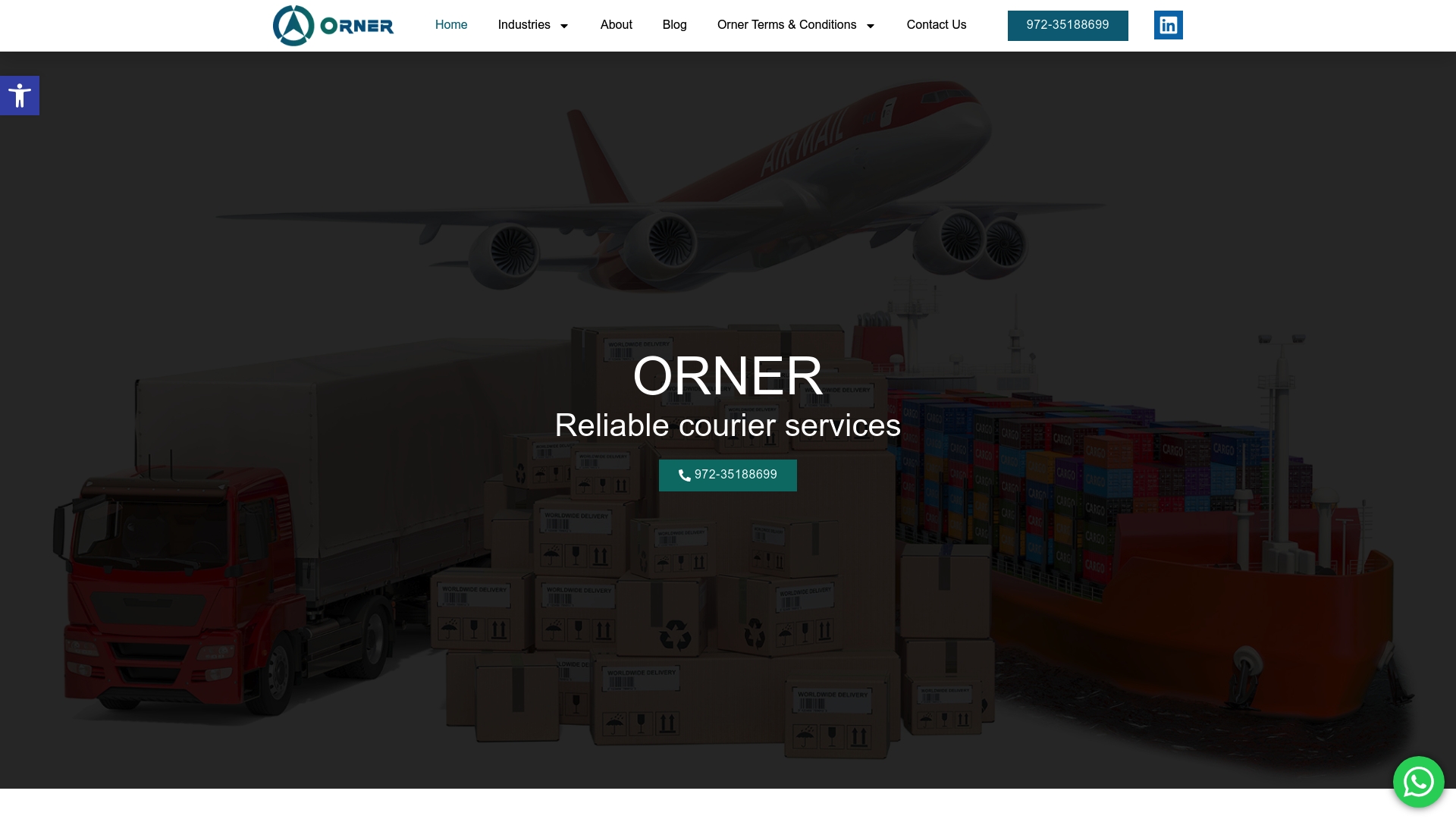
Take control of your supply chain today by partnering with a platform that provides end-to-end visibility across ocean, air, and land transport modes. From real-time shipment tracking to seamless warehousing, our solutions help ecommerce sellers anticipate customer demand and streamline fulfillment processes. Explore how integrating demand forecasting insights with our comprehensive services enhances accuracy and responsiveness. Visit our homepage to get started or learn more about what is ecommerce logistics and the benefits of freight forwarding for growing businesses.
Don’t let forecasting challenges hold you back. Act now to optimize your logistics strategy and deliver better customer experiences with confidence.
Frequently Asked Questions
What is demand forecasting in logistics?
Demand forecasting in logistics is the process of predicting future product requirements based on historical data, market trends, and statistical models to ensure proper inventory planning and management.
What are the main types of demand forecasting methods in logistics?
The main types of demand forecasting methods include Single Traditional Methods (historical data analysis), Single Intelligent Methods (neural networks and machine learning), Combined Methods (integrating multiple forecasting approaches), and Hybrid Methods (mixing qualitative and quantitative techniques).
How does demand forecasting benefit eCommerce businesses?
Accurate demand forecasting helps eCommerce businesses improve cash flow, reduce inventory carrying costs, enhance customer satisfaction through consistent product availability, and make informed decisions regarding marketing and promotional planning.
What challenges are commonly faced in demand forecasting?
Common challenges in demand forecasting include data inaccuracies, unforeseen market changes, over-reliance on historical data, misinterpretation of trends, and neglecting to regularly update forecasts.